


As the world prepares to discuss climate change in South Africa next week, activists and researchers are pointing to a region that has been among the most affected in recent years - the Niger River basin in West Africa. In addition to identifying the region's problems, there has been an effort to find solutions to help vulnerable populations there.
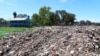
A video on the website of the Netherlands-based group Wetlands International shows scenes of parched land, dried up river beds and deforestation in the Niger River basin.
Activist Bakary Kone describes the situation in his own country, Mali.
"The rainfall is dropping. It is expected during the coming 100 years [that] rainfall will drop about 20 percent. Where we are now, the temperature is about 40 degrees Celsius. This temperature is expected to rise during the coming 80 years from two to seven degrees Celsius," said Kone.
Erratic weather patterns
The Niger River extends more than 4,000 kilometers in five countries. Running in a crescent shape, it starts in Guinea and goes through Mali, Niger, on the border of Benin and into Nigeria before discharging through the Niger Delta in the Atlantic Ocean.
Research by different groups and universities indicates that in the river's surrounding regions, rainfall has been down in recent years and that weather patterns have become less predictable, with shorter rainy seasons and longer droughts. When the rains do come, they often have been heavier than usual with more instances of flooding.
Researchers say development initiatives have made matters worse, with, for example, river dredging and the building of dams that sometimes create more parched land. Some small-scale farmers have been asked to reduce their production of water-intensive crops, such as vegetables and rice, while governments have sold large tracts of land for sugar cane and ethanol production, which consume even more water.
At a recent conference here in Washington, Lulsegged Abebe, the West Africa manager for the London-based group International Alert, said development policies and climate change adaptation strategies often contradict each other.
Creating holistic development plans
"The issue of development and adaptation, we think, they are not different and they should not be perceived as different. Both of them are for change. If both are going to be a change agent, then we have to really synchronize them so that they would be able, and they would be meaningful to the beneficiaries rather than making it separate and looking at it separately," said Abebe.
While climate conditions have become more difficult, researchers and activists say there also is a greater probability of clashes between farmers and herders. One positive initiative, they point out, is the creation of clearly marked cattle corridors to avoid such problems.
Marisa Goulden of the University of East Anglia in Britain also applauds a very localized weather forecasting system that is being tried in Mali.
"The agrometeorology department has a wide network of farmers who take measurements of rainfall and feed these back to the agrometeorology department by various networks, and they monitor soil moisture and crop responses in an attempt to produce forecasts," said Goulden.
Goulden told the conference that government officials in Mali are using the data to improve the efficiency of cloud seeding flights that are intended to produce rain. She also praised efforts to increase early warning systems for droughts and floods, but said many of these efforts are poorly funded.
One warning that researchers at the conference made was that worsening economic conditions caused by climate change, along with poor governance, might explain the rise in recruits among violent Islamic radical groups in the region.
Researchers Seek Solutions to Climate Change in Niger River Basin