



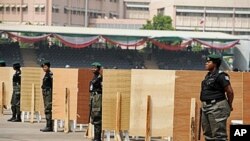
Leaders of Nigeria's ruling party are meeting to choose their presidential candidate amid tight security following a series of bombings.
Thousands of police, soldiers, and civil defense forces are on patrol to safeguard the ruling People's Democratic Party primary. Anti-terrorism personnel and bomb disposal units are also on duty.
Vehicles have been cleared from the vicinity of Eagle Square where the primary is being held and everyone entering the venue is being screened, including delegates. Police Inspector General Hafiz Ringim says the public should be on alert for unattended bags or other suspicious packages.
An Independence Day bombing near Eagle Square killed 12 people in October. A new year's eve blast near a military barracks in Abuja killed four people. President Goodluck Jonathan says that attack was the work of a radical Muslim group that claimed responsibility for a Christmas Eve bomb in the northern city of Jos that killed 80 people.
President Jonathan is one of three candidates seeking the ruling-party's nomination alongside former vice president Atiku Abubakar and veteran politician Sarah Jibril.
Nigeria's ruling party has won the last three presidential elections, so the winner of this primary will be the clear frontrunner in April's vote.
But the nearly 4,000 party delegates are also deciding the future of an informal power-sharing deal that rotates the presidency between Nigeria's mainly Muslim north and its predominantly Christian south.
If delegates choose Mr. Abubakar they will be abiding by an agreement that gives northern Nigerians another four years in office following the death of President Umaru Musa Yar'Adua.
If delegates choose Mr. Jonathan they will be breaking with that plan in favor of a southern politician who came to office because he was Mr. Yar'Adua's vice president.
Both candidates are campaigning on promises of improving security, creating jobs, and boosting electricity supplies.
Mr. Abubakar says he has more government experience than Mr. Jonathan and says Nigeria can not afford to leave democracy in the "hands of those ill-prepared for the challenges."
Mr. Jonathan's campaign is urging party delegates not to sell their votes to what it calls "desperate politicians" who are trying to buy the ruling-party nomination in what the campaign says is a "cheap inducement" capable of mortgaging the country's future.