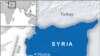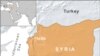



Syrian rights activists say four government soldiers have been killed in clashes with military defectors near the Turkish border.
The London-based Syrian Observatory for Human Rights said the fighting Thursday took place in the Jabal al-Zawiya area of Idlib province.
President Bashar al-Assad's government has been using military force to crush almost seven months of opposition protests, including operations against military defectors.
US criticism
Meanwhile, U.S. Secretary of State Hillary Clinton says the U.N. Security Council has failed in its responsibility by not passing a resolution condemning Syria for its brutal crackdown.
Without mentioning Russia and China by name, Clinton said Wednesday the two countries would have to explain their vetoes "to the Syrian people."
Moscow and Beijing blocked a resolution Tuesday written by France, Britain, Germany and Portugal, sparking U.S. and European outrage. The watered-down measure contained only possible references to sanctions against Syria if Damascus pursues its military crackdown on pro-reform protesters.
France denounces Assad
Earlier Wednesday, French Foreign Minister Alain Juppé angrily denounced Syrian President Bashar al-Assad as a "dictator who is massacring his people" and vowed support for Syrians attempting to overthrow the authoritarian leader.
U.N. chief Ban Ki-moon said the international community has a "moral obligation" to prevent further bloodshed in Syria, while Turkish Prime Minister Recep Tayyip Erdogan said his government will impose its own sanctions on Damascus.
But an aide to the Syrian president told the French news agency that Russia and China stood "with the Syrian people" and provided the time needed for the government to "enforce and enhance reforms."
Thousands killed
The United Nations says at least 2,700 people have been killed in the crackdown against pro-reform protesters and a growing cadre of military defectors, who are demanding an end to Assad's 11-year autocratic rule.
Turkey has provided refuge for several Syrian dissidents. A Syrian officer who found refuge there and heads the opposition Free Syrian Army said a brutal crackdown last week in Rastan was an operation to capture him.
Colonel Riad al-Asaad says he defected in July after refusing to follow Syrian government orders to shoot protesters. He says his opposition group now has more than 10,000 defectors.
Some information for this report was provided by AP and AFP.