


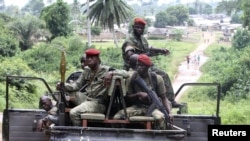
DAKAR, Senegal - Liberia says it will extradite 41 Ivorians home to face trial for suspected involvement in last year's post-electoral conflict in Ivory Coast. However high-level allies of ousted Ivorian president Laurent Gbagbo remain at large in West Africa and continue to pose a risk to Ivory Coast's future stability.
As Ivory Coast struggles to emerge from a decade of division and conflict, the future stability of its troubled western region rests, at least in part, in the hands of its neighbors.
Former Ivorian president Laurent Gbagbo awaits trial at the Hague on charges of crimes against humanity. Gbagbo lost a November 2010 presidential election, but refused to step down, sparking a nationwide conflict that killed 3,000 people. Ivorian militiamen and Liberian mercenaries who fought on the Gbagbo side took refuge in eastern Liberia, while other elite members of the Gbagbo camp fled to Ghana, Benin and Togo.
Human Rights Watch says armed groups in eastern Liberia, motivated by revenge and funded by Gbagbo allies in Ghana, have been staging deadly raids on civilians in western Ivory Coast. The rights group condemned Liberia's handling of the threat.
However, the killing of seven U.N. peacekeepers during a June 8th raid in the Tai region of Ivory Coast spurred Liberia into action.
On Thursday, a Liberian court ruled in favor of extraditing 41 Ivorians accused of crimes during the 2011 crisis in Ivory Coast. The prisoners had been in custody since April of last year when they reportedly attempted to cross into Liberia with weapons.
Liberia's Solicitor General, Witkin Wrights, said the ruling was in accordance with international legal protocols.
"Liberia has an international duty to extradite persons wanted to criminal offenses and not to allow its territory to be used to shield persons accused of crimes committed in other countries," said Wrights.
Family members of the prisoners wept outside the courthouse in Liberia's southeastern Grand Gedeh county.
They said they doubted their relatives would receive fair trial in Ivory Coast. The mother of one prisoner said her son did not fight, he ran. She says please do not send him back to Ivory Coast. They would kill him there.
The government of Ivorian President Alassane Ouattara has come under fire for what critics say has been a "victor's justice" since the post-election conflict ended, though armed groups loyal to him have also been accused of war crimes and other abuses.
Meanwhile, the Ivorian military has stepped up defenses along the Liberian border.
Liberia's acting Information Minister, Norris Tweh, said the border area has stabilized.
"Contrary to the newspapers' reports, the situation along the Liberian-Ivorian border is calm while the governments of Liberia and Ivory Coast under the United Nations Missions in Ivory Coast and Liberia continue to cement a combined approach to dealing with the current situation," said Tweh.
United Nations humanitarian officials in Ivory Coast visited the affected area this week. They said in a statement that this month's raids displaced 13,000 people who are too scared to return to their homes.
Ivory Coast's Interior Ministry said earlier this month that authorities had foiled a coup plot masterminded by a group of former Ivorian military officers in Ghana.
So far, Togo has been the only country to respond to international arrest warrants issued for Gbagbo allies who have fled to neighboring countries. In early June, Togolese authorities arrested and extradited Moise Ladi Kounassi, a former defense minister and top Gbagbo aide.
In Washington this week, Ivory Coast's prime minister said the cross-border attacks from Liberia are the "last jolts" of the Gbagbo regime.
Prime Minister Jeannot Ahoussou-Koudio said despite their best efforts to work with neighboring countries and to urge these exiles to return, the hardliners continue to organize themselves to attack Ivory Coast.
Analysts say the attacks are unlikely to plunge the country back into conflict. However the violence could undermine reconciliation efforts and inflame long-standing tensions over land rights in the west.
Ivory Coast Senior Analyst for International Crisis Group, Rinaldo Depagne, said these exiled elements do not have the operational capacity to overthrow the current regime, but they can proceed with a strategy of harassment and destabilization, in particular near the border with Liberia, which is the most fragile part of the country.
Ivory Coast alone, he says, cannot defuse this threat and there needs to be cooperation and action on a regional level.
As Ivory Coast struggles to emerge from a decade of division and conflict, the future stability of its troubled western region rests, at least in part, in the hands of its neighbors.
Former Ivorian president Laurent Gbagbo awaits trial at the Hague on charges of crimes against humanity. Gbagbo lost a November 2010 presidential election, but refused to step down, sparking a nationwide conflict that killed 3,000 people. Ivorian militiamen and Liberian mercenaries who fought on the Gbagbo side took refuge in eastern Liberia, while other elite members of the Gbagbo camp fled to Ghana, Benin and Togo.
Human Rights Watch says armed groups in eastern Liberia, motivated by revenge and funded by Gbagbo allies in Ghana, have been staging deadly raids on civilians in western Ivory Coast. The rights group condemned Liberia's handling of the threat.
However, the killing of seven U.N. peacekeepers during a June 8th raid in the Tai region of Ivory Coast spurred Liberia into action.
On Thursday, a Liberian court ruled in favor of extraditing 41 Ivorians accused of crimes during the 2011 crisis in Ivory Coast. The prisoners had been in custody since April of last year when they reportedly attempted to cross into Liberia with weapons.
Liberia's Solicitor General, Witkin Wrights, said the ruling was in accordance with international legal protocols.
"Liberia has an international duty to extradite persons wanted to criminal offenses and not to allow its territory to be used to shield persons accused of crimes committed in other countries," said Wrights.
Family members of the prisoners wept outside the courthouse in Liberia's southeastern Grand Gedeh county.
They said they doubted their relatives would receive fair trial in Ivory Coast. The mother of one prisoner said her son did not fight, he ran. She says please do not send him back to Ivory Coast. They would kill him there.
The government of Ivorian President Alassane Ouattara has come under fire for what critics say has been a "victor's justice" since the post-election conflict ended, though armed groups loyal to him have also been accused of war crimes and other abuses.
Meanwhile, the Ivorian military has stepped up defenses along the Liberian border.
Liberia's acting Information Minister, Norris Tweh, said the border area has stabilized.
"Contrary to the newspapers' reports, the situation along the Liberian-Ivorian border is calm while the governments of Liberia and Ivory Coast under the United Nations Missions in Ivory Coast and Liberia continue to cement a combined approach to dealing with the current situation," said Tweh.
United Nations humanitarian officials in Ivory Coast visited the affected area this week. They said in a statement that this month's raids displaced 13,000 people who are too scared to return to their homes.
Ivory Coast's Interior Ministry said earlier this month that authorities had foiled a coup plot masterminded by a group of former Ivorian military officers in Ghana.
So far, Togo has been the only country to respond to international arrest warrants issued for Gbagbo allies who have fled to neighboring countries. In early June, Togolese authorities arrested and extradited Moise Ladi Kounassi, a former defense minister and top Gbagbo aide.
In Washington this week, Ivory Coast's prime minister said the cross-border attacks from Liberia are the "last jolts" of the Gbagbo regime.
Prime Minister Jeannot Ahoussou-Koudio said despite their best efforts to work with neighboring countries and to urge these exiles to return, the hardliners continue to organize themselves to attack Ivory Coast.
Analysts say the attacks are unlikely to plunge the country back into conflict. However the violence could undermine reconciliation efforts and inflame long-standing tensions over land rights in the west.
Ivory Coast Senior Analyst for International Crisis Group, Rinaldo Depagne, said these exiled elements do not have the operational capacity to overthrow the current regime, but they can proceed with a strategy of harassment and destabilization, in particular near the border with Liberia, which is the most fragile part of the country.
Ivory Coast alone, he says, cannot defuse this threat and there needs to be cooperation and action on a regional level.