Chinese Government Criticized for Downplaying Floods
Chinese Government Criticized for Downplaying Floods
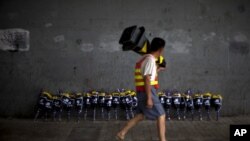
A road worker walks past flowers placed under a bridge where a man drowned July 21 in his flooded car on a main road in Beijing, July 27, 2012.
Chinese authorities in Beijing are coming under continuing criticism for allegedly downplaying the severity of deadly floods that have killed scores of people since last week.
Skepticism
Internet users Friday reacted with skepticism to the official death toll, and called it a man-made disaster that has highlighted the government’s poor emergency response.
Pan Anjun, deputy head of the municipal flood control and drought relief headquarters appeared at a news conference on Thursday evening saying that 77 dead bodies had been counted so far. “Of them 66 have been identified, 11 remain unnamed,” he said offering condolences to the victims’ families on behalf of the city administration. Pan also stressed that authorities would "conscientiously sum up and reflect and learn lessons from the disaster.”
Beijing Hit by Heavy Rains and Floods
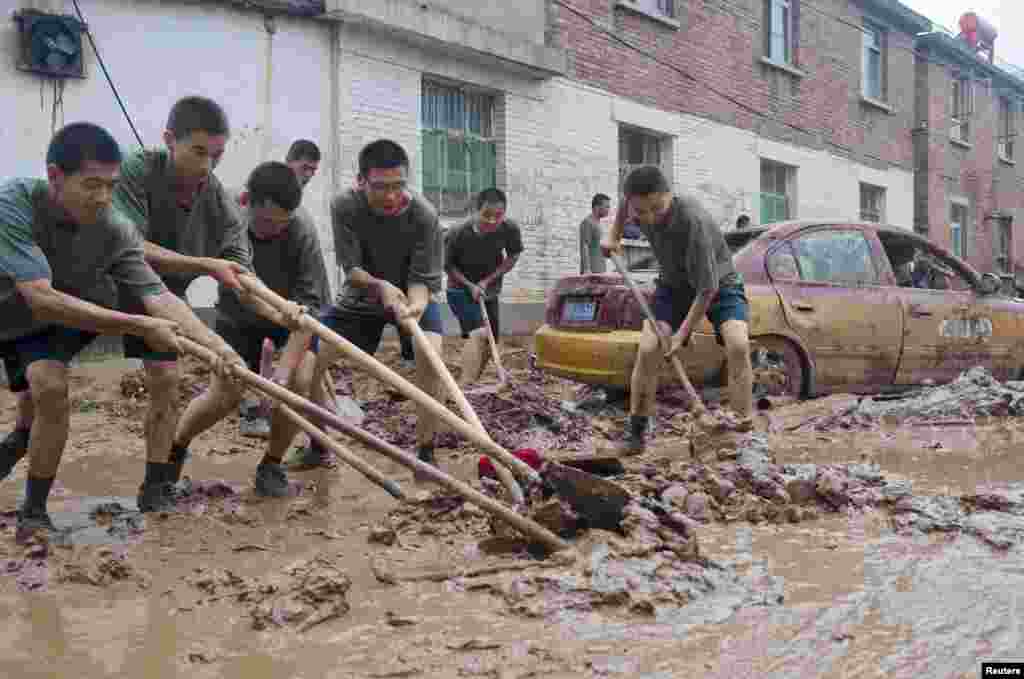
1/8Chinese People's Liberation Army soldiers clear mud from a street in a flood-hit area in Hougoumen village of Fangshan district in Beijing, July 25, 2012.
Heavy rainfall triggers floods in and around Beijing, killing dozens.
Show moreShow less
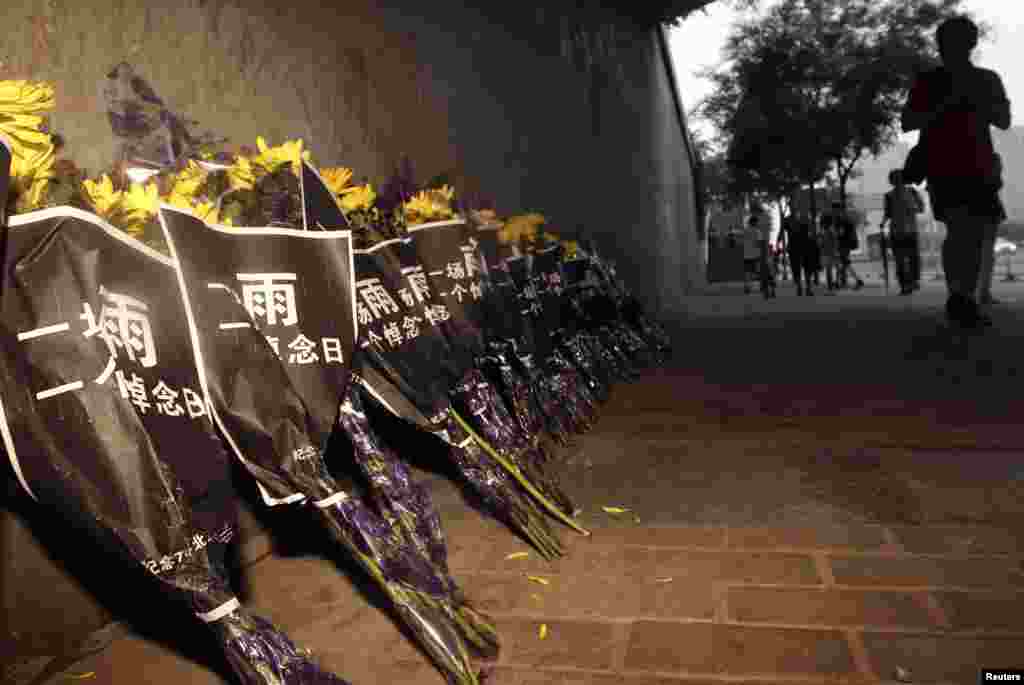
2/8Pedestrians walk past chrysanthemums placed under the Guangqumen overpass to mourn victims who were killed during a rainstorm, in Beijing, China, July 27 2012.
Heavy rainfall triggers floods in and around Beijing, killing dozens.
Show moreShow less
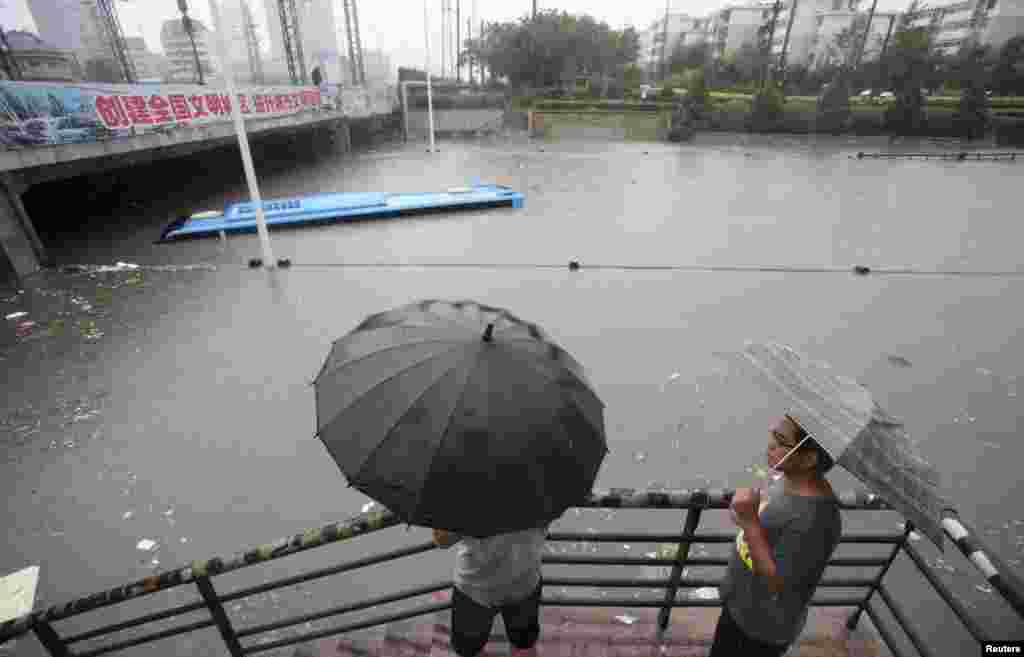
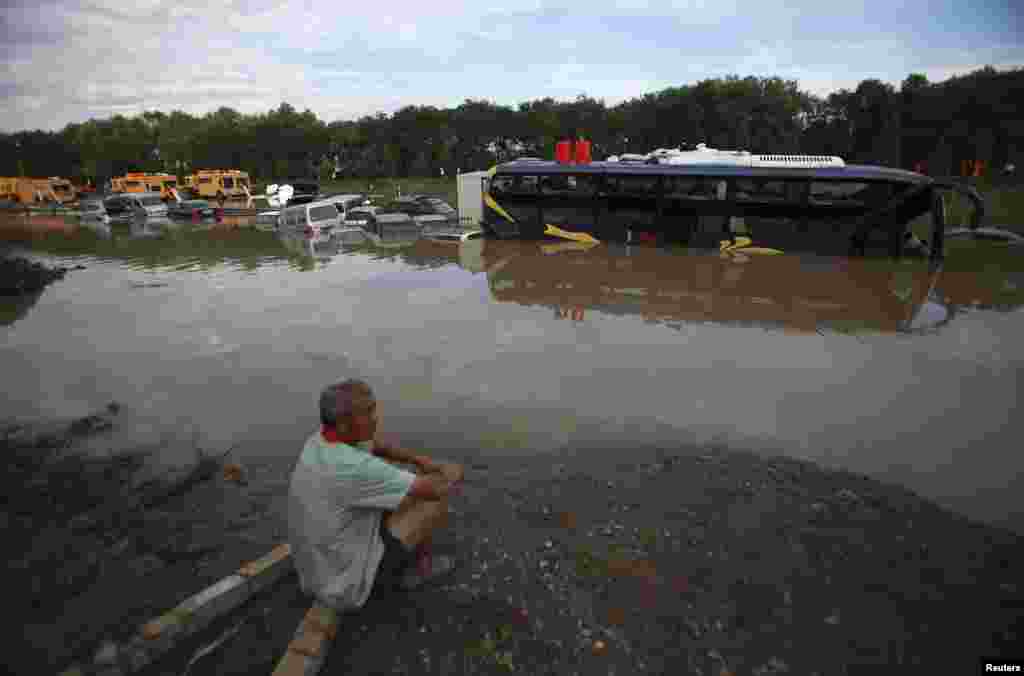
3/8Residents look at a submerged bus on a flooded street in the Tianjin municipality, China, July 26, 2012.
Heavy rainfall triggers floods in and around Beijing, killing dozens.
Show moreShow less
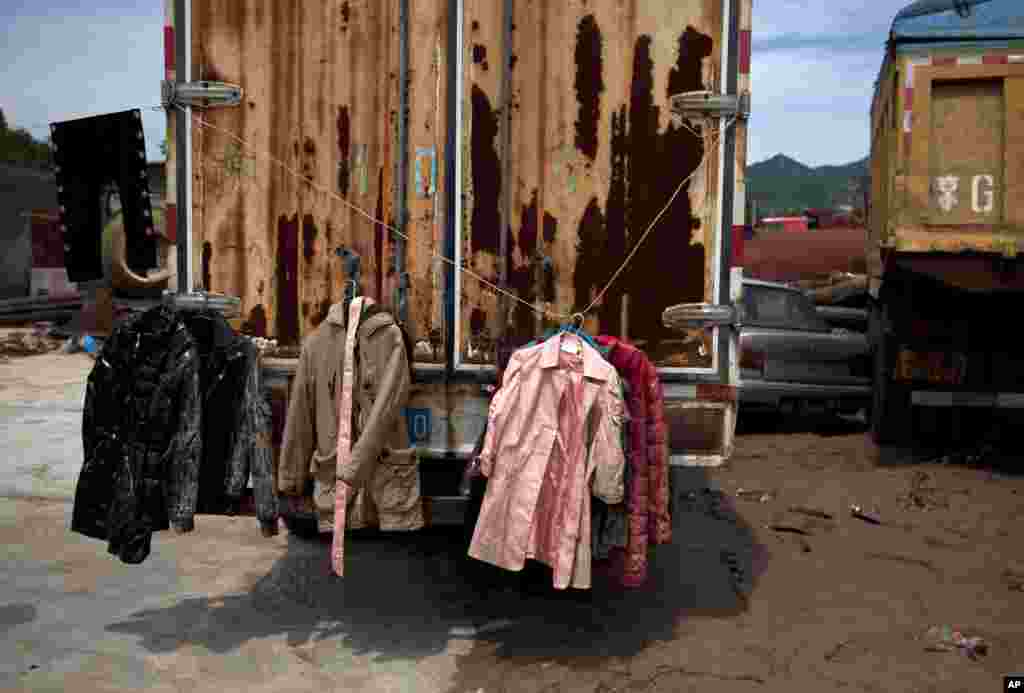
4/8Muddy clothes hang on a truck damaged by flood in a village in Fangshan district, Beijing, China, July 23, 2012.
Heavy rainfall triggers floods in and around Beijing, killing dozens.
Show moreShow less
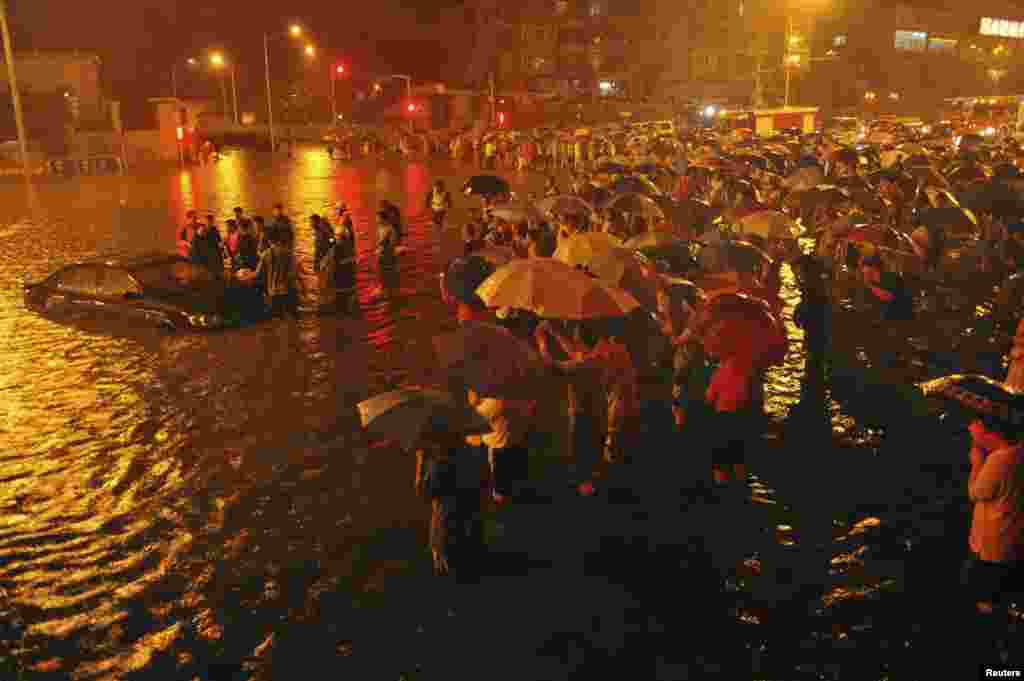
5/8Rescuers and residents stand next to a stranded car being pulled from a flooded street under the Guangqumen overpass, Beijing, China, July 21, 2012.
Heavy rainfall triggers floods in and around Beijing, killing dozens.
Show moreShow less
6/8A man waits next to a flooded highway after his car was trapped following heavy rainfalls in Fangshan District, Beijing, China, July 22, 2012.
Heavy rainfall triggers floods in and around Beijing, killing dozens.
Show moreShow less
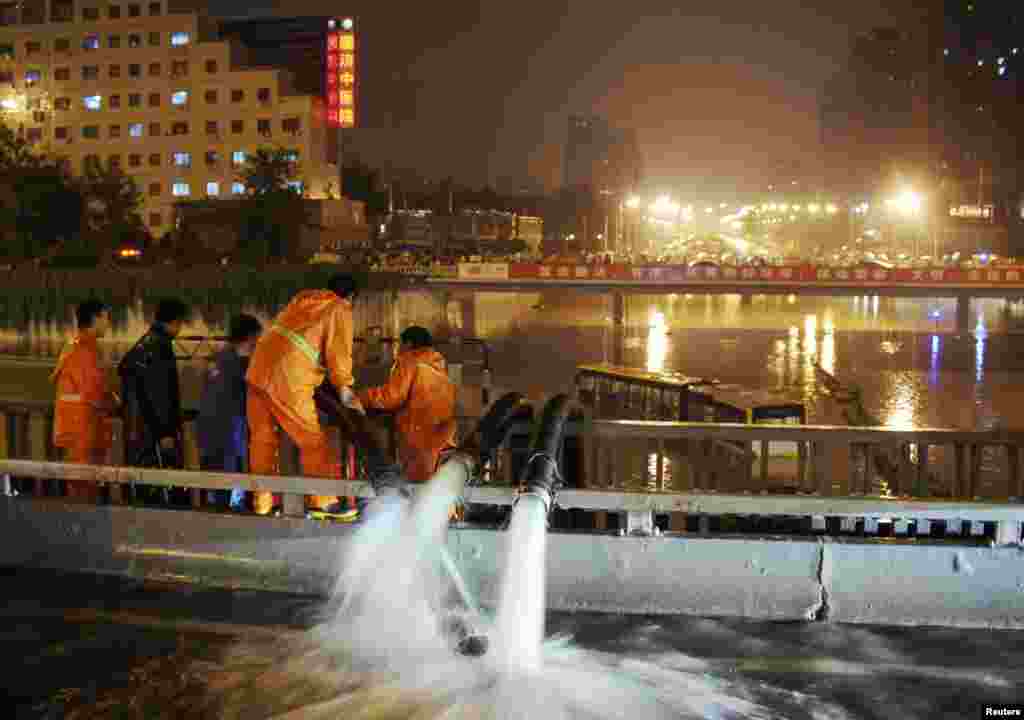
7/8Workers pump flood water near a stranded bus in Beijing, China, July 21, 2012.
Heavy rainfall triggers floods in and around Beijing, killing dozens.
Show moreShow less
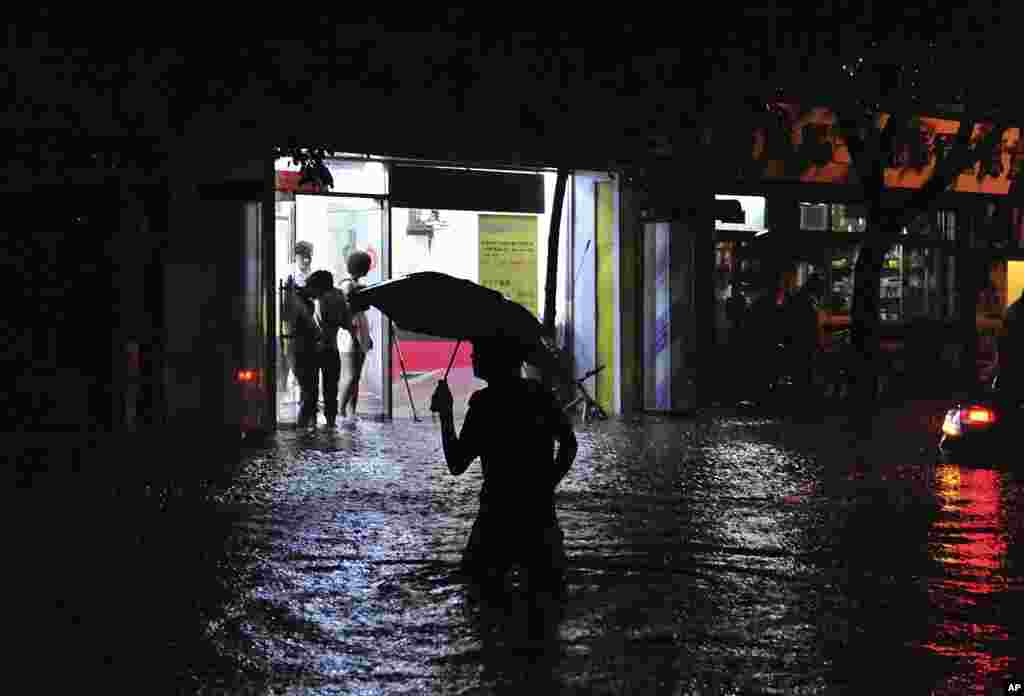
8/8A man wades through a flooded street following a heavy rain in Beijing, China, July 21, 2012.
Heavy rainfall triggers floods in and around Beijing, killing dozens.
Show moreShow less
Previous slide
Next slide
Photos, videos posted
Online, where news of last week’s floods trended high on microblog searches since Saturday and witnesses posted pictures and videos to detail the damages, the government’s management of the rains was the subject of much criticism.
“The death toll should have been zero,” one user says noting that though the government cannot control nature, it is still possible to warn people in advance, use some precautions, provide emergency relief and deal with the aftermath properly. “We must not again use people’s blood to mend the system,” he added.
The biggest rainstorm in 61 years hit China’s capital last Saturday, overwhelming the city’s drainage system, flooding highways and, in rural areas around the capital, triggering mudslides and river overflows. Beijing authorities quickly categorized the flooding as a “natural disaster,” a definition that is challenged by many users of China’s twitter-like service Weibo.
Responsibility
“77 people died, this is a huge man made disaster,” one user said. “To call it a natural disaster is to avoid taking responsibility.”
“Why is it that it takes people’s loss of life for everybody to start caring?” another microblog user wrote on his account, “our city managers need to take a hard look at their track record,” he added.
The district chief of Fangshan, one of the worst ravaged by the floods, apologized on Wednesday to the 800,000 people affected by the weather crisis. “We learned from this rainstorm that the city infrastructure, especially the drainage system needs to be improved,” he said on national TV.
Damage
The floods’ damage, estimated at nearly $2 billion, is a huge embarrassment for China’s leaders, whose effort to upgrade the country’s image culminated in the 2008 Beijing Olympics.
Many commentators pointed at the discrepancy between what city officials wanted to show the world then, and the reality made clear by the downpour.
“Four years ago, the Olympic capital was shining,” one user said on Weibo, “Four years later, it took just one big storm…” he added.
Zhang Yuanjie, a famous children’s literature writer, denounced the sub-standard quality of Beijing’s highways, where cars were submerged during the downpour.
“The lack of an efficient drainage system on the Beijing-Hong Kong expressway caused cars and people to be engulfed in water,” he wrote on his Weibo account. “I propose that from tomorrow on the Beijing municipality offers its apology by not accepting toll fees on its highways for 77 days,” he added.
“They should do it for 77 years,” another Weibo user responded.