Syria's President Bashar al-Assad in seen in February 12, 2013, file photo
Syrian President Bashar al-Assad is blasting the West for aiding forces attempting to oust him -- while a Britain-based monitoring group says more than 200 Syrian soldiers and opposition fighters died in a week-long battle for a police academy near the northern city of Aleppo.
The Syrian Observatory for Human Rights, which has a network of sources inside Syria, says rebels seized control of the police academy in Khan al-Asal, west of Aleppo, after Assad's forces abandoned it early Sunday.
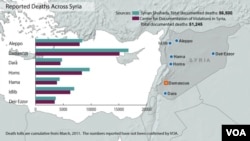
Syria deaths from conflict, updated March 4, 2013
It says at least 120 army troops and 80 rebels were killed in the fighting outside Syria's largest city. Opposition fighters had been trying to take the complex for months.
Syrian opposition leader Moaz al-Khatib visited rebel-held areas in northern Syria Sunday, in a trip intended to strengthen ties between the main opposition coalition and rebels inside the country. Al-Khatib, who fled Syria last year, crossed the border from Turkey and toured two towns in Aleppo province -- Jarablus and Minbij.
Also Sunday, Iraq shut an eastern border crossing with Syria after rebels captured the frontier post two days earlier.
Meanwhile, in a videotaped interview with Britain's Sunday Times newspaper, Assad lashed out at the U.S. and Britain for sending financial and other aid to the opposition. The Syrian president insisted he will not step down and set tough terms for talking to armed rebels allied against him.
The president said he is ready to negotiate with anyone who surrenders their weapons, making a distinction between "political entities" and "armed terrorists."
The Syrian president accused Britain of seeking to escalate violence in Syria because it wants to supply military equipment to the rebels. He said, how can anyone "expect to ask Britain to play a role while it is determined to militarize the problem?"
Assad said of Britain, "we don't expect an arsonist to be a firefighter."
In London, British Foreign Secretary William Hague dismissed Assad's remarks as "delusional." He said Britain will announce a new aid package this week, continuing to provide the Syrian opposition with medical and non-lethal assistance, but not ruling out future arms deliveries.
U.S. Secretary of State John Kerry met Syrian rebel leaders Thursday in Italy where he announced that Washington will for the first time provide non-lethal aid directly to fighters in addition to $60 million in assistance to Syria's political opposition.
The Voice of America provides news and information in more than 40 languages to an estimated weekly audience of over 326 million people. Stories with the VOA News byline are the work of multiple VOA journalists and may contain information from wire service reports.