Burmese opposition leader Aung San Suu Kyi cheered on athletes at the 2013 Special Winter Olympics in the South Korean ski resort town of Pyeongchang Wednesday.
The democracy icon is attending the Global Development Summit, which is being held on the sidelines of the games. During a news conference, she compared her years of house arrest spent in Burma to the experience of those with disabilities.
"Your spirit will help you to overcome your intellectual, all your physical disabilities. And the spirit is what we've had to rely on in Burma for the last several decades. And I've always said the real revolution is the revolution of the spirit. And that is what you are carrying out," she said.
The Nobel laureate said she was "humbled" by the commitment of the thousands of athletes participating in the games. She said it is important that disabled people be allowed to be active in their communities, and that participation is key to ensuring human rights.
She also addressed sectarian tensions in Burma, stressing that being "different" does not pose a threat to the rest of society.
"Just because [Burma has] a number of different ethnic groups does not mean that our country has special problems. What it means is that we have special opportunities, and I am sure that we will be able to achieve peace and harmony," she said.
Aung San Suu Kyi is in the middle of a five-day trip to South Korea. On Thursday, she will visit the southwestern city of Gwangju to receive a long-delayed human rights award that she was previously unable to accept because she was under house arrest.
She was released in 2010 by Burma's reformist government, and has since become a member of parliament.
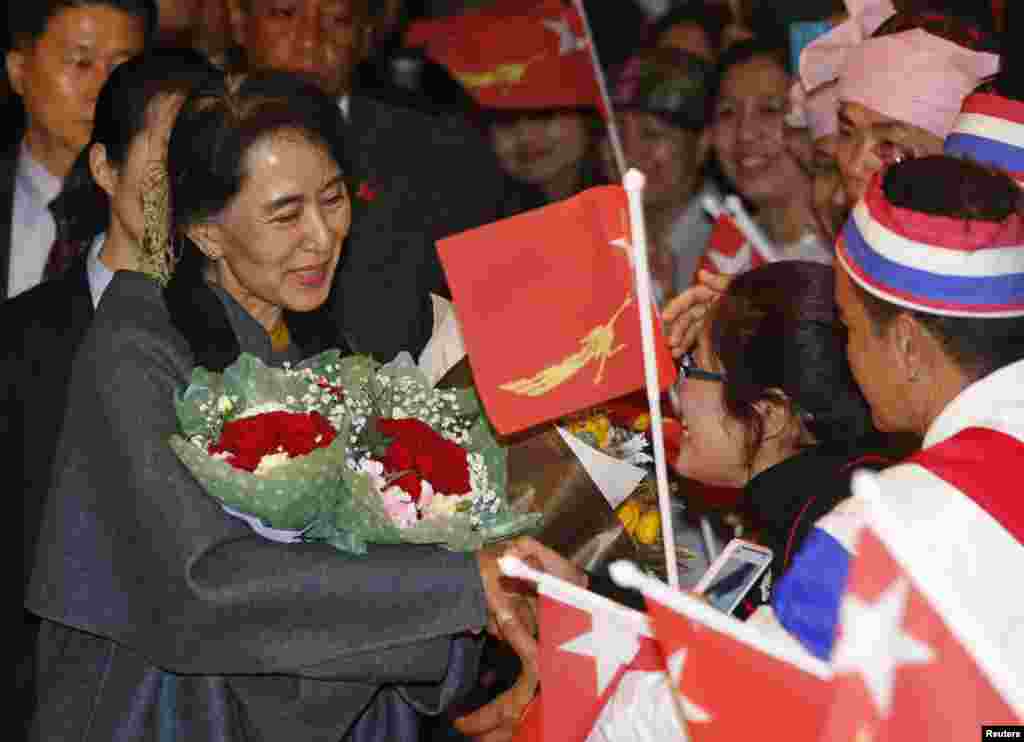
![Burmese citizens residing in South Korea greet Aung San Suu Kyi upon her arrival at a hotel in central Seoul, January 28, 2013.]()
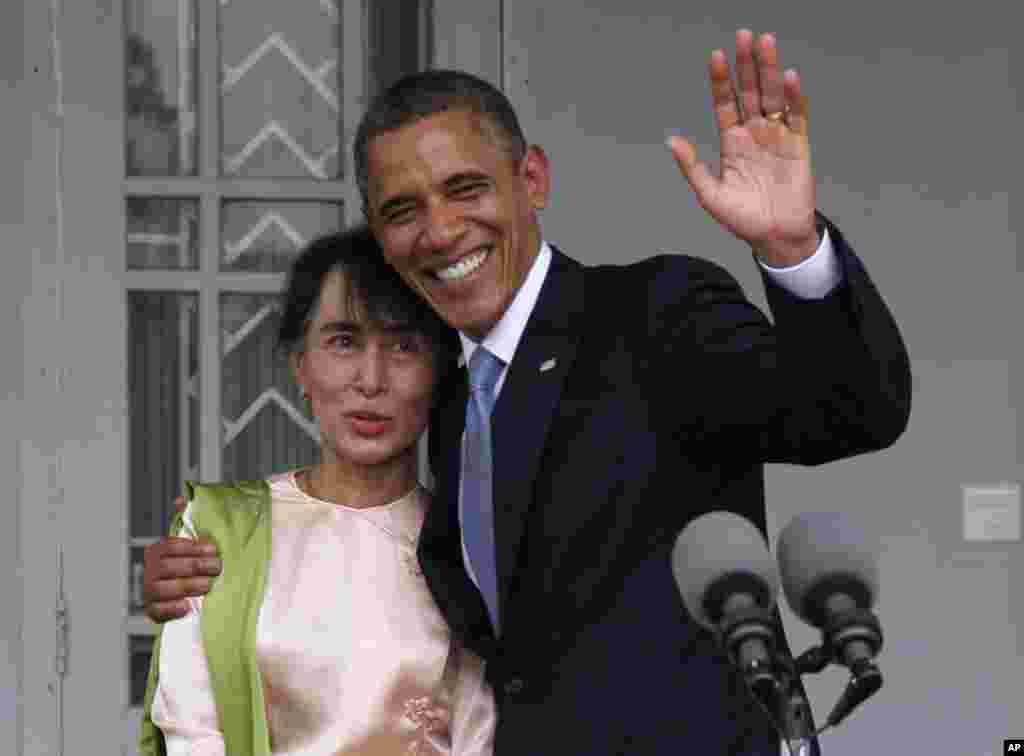
![U.S. President Barack Obama waves to the media as he embraces Burmese opposition leader Aung San Suu Kyi after they spoke to the media at her residence in Rangoon, November 19, 2012.]()
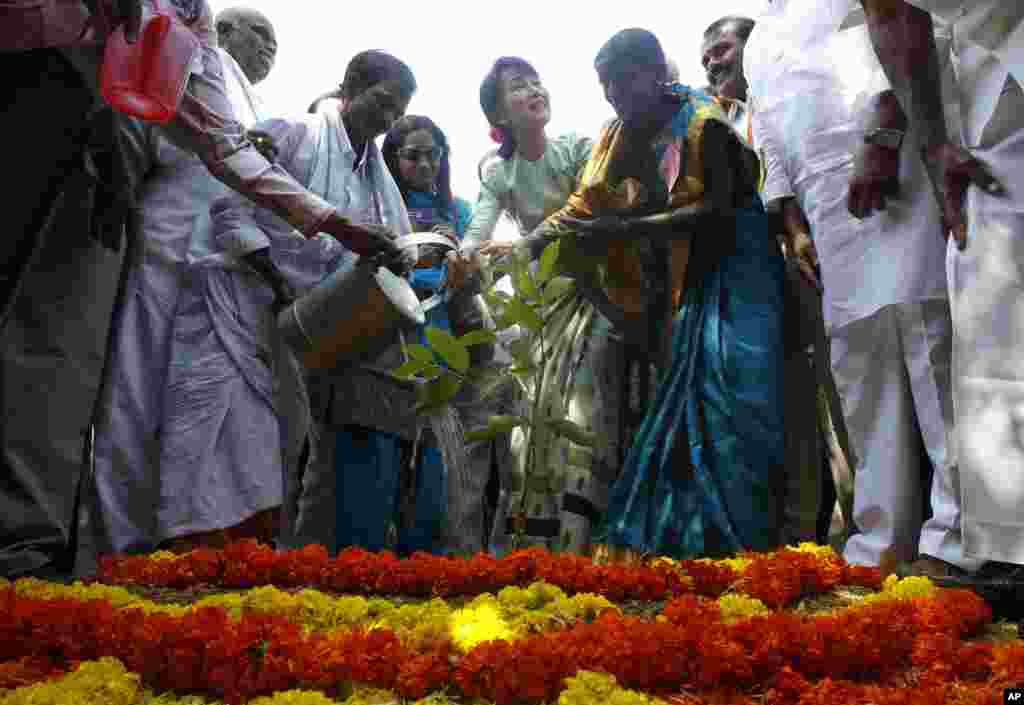
![Burmese opposition leader Aung San Suu Kyi, center, waters a sapling after planting it in Govindapuram village, north of Bangalore, India, November 17, 2012.]()
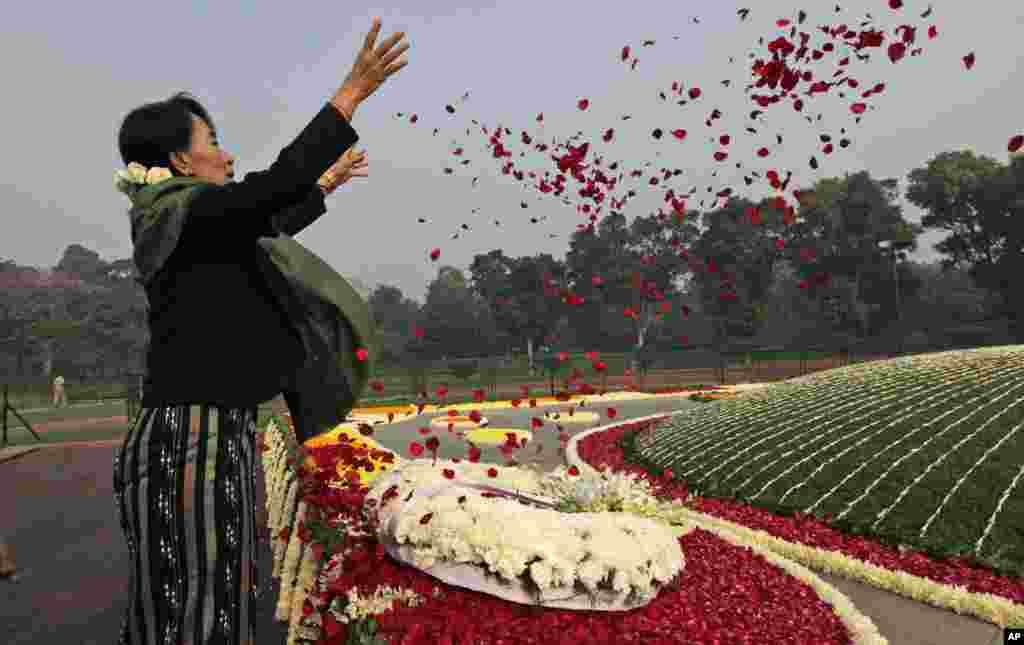
![Burmese opposition leader and Nobel laureate Aung San Suu Kyi pays floral tribute on the birth anniversary of India's first prime minister, Jawaharlal Nehru, at his memorial in New Delhi, India, November 14, 2012.]()
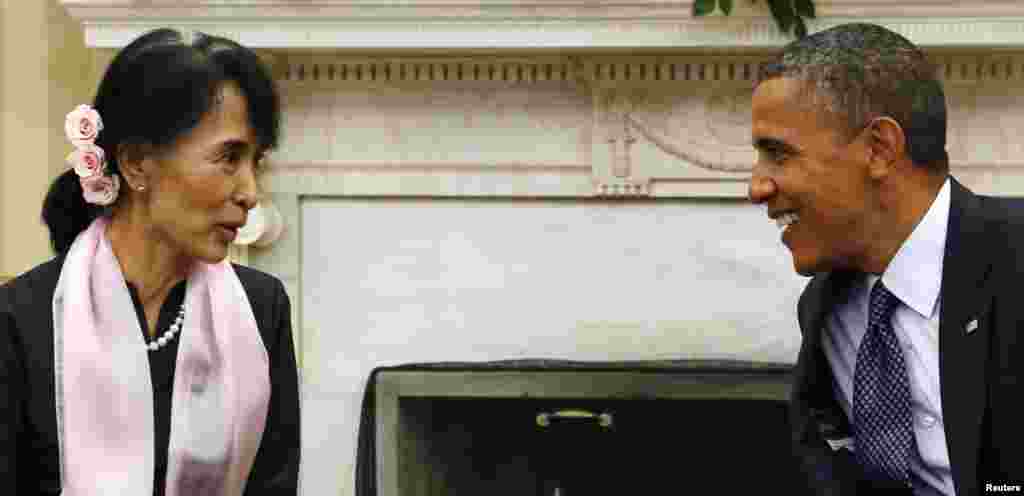
![U.S. President Barack Obama meets with Burma's opposition leader Aung San Suu Kyi in the Oval Office of the White House in Washington, September 19, 2012.]()

![Burma's democracy leader Aung San Suu Kyi holds her Congressional Gold Medal after it was presented to her by House Speaker John Boehner (R-OH) (2nd L), at the U.S. Capitol in Washington, September 19, 2012.]()
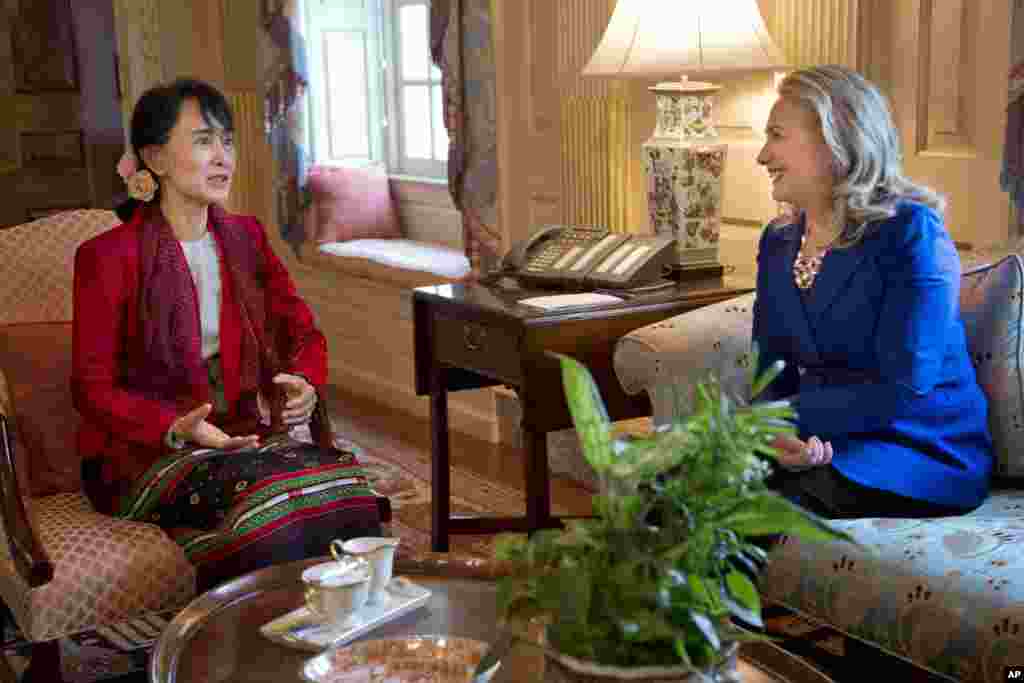
![Secretary of State Hillary Rodham Clinton, right, meets with Burmese democracy leader Aung San Suu Kyi at the State Department, Washington, September 18, 2012.]()
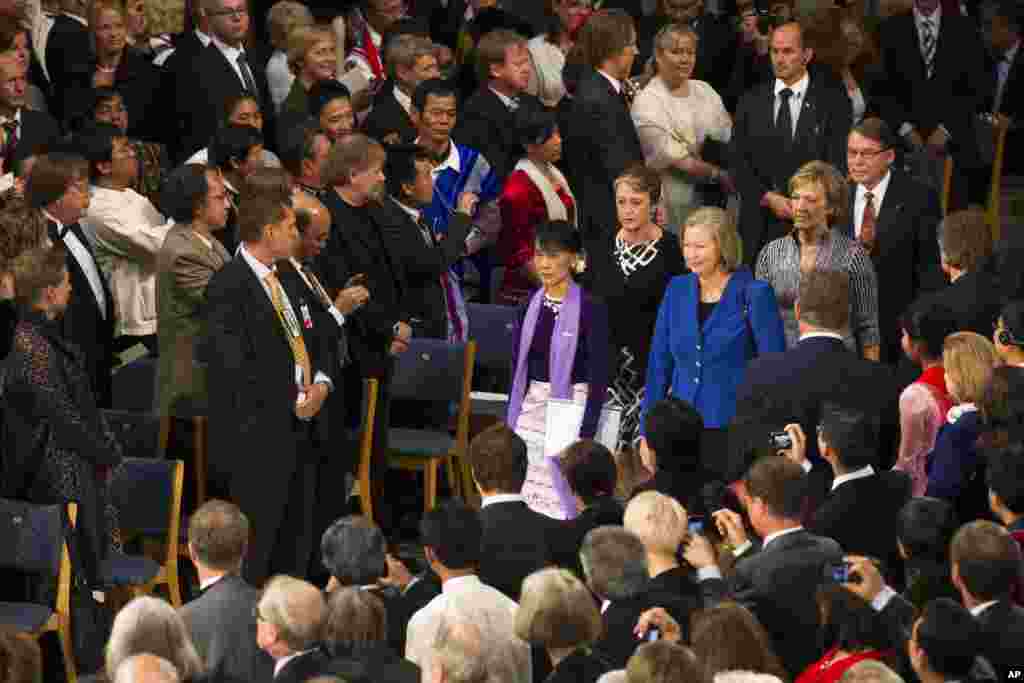
![Aung San Suu Kyi, center, arrives for the Peace Nobel Prize lecture at the city hall in Oslo, June 16, 2012 to thank the Nobel committee for the prize she won in 1991.]()
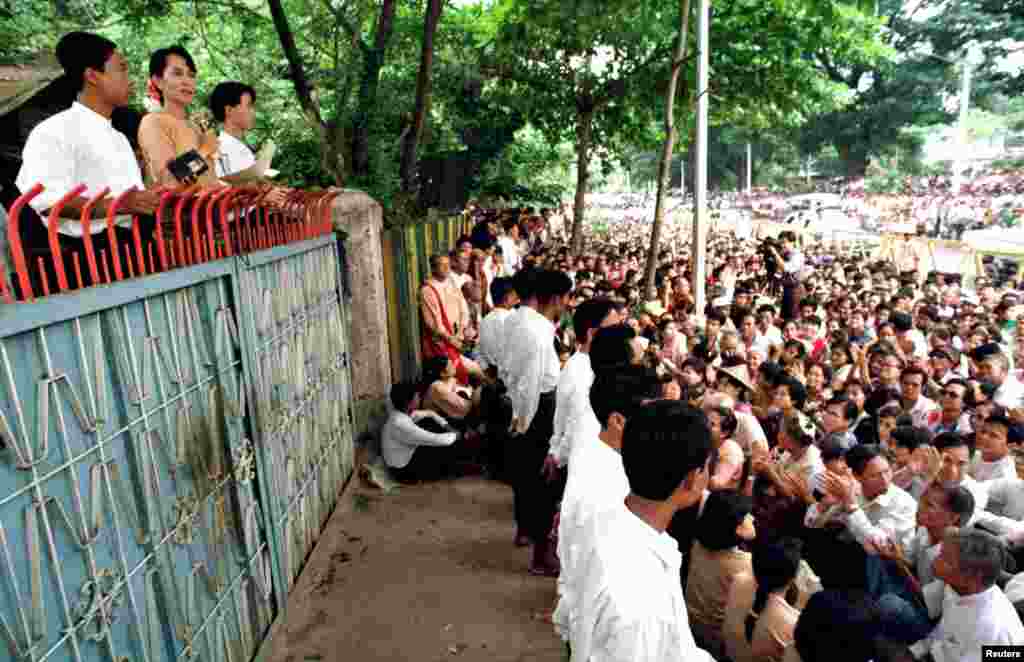
![Aung San Suu Kyi addresses about 4,000 people gathered outside her house in Rangoon, Burma, June 1, 1996.]()
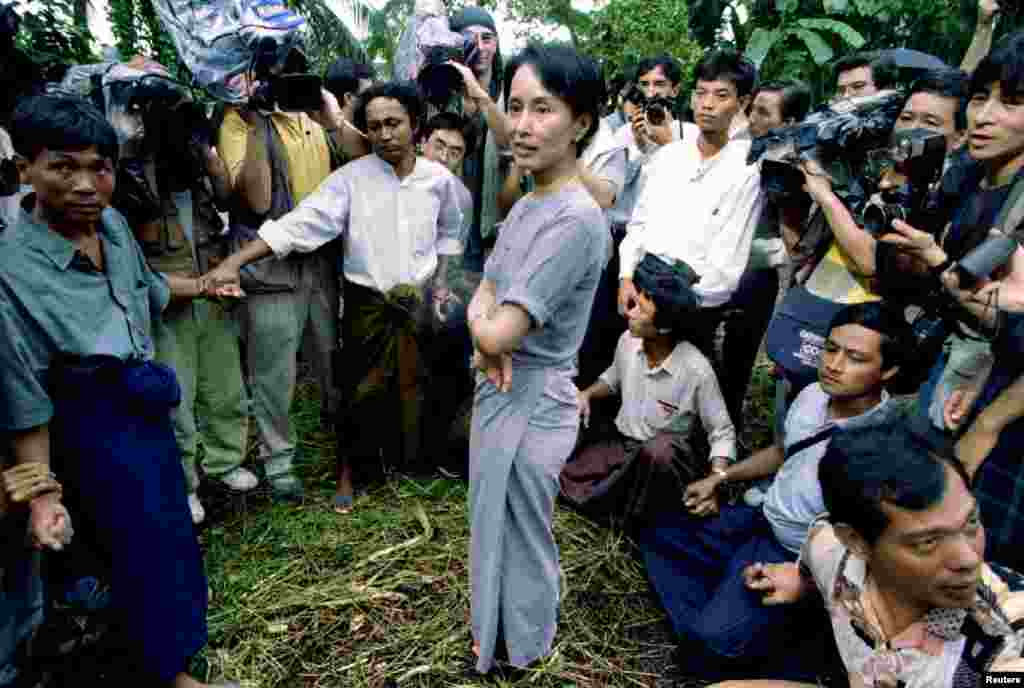
![Aung San Suu Kyi is surrounded by security guards and newsmen as she walks out of her lakeside house in Rangoon, Burma, Juy 14, 1995.]()
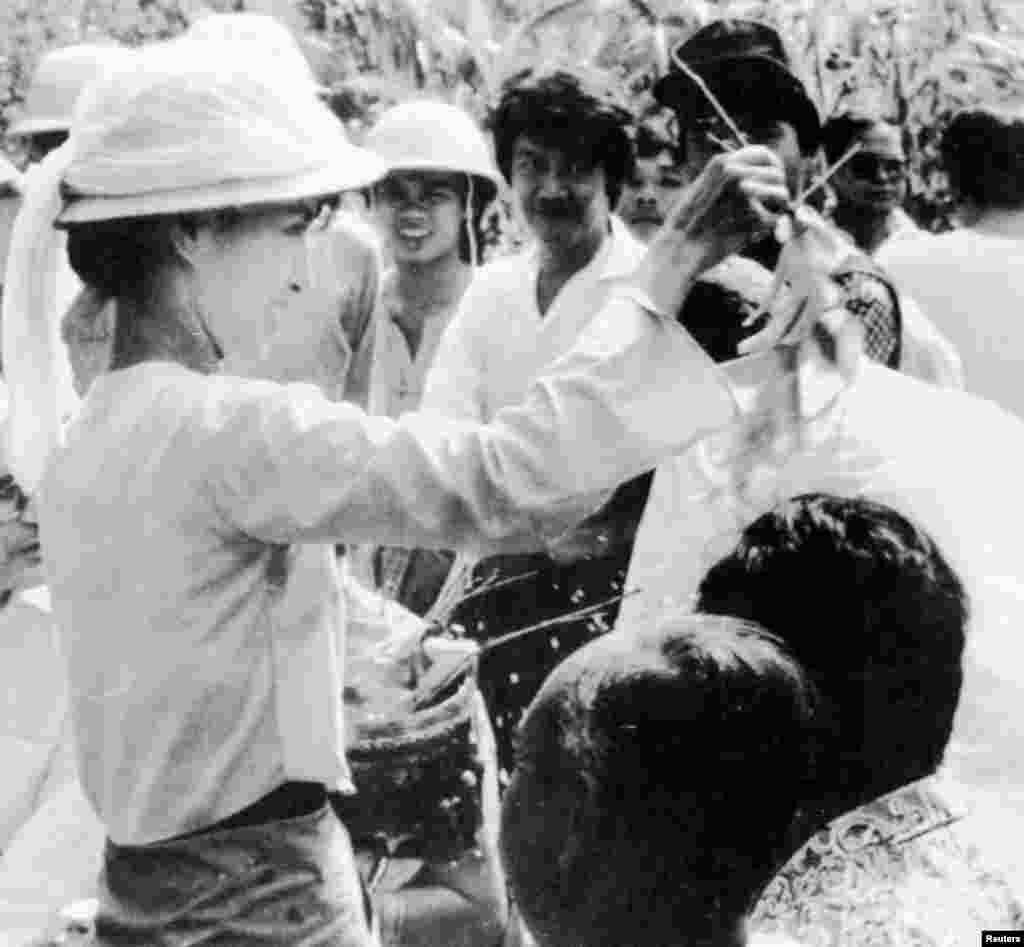
![Aung San Suu Kyi addresses crowd of supporters in Rangoon, Burma, July 7, 1989.]()
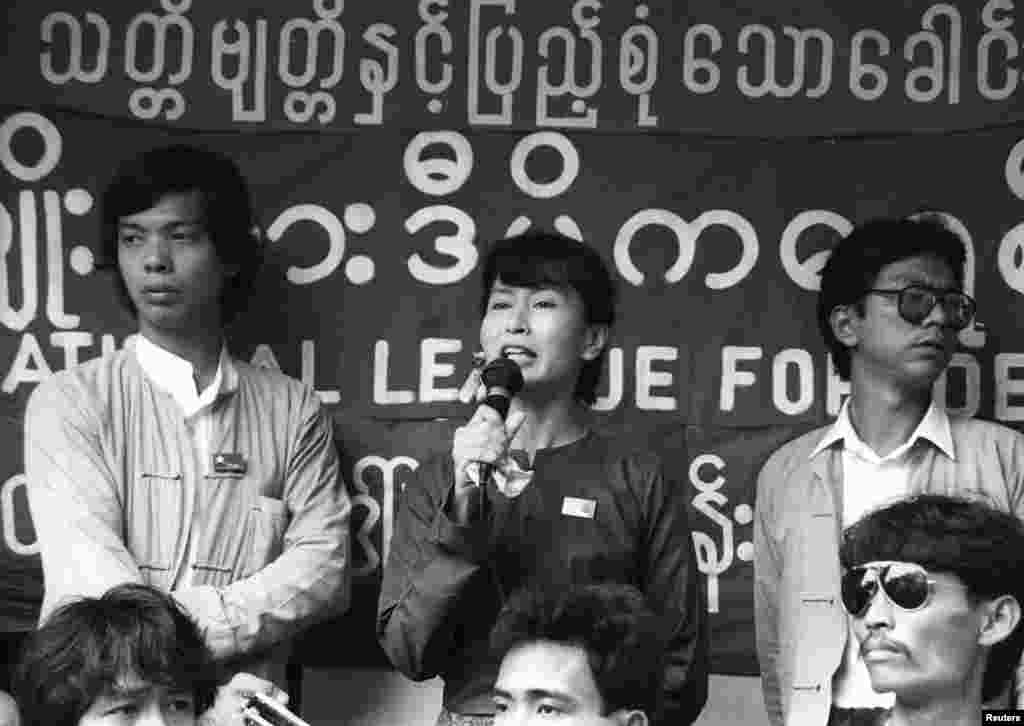
![Aung San Suu Kyi addresses crowd of supporters in Rangoon, Burma, July 7, 1989.]()
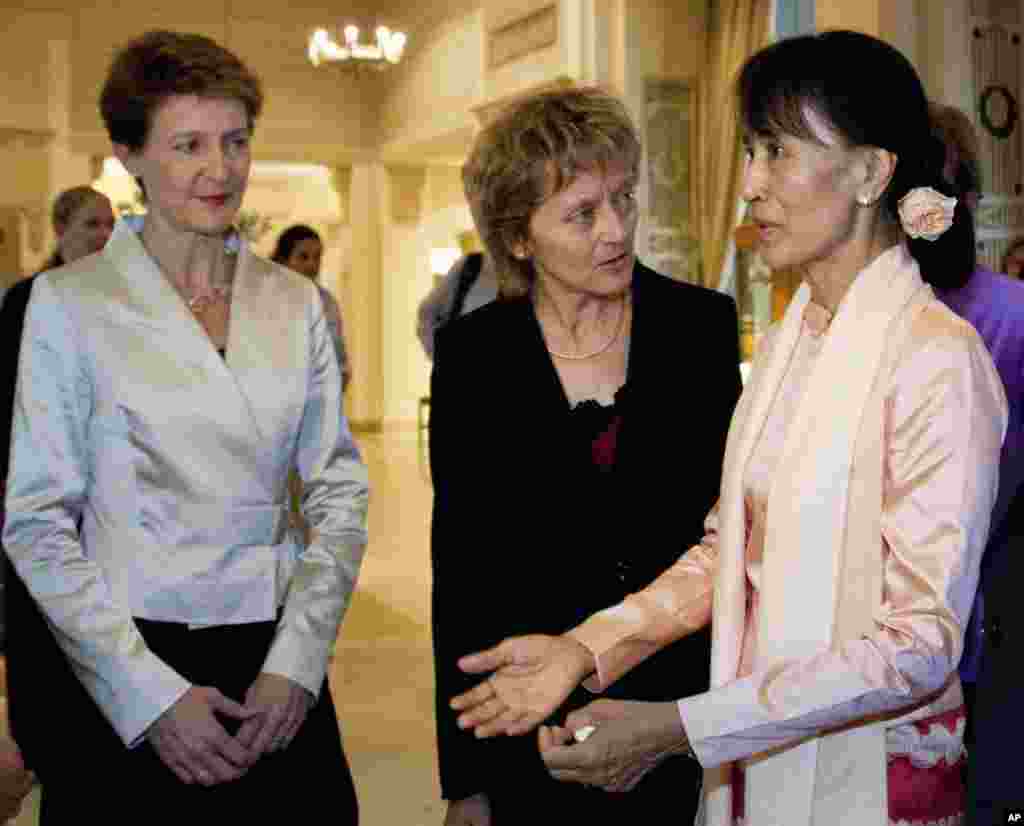
![Swiss Federal Councillor Simonetta Sommaruga, left Swiss President Eveline Widmer-Schlumpf, center, and Burmese opposition leader Aung San Suu Kyi, in Bern, Switzerland, June 14, 2012.]()
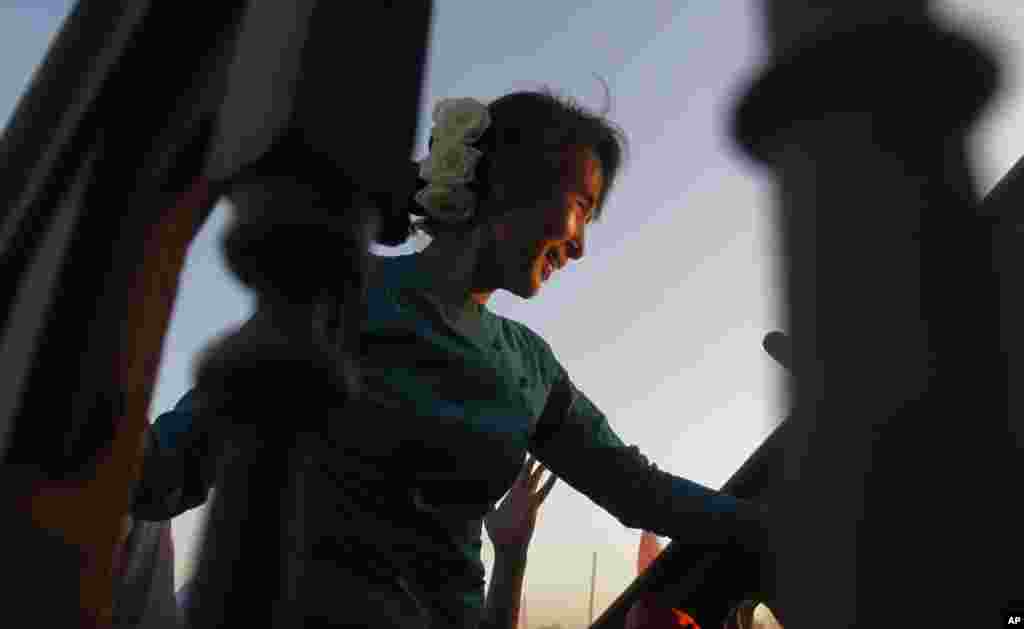
![Aung San Suu Kyi during an election campaign rally in Thongwa village some 50 kms from Rangoon, Burma, February 26, 2012]()
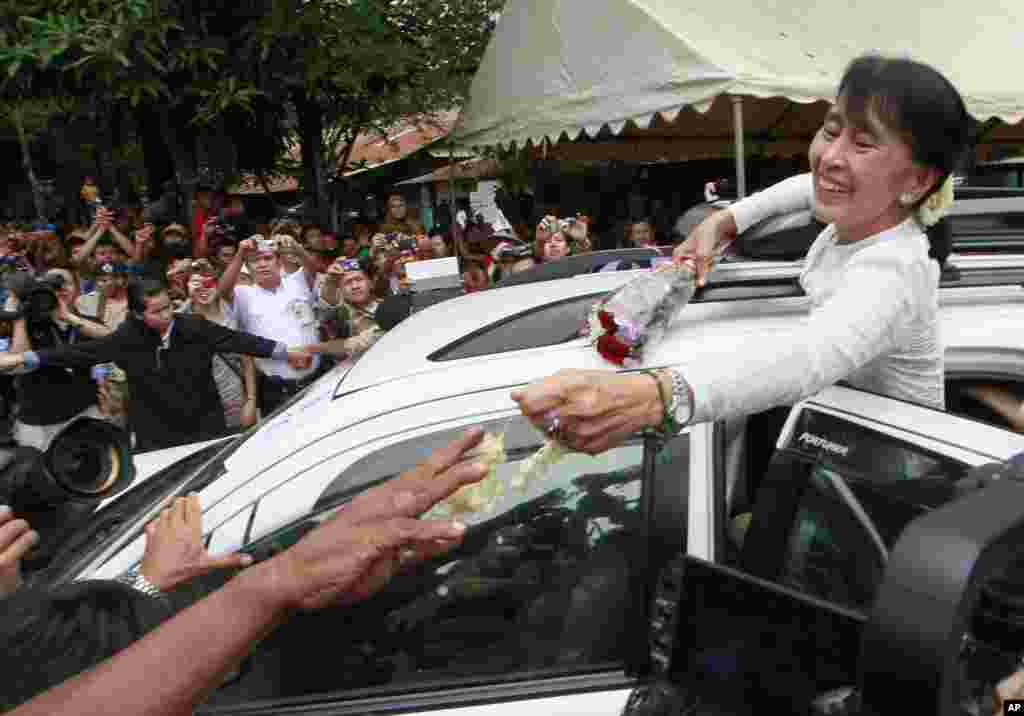
![Aung San Suu Kyi is presented with flowers by cheering Karen refugees at Mae La refugee camp in Tha Song Yang district, Tak province, northern Thailand, June 2, 2012.]()
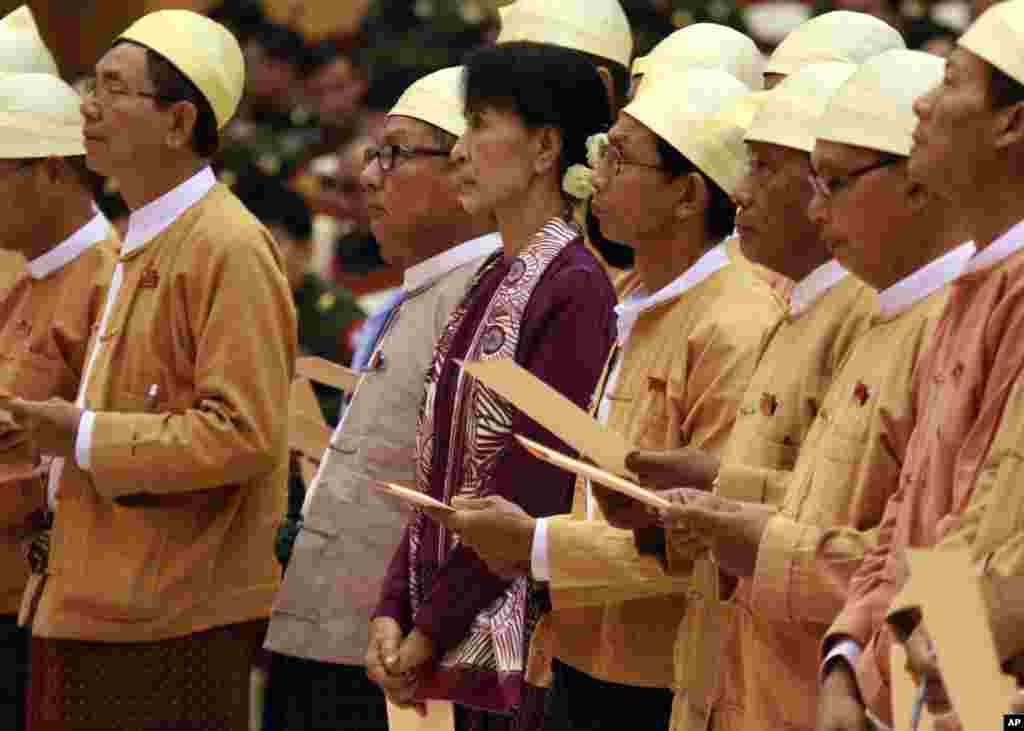
![Aung San Suu Kyi, center, and elected lawmakers of her National League for Democracy party take an oath during a regular session of the Lower House at parliament in Naypyitaw, Burma, May 2, 2012.]()
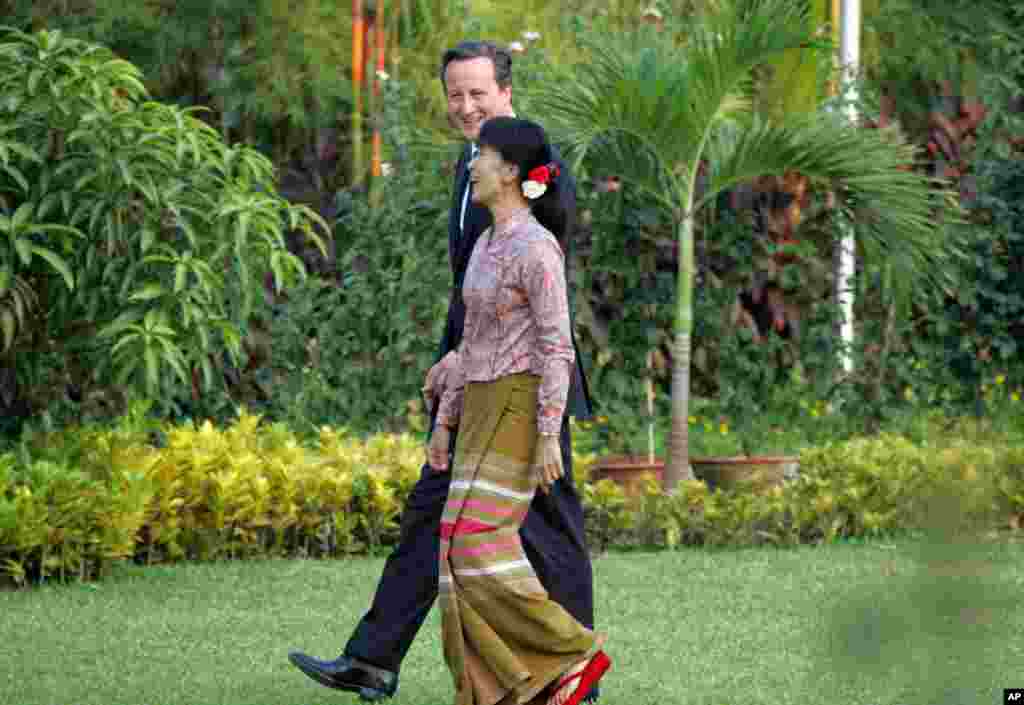
![British Prime Minister David Cameron and Aung San Suu Kyi share a light moment during their meeting in the compound of her lakeside home, April 13, 2012, Rangoon, Burma.]()
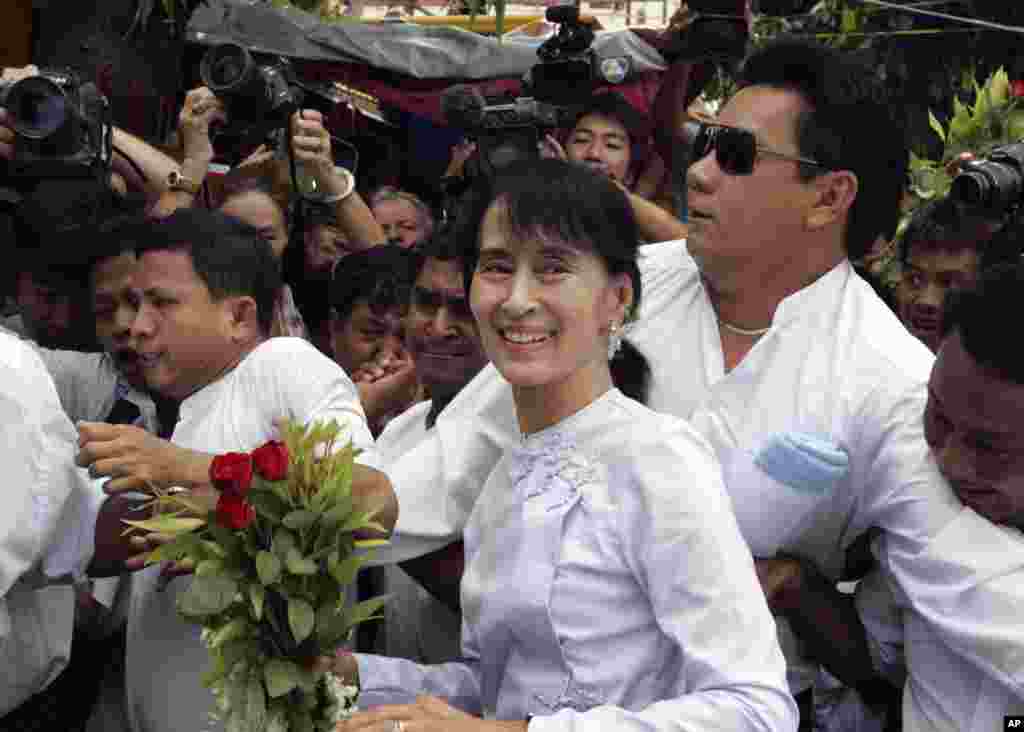
![Aung San Suu Kyi arrives at the headquarters of her National League for Democracy party, April 2, 2012, Rangoon, Burma.]()
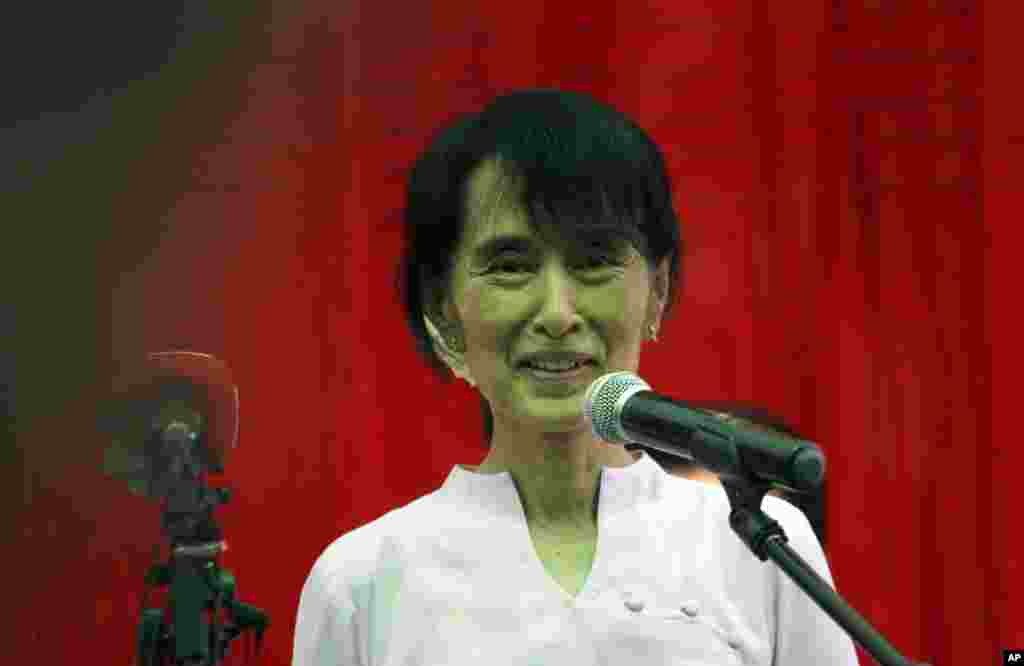
![Aung San Suu Kyi speaks to journalists during the press conference in her residence in Rangoon, Burma, March 30, 2012.]()
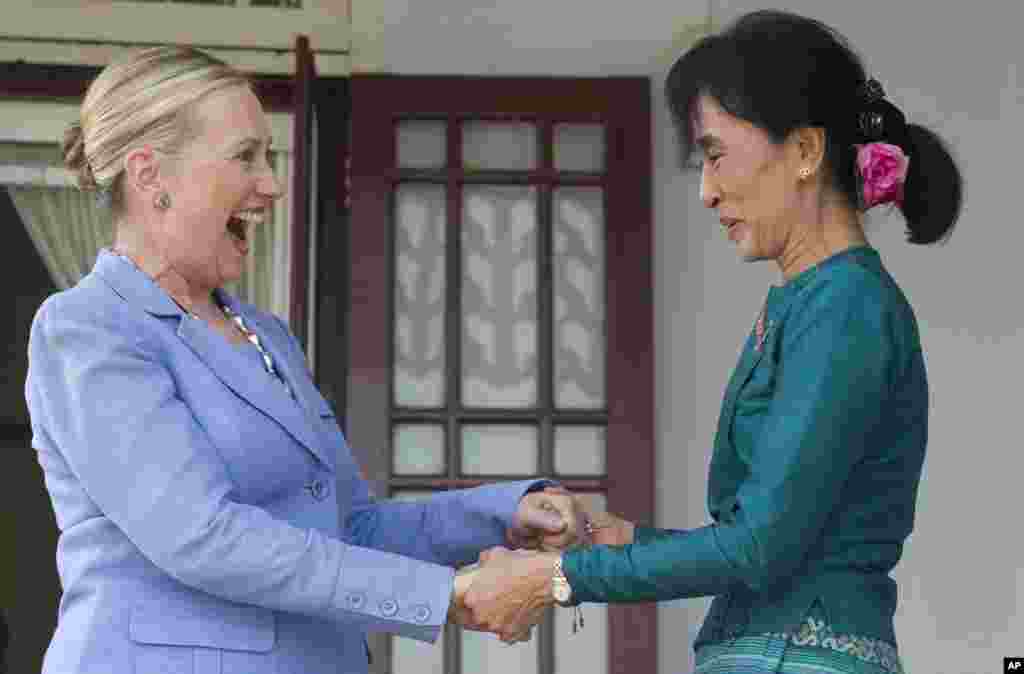
![Aung San Suu Kyi, right, and U.S. Secretary of State Hillary Clinton react after speaking to the press at Suu Kyi's residence in Rangoon, Burma, December 2, 2011.]()
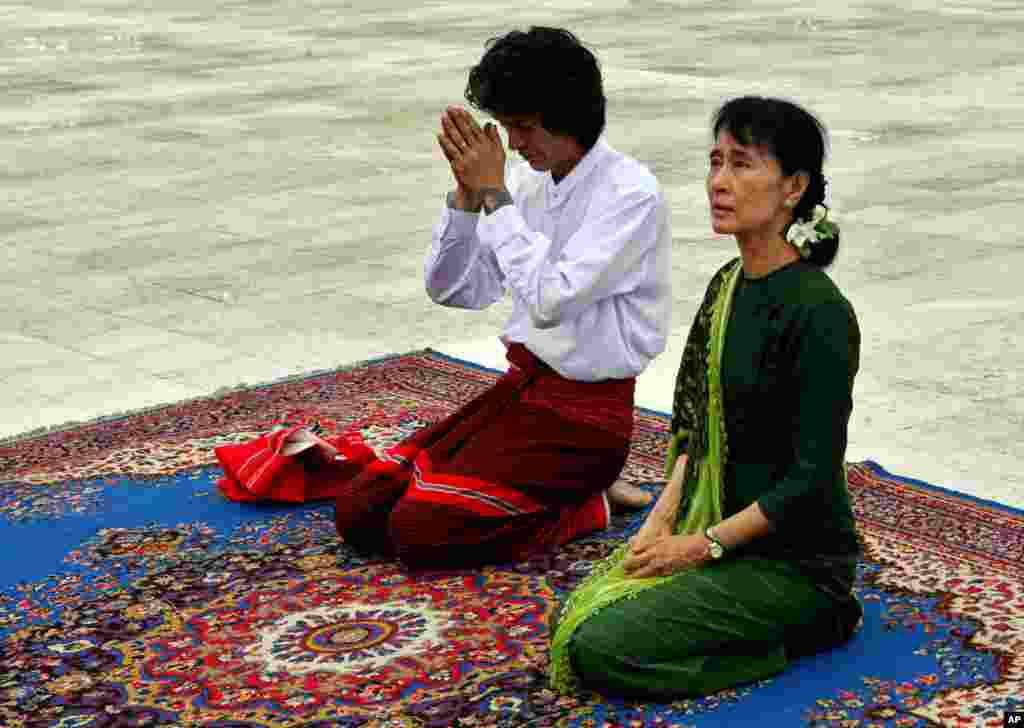
![Aung San Suu Kyi and her youngest son Kim Aris pay respect to her father, the late Geneneral Aung San, at the Martyr's Mausoleum in Rangoon, Burma, July 12, 2011.]()
The democracy icon is attending the Global Development Summit, which is being held on the sidelines of the games. During a news conference, she compared her years of house arrest spent in Burma to the experience of those with disabilities.
"Your spirit will help you to overcome your intellectual, all your physical disabilities. And the spirit is what we've had to rely on in Burma for the last several decades. And I've always said the real revolution is the revolution of the spirit. And that is what you are carrying out," she said.
The Nobel laureate said she was "humbled" by the commitment of the thousands of athletes participating in the games. She said it is important that disabled people be allowed to be active in their communities, and that participation is key to ensuring human rights.
She also addressed sectarian tensions in Burma, stressing that being "different" does not pose a threat to the rest of society.
"Just because [Burma has] a number of different ethnic groups does not mean that our country has special problems. What it means is that we have special opportunities, and I am sure that we will be able to achieve peace and harmony," she said.
Aung San Suu Kyi is in the middle of a five-day trip to South Korea. On Thursday, she will visit the southwestern city of Gwangju to receive a long-delayed human rights award that she was previously unable to accept because she was under house arrest.
She was released in 2010 by Burma's reformist government, and has since become a member of parliament.
Burmese Democracy Leader Aung San Suu Kyi
Show more
Show less
Show more
Show less
Show more
Show less
Show more
Show less
Show more
Show less
Show more
Show less
Show more
Show less
Show more
Show less
Show more
Show less
Show more
Show less
Show more
Show less
Show more
Show less
Show more
Show less
Show more
Show less
Show more
Show less
Show more
Show less
Show more
Show less
Show more
Show less
Show more
Show less
Show more
Show less
Show more
Show less
Some information for this report was provided by AFP and Reuters.