Suu Kyi Requests Burma Mine Crackdown Investigation
Burmese pro-democracy leader Aung San Suu Kyi visits Buddhist monks, wounded in a recent police crackdown on protesters against a copper mine project, November 29, 2012.
Burmese opposition leader Aung San Suu Kyi spent a second day at a Chinese-owned copper mine in Monywa township, Upper Burma. Local residents are angry about the compensation they have been paid for use of their land. They also complain that Chinese migrant workers have taken most of the jobs, and the environmental risks from the project are high.
Aung San Suu Kyi met with villagers as well as security forces a day after protesters were dispersed in a crackdown that left dozens injured. She also met with United Myanmar Economic Holdings Limited officials. The military conglomerate partnered with Chinese-owned Wan Bao on the project.
Her party spokesperson, Ohn Kyaing, says Aung San Suu Kyi plans to act as a negotiator between the two sides, and was saddened by the events of the previous morning.
"She also asked the authorities to release all people that were arrested," the spokesperson said. "Excessive things to crack down the protesters, police said they didn't think it would be so fierce actions and now she's trying to find a peaceful solution about Latpadaung projects. She will propose very soon to the parliament to form an investigation committee about that project."
Police forces said they used only water guns and tear gas. But according Burma analyst Maung Zarni, a fellow at London's School of economics, injuries sustained by dispersed protesters suggest there was some other type of weapon in use. His allegation is based on contacts with both activists and military, who gave him details about what happened.
"They used excessive force primarily they used canisters that contained chemicals that burned skin you know there were about forty monks that were completely injured," Maung Zarni said. "Some of the monks lost their skin it peeled off and you know the public is extremely outraged by the sight of dozens of monks including young novices essentially firebombed by president Thein Sein's troops."
On Thursday, the Burmese information ministry published a statement defending the security forces' actions, and then retracted the statement shortly thereafter. They could not be reached for comment Friday.
The Chinese embassy in Rangoon issued a statement after the crackdown saying the conflicts between villagers and the mine developers will be jointly settled through negotiations, and they hope for a "favorable environment" for the project's smooth operation.
"The interest from the Chinese side is we're going to how to make sure that their legal rights of the Chinese investor are protected in certain circumstances that's why we want to issue the statement in response to some of the concerns," explained embassy spokesperson Gao Mingbo.
Last year, the Burmese government halted construction on the Chinese-backed Myitsone hydropower project after protesters pressured the government.
Photo Gallery: Burma Mine Protest
Burmese Protest Continues in Defiance of Government
1/9Burmese protesters at a camp site outside a Chinese-backed copper mine, Monywa Burma, November 23, 2012. (VOA Burmese Service)
Hundreds of Burmese villagers and monks protest the expansion of a Chinese-backed copper mine in northwestern Burma.
Show moreShow less
2/9Monks and protesters at a Chinese-backed copper mine, Monywa, Burma, November 22, 2012. (VOA Burmese Service)
Hundreds of Burmese villagers and monks protest the expansion of a Chinese-backed copper mine in northwestern Burma.
Show moreShow less
3/9Protesters at a Chinese-backed copper mine, Monywa, Burma, November 22, 2012. (VOA Burmese Service)
Hundreds of Burmese villagers and monks protest the expansion of a Chinese-backed copper mine in northwestern Burma.
Show moreShow less
4/9Protesters at a Chinese-backed copper mine, Monywa, Burma, November 22, 2012. (VOA Burmese Service)
Hundreds of Burmese villagers and monks protest the expansion of a Chinese-backed copper mine in northwestern Burma.
Show moreShow less
5/9Protesters at their camp at a Chinese-backed copper mine, Monywa, Burma, November 22, 2012. (VOA Burmese Service)
Hundreds of Burmese villagers and monks protest the expansion of a Chinese-backed copper mine in northwestern Burma.
Show moreShow less
6/9Monks and protesters at a Chinese-backed copper mine, Monywa, Burma, November 22, 2012. (VOA Burmese Service)
Hundreds of Burmese villagers and monks protest the expansion of a Chinese-backed copper mine in northwestern Burma.
Show moreShow less
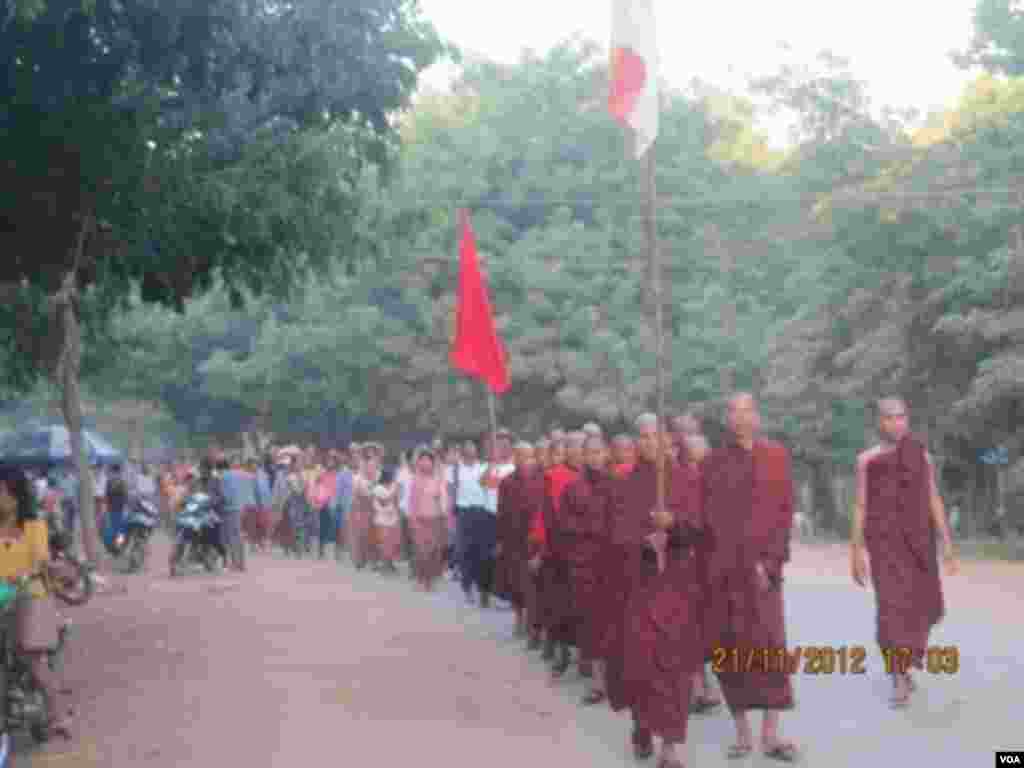
7/9Monks lead a protest march against a Chinese-backed copper mine, Monywa, Burma, November 21, 2012. (VOA Burmese Service)
Hundreds of Burmese villagers and monks protest the expansion of a Chinese-backed copper mine in northwestern Burma.
Show moreShow less
8/9Monks take part in a protest march against a Chinese-backed copper mine, Monywa, Burma, November 21, 2012. (VOA Burmese Service)
Hundreds of Burmese villagers and monks protest the expansion of a Chinese-backed copper mine in northwestern Burma.
Show moreShow less
9/9Monks and protesters march in a demonstration against a Chinese-backed copper mine, Monywa, Burma, November 21, 2012. (VOA Burmese Service)
Hundreds of Burmese villagers and monks protest the expansion of a Chinese-backed copper mine in northwestern Burma.
The Voice of America provides news and information in more than 40 languages to an estimated weekly audience of over 326 million people. Stories with the VOA News byline are the work of multiple VOA journalists and may contain information from wire service reports.