Bahrain's Top Court Upholds Prison Terms for 13 Dissidents
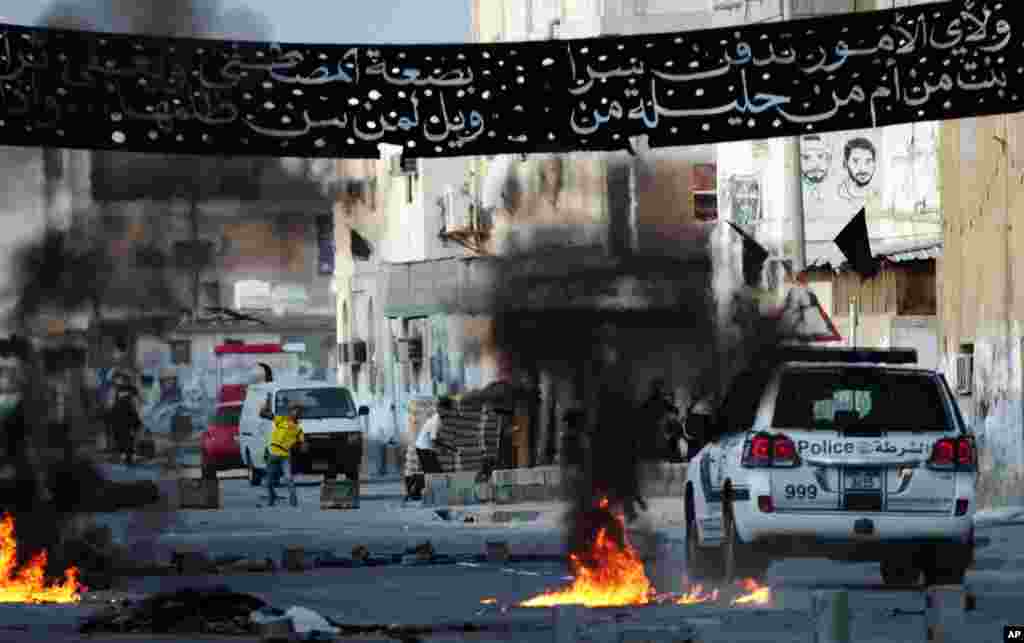
Masked Bahraini anti-government protesters run through smoke after setting tires alight on a road in the village of Dumistan, January 7, 2013.
Bahrain's top court has upheld prison sentences against 13 opposition figures charged with plotting to overthrow the Gulf state's minority Sunni rulers in a 2011 uprising.
In a ruling Monday, the Bahraini court rejected appeals from all 13 dissidents, most of whom are majority Shi'ites. Eight of the defendants had been sentenced to life is prison by lower courts, while the other five had received terms of five to 15 years.
Bahrain's Top Court Upholds Dissidents' Sentences
1/5Anti-government protesters clash with riot police in Malkiya village, Bahrain, January 7, 2013.
Bahrain's top court has upheld prison sentences against 13 opposition figures charged with plotting to overthrow the Gulf state's minority Sunni rulers in a 2011 uprising. The ruling sparked new protests.
Show moreShow less
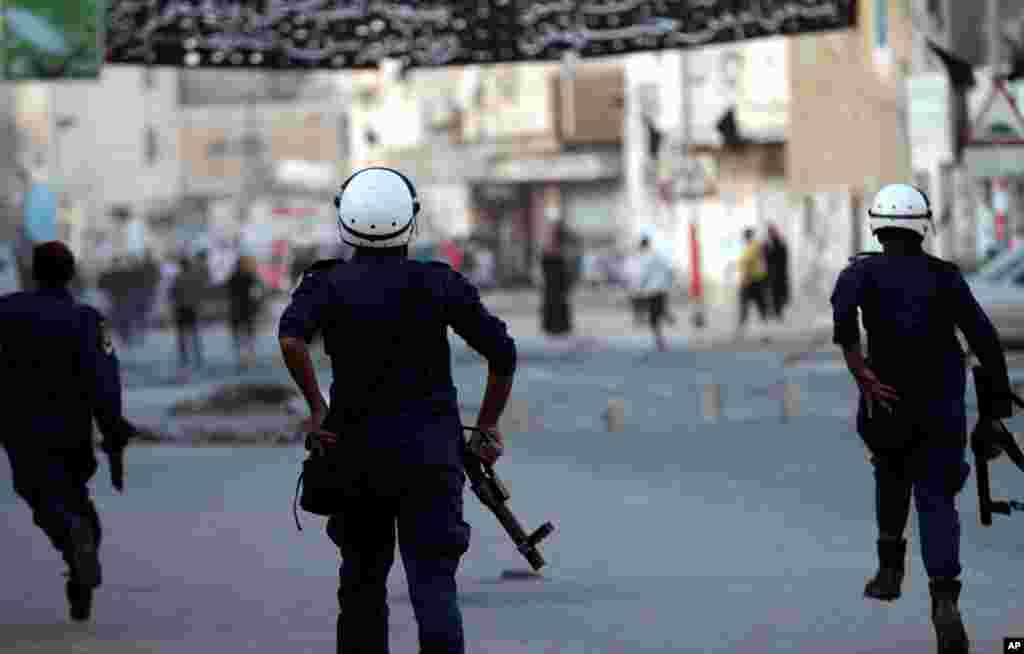
2/5Riot police chase anti-government protesters during clashes in Malkiya village, Bahrain, January 7, 2013.
Bahrain's top court has upheld prison sentences against 13 opposition figures charged with plotting to overthrow the Gulf state's minority Sunni rulers in a 2011 uprising. The ruling sparked new protests.
Show moreShow less
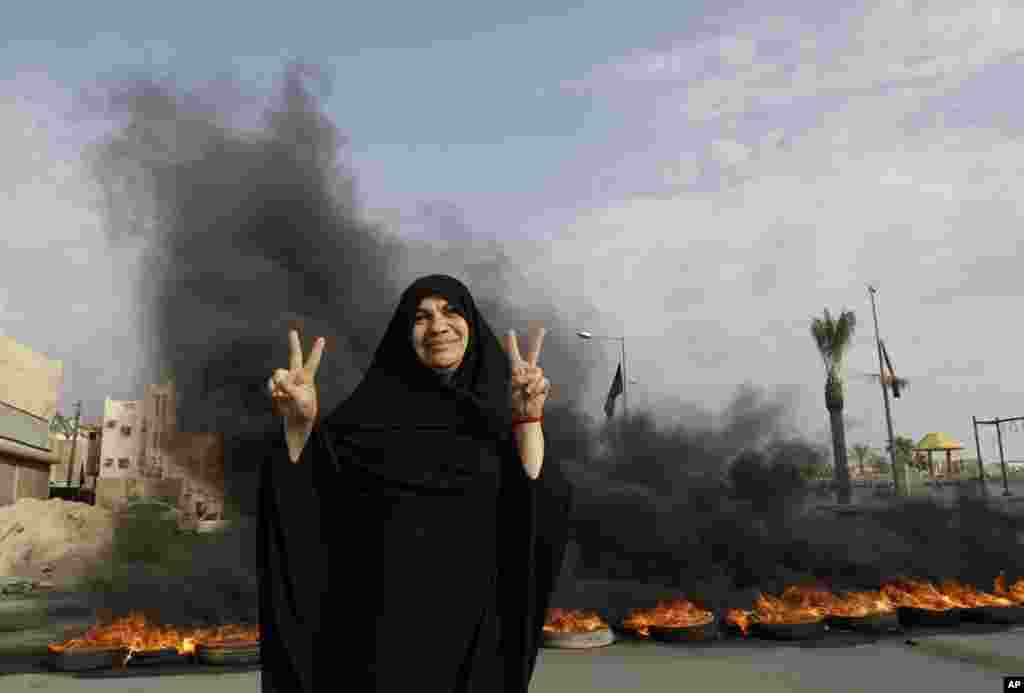
3/5An anti-government protester poses for a photograph flashing the victory sign in front of burning tires on a road in the village of Dumistan, Bahrain, January 7, 2013.
Bahrain's top court has upheld prison sentences against 13 opposition figures charged with plotting to overthrow the Gulf state's minority Sunni rulers in a 2011 uprising. The ruling sparked new protests.
Show moreShow less
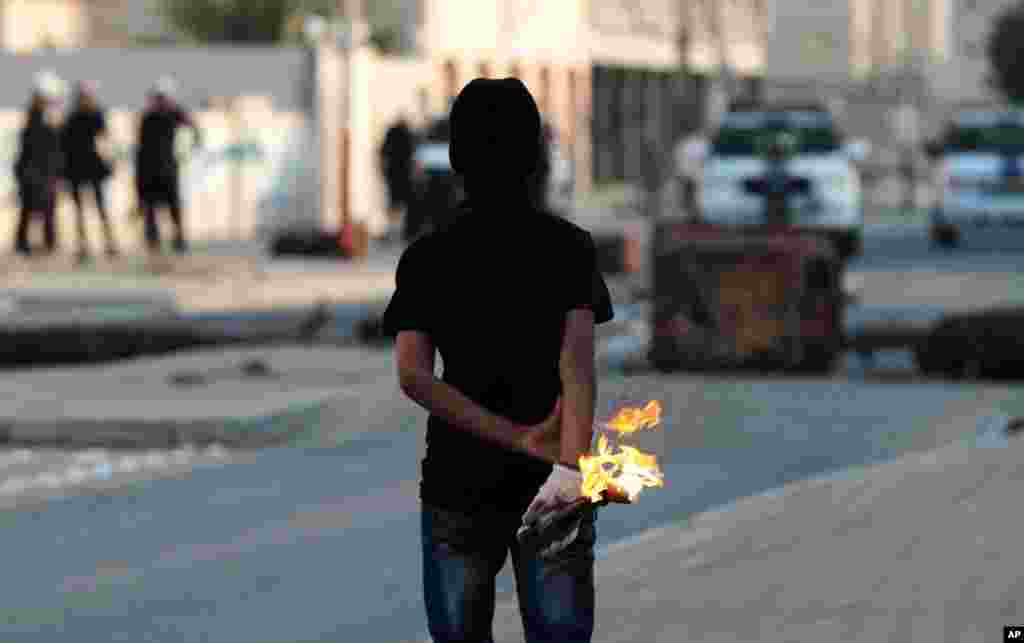
4/5An anti-government protester prepares to throw a gasoline bomb at riot police during clashes in Malkiya village, Bahrain, January 7, 2013.
Bahrain's top court has upheld prison sentences against 13 opposition figures charged with plotting to overthrow the Gulf state's minority Sunni rulers in a 2011 uprising. The ruling sparked new protests.
Show moreShow less
5/5Anti-government protesters chant slogans as they hold banner and images of jailed opposition leaders in Malkiya village, Bahrain, January 7, 2013.
Bahrain's top court has upheld prison sentences against 13 opposition figures charged with plotting to overthrow the Gulf state's minority Sunni rulers in a 2011 uprising. The ruling sparked new protests.
Show moreShow less
Previous slide
Next slide
The opposition activists were convicted of forming "terrorist" groups to overthrow Bahrain's ruling Al Khalifa family and engaging in "intelligence contacts" with foreign powers - a reference to Shi'ite-majority Iran and Lebanese Shi'ite militant group Hezbollah. Iran denies providing anything more than moral support to Bahraini Shi'ites.
The Bahraini dissidents helped to launch mass anti-government protests in February 2011, demanding democratic reforms and an end to the Sunni monarchy's perceived discrimination against the Shi'ite majority.
Bahrain's main Shi'ite opposition group, Wefaq, responded to the upholding of the dissidents' prison terms by accusing the government of "political persecution." In messages posted on its Twitter feed, Wefaq said the "revolution continues and the sentences ... will energize it."
The U.S. State Department spokeswoman said it regretted Monday's court ruling. Spokeswoman Victoria Nuland said Washington is concerned the decision "further restricts freedom of expression and compromises the atmosphere within Bahrain for reconciliation."
“We regret today’s decision by the Bahraini Court of Cassation to uphold the convictions and the sentences of these 13 activists. We’re concerned that this decision further restricts freedom of expression and compromises the atmosphere within Bahrain for reconciliation," said Nuland..
"We have repeatedly voiced our concern about these cases both publicly and privately and at the highest levels, and urged the government of Bahrain to abide by its international obligations, and we have also had embassy observers at the trial," she added. "So we call on the government of Bahrain to investigate all reports of torture, including those made by the defendants in this case, as it has pledged to do, and to hold accountable any who are found responsible.”
Amnesty International called the ruling an "unjust decision," saying in a statement that it was "further proof" of how Bahrain's justice system "simply cannot be relied on."
The London-based group again called on the Bahraini authorities to release the 13 opposition figures, saying they were imprisoned "simply for exercising their rights to freedom of expression and assembly."
One of those sentenced to life in prison is Abdulhadi al-Khawaja, a rights activist who held a 110-day hunger strike last year to protest his detention. Two other dissidents who received life terms are leaders of the Shi'ite opposition Haq movement -- Hassan Mashaima and Abduljalil al-Singace.
In addition to the 13 defendants, the court upheld prison terms for another seven dissidents who were tried in absentia and remain on the run.
Bahrain's 2011 protest movement was inspired by pro-democracy uprisings unfolding in other Arab nations at the time. The Bahraini government crushed the demonstrations in March that year, sending security forces to clear a protest encampment in Manama and bringing in troops from neighboring Sunni-led Gulf states to restore order.
Frequent street battles between Bahraini security forces and Shi'ite demonstrators have continued, mostly outside of Manama. At least 55 people have been killed since the uprising began.
The Voice of America provides news and information in more than 40 languages to an estimated weekly audience of over 326 million people. Stories with the VOA News byline are the work of multiple VOA journalists and may contain information from wire service reports.