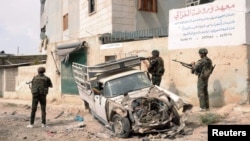
Forces loyal to Syria's President Bashar al-Assad patrol at Tal-al-Zrazir neighborhood in Aleppo city, September 29, 2012.
Battles are raging in Syria's most populous city, Aleppo, as rebels continued their offensive to take the city that began three days ago.
Clashes broke out in Aleppo's Arkub and Azzizia neighborhoods Saturday. Witnesses tell the Britain-based Syrian Observatory for Human Rights that at least three rebel fighters were killed in fighting in the central Old City district, which has suffered heavy shelling.
Rebels announced a new offensive against government troops in Aleppo on Thursday, but it appears that neither side has made significant gains. Syria's official SANA news agency reports the government is targeting and killing what it describes as "terrorists" in Aleppo.
The Syrian Observatory says government troops also bombarded areas in Homs, Idlib and Daraa provinces Saturday.
Fighting Rages in Aleppo, Syria
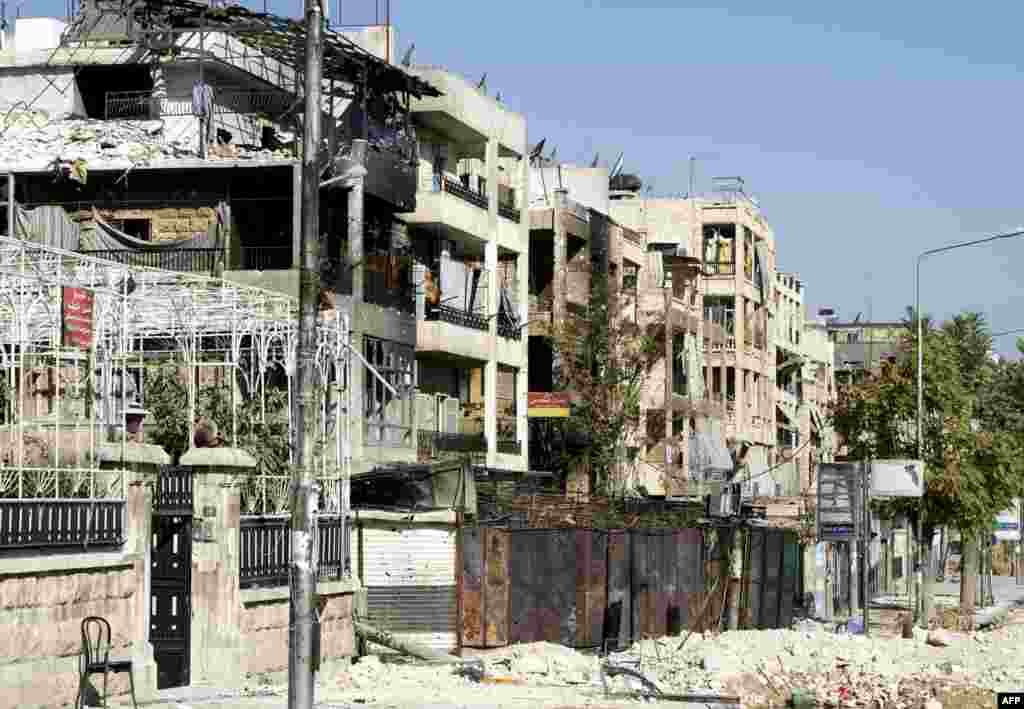
1/7Damaged buildings in the northern city of Aleppo following months of clashes and battles between Syrian rebels and government forces, September 28, 2012.
Show moreShow less
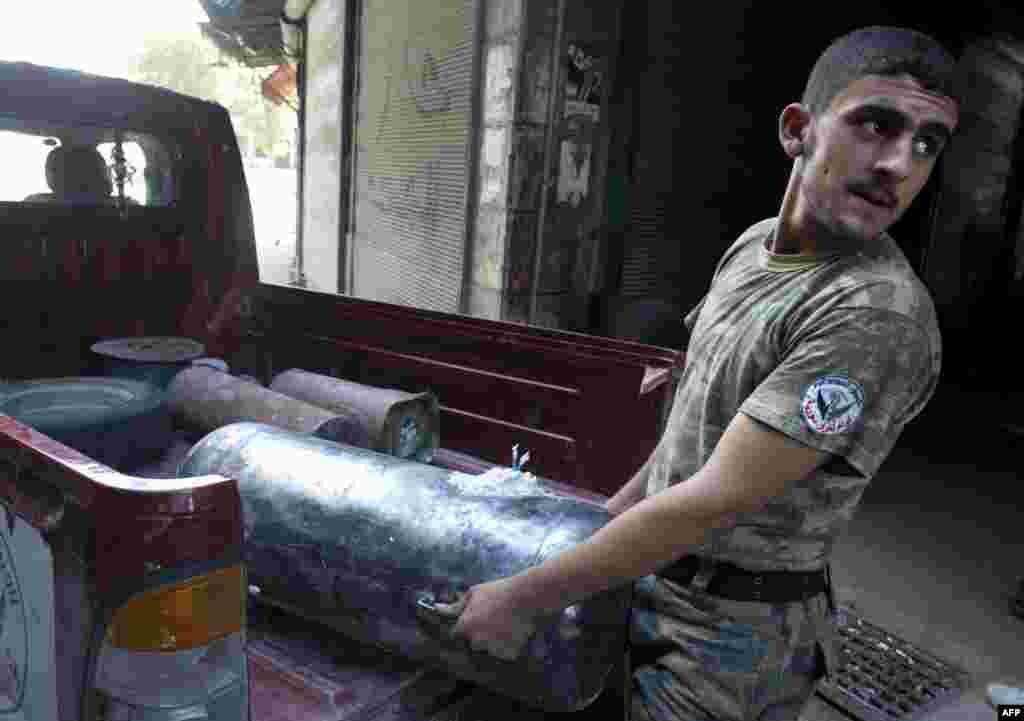
2/7A Syrian rebel fighter unloads an Improvised Explosive Device (IED) from a pick up during fighting with government troops in the old city of Aleppo, September 28, 2012.
Show moreShow less
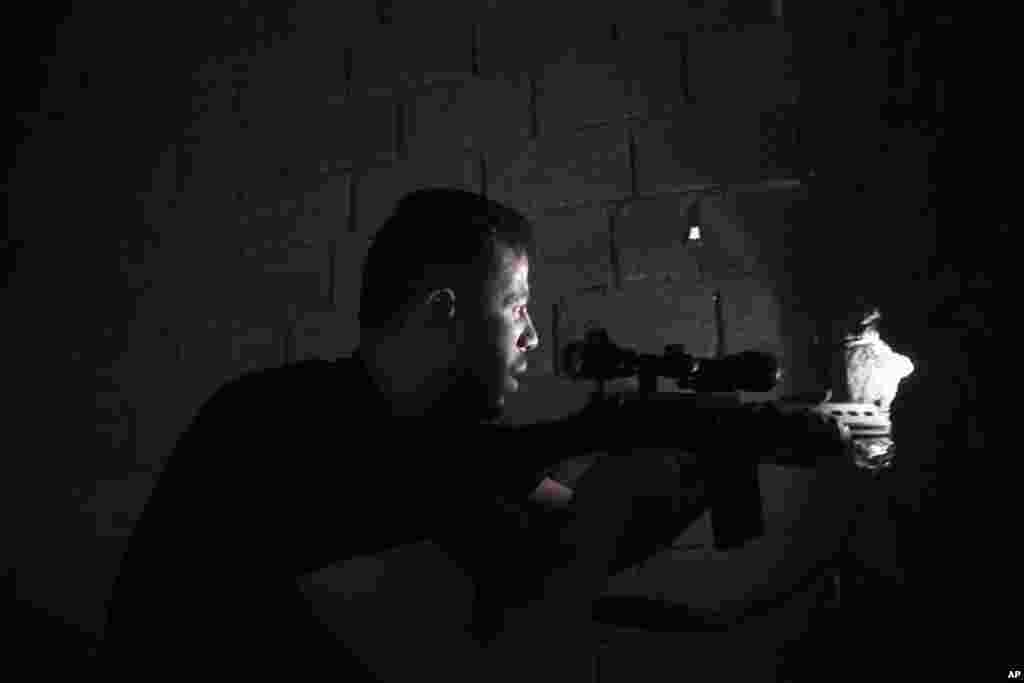
3/7Free Syrian Army fighter scans for targets from a building in Aleppo, Syria, September 27, 2012.
Show moreShow less
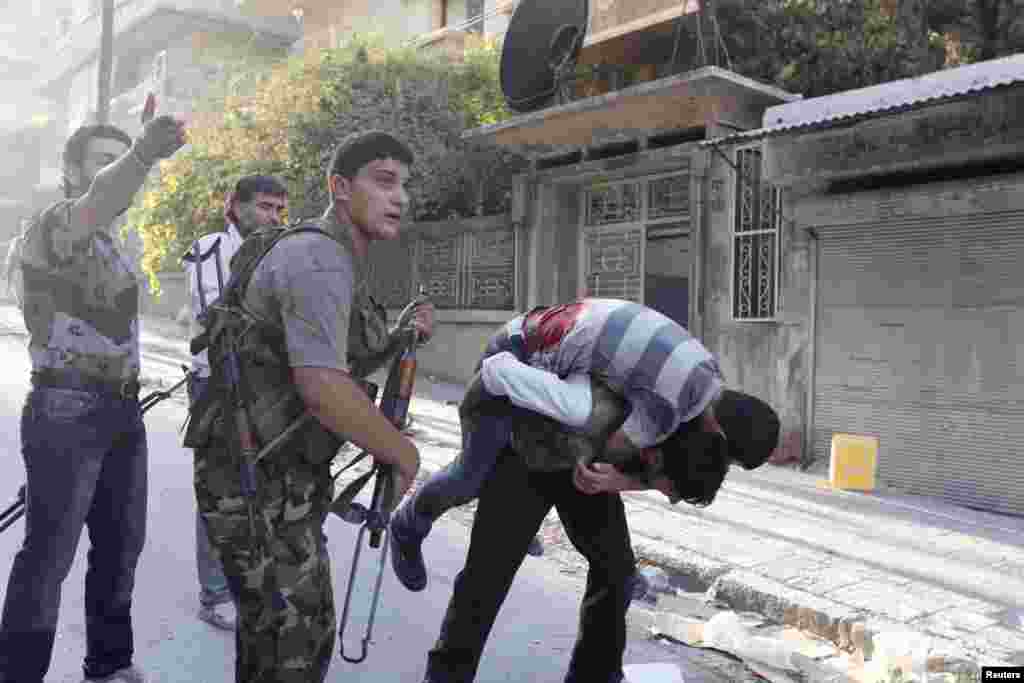
4/7A member of the Free Syrian Army carries his wounded comrade who was shot during clashes with Syrian Army forces as others shout for help in Aleppo, Syria, September 27, 2012.
Show moreShow less
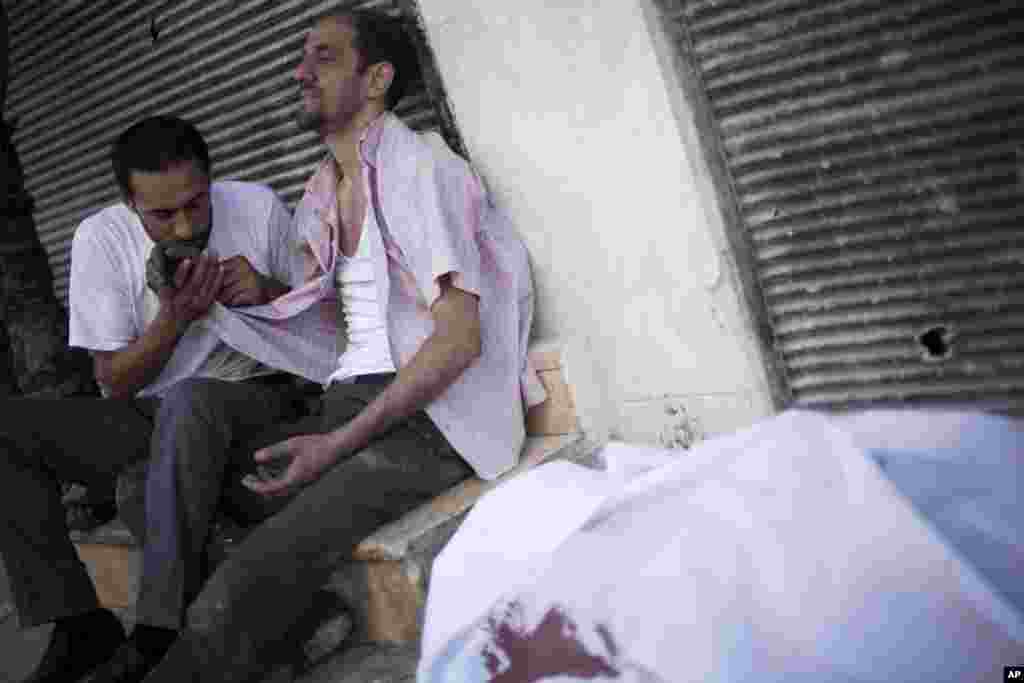
5/7A Syrian man is comforted after the death of his brother, who witnesses say was shot by a Syrian Army sniper, outside Dar El Shifa Hospital in Aleppo, Syria, September 27, 2012.
Show moreShow less
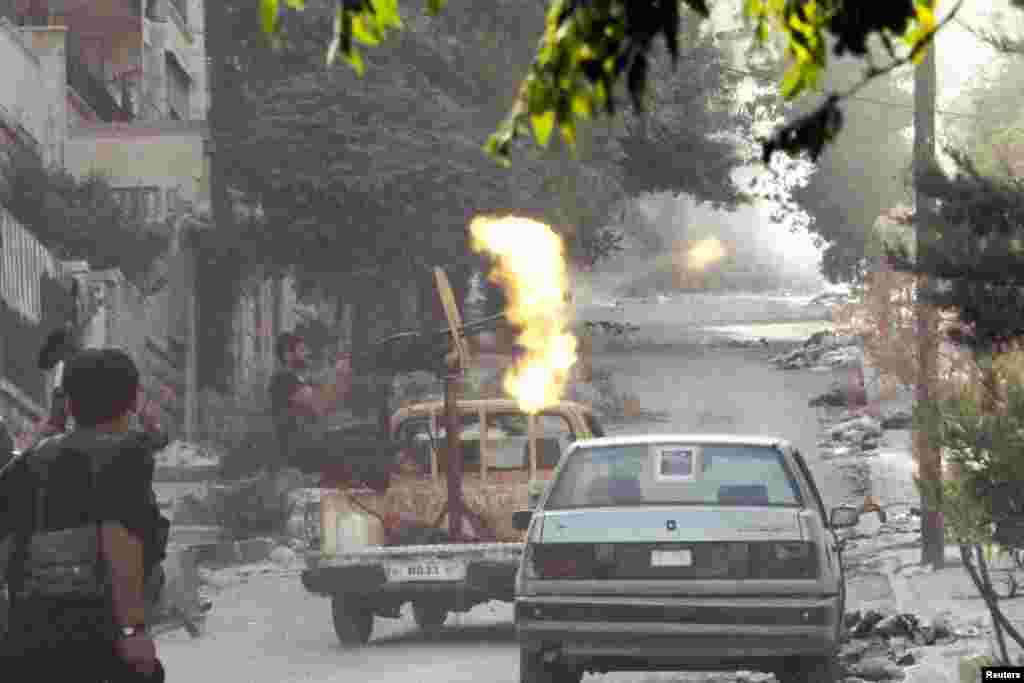
6/7A member of the Free Syrian Army open fire from his machine gun during clashes with Syrian Army forces in Aleppo, September 27, 2012.
Show moreShow less
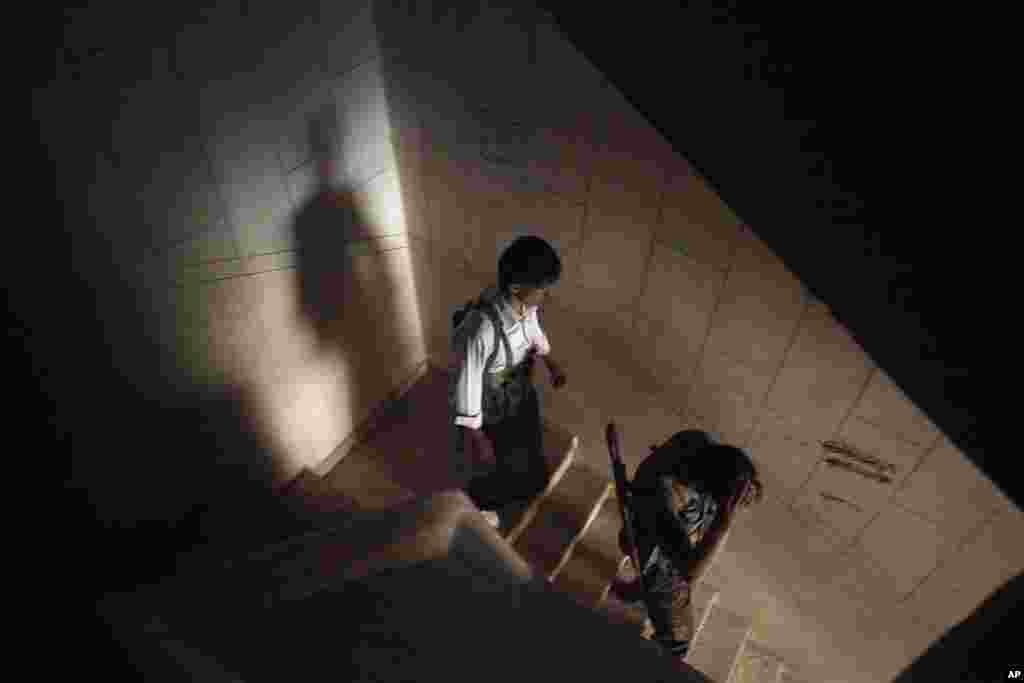
7/7Free Syrian Army fighters walk down stairs in a damaged building in Aleppo, Syria, September 26, 2012.
Show moreShow less
Previous slide
Next slide
The latest violence comes as the U.N. General Assembly is wrapping up its general debate period in New York. U.S. President Barack Obama repeated his calls for the Syrian president to step down.
"We intervened in Libya alongside a broad coalition, and with the mandate of the United Nations Security Council, because we had the ability to stop the slaughter of innocents, and because we believed that the aspirations of the people were more powerful than a tyrant," he said. "And as we meet here, we again declare that the regime of Bashar al-Assad must come to an end so that the suffering of the Syrian people can stop and a new dawn can begin."
But the Syrian Observatory's Mataz Suheil said he was dissatisfied with the general debate speeches.
"The representative of each state used Syria just to bolster their position domestically. There was no actual movement toward solving the situation," he said.
He called the U.N.'s failure to have its special envoy to Syria speak before the General Assembly "ridiculous" and said the General Assembly lacks a unified stance to stop the bloodshed.
"It's not a priority to stop it at the moment. It's a low-burning conflict that is going to be solved at a later date when it's deemed necessary," said Suheil.
The Syrian Observatory says Saturday's violence across Syria killed at least 45 people, including three children. That brings the death toll to nearly 31,000 since the uprising began in March of last year.