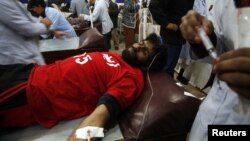
An injured rescue worker receives treatment in a hospital after the second bomb blast in Quetta, Pakistan, January 10, 2013.
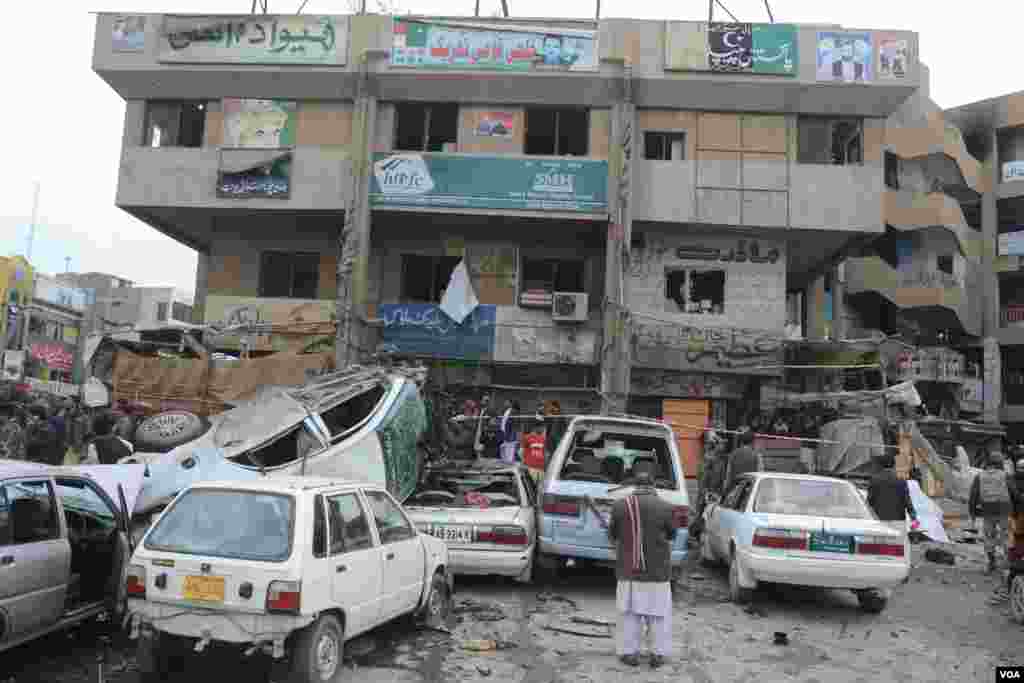
Four separate bombings killed more than 110 people and wounded nearly 250 across Pakistan Thursday, including 92 deaths in Quetta.
Police in the capital of Baluchistan province say a suicide bomber blew himself up inside a crowded billiard hall, followed by a second bomber there minutes later. The twin blasts killed 81 people, including police and rescue workers. Police say most of the deaths came after the second blast caused the roof of the building to collapse
The billiard hall attacks came just hours after a bomb blast at the Quetta market killed 11 people. Authorities say paramilitary soldiers may have been the target.
The outlawed militant Sunni group Lashkar-e-Jhangive contacted local media to claim responsibility.
Baluchistan has grappled with a separatist insurgency, Islamic militancy, and sectarian violence for decades.
Pakistan Mourns Bombing Victims
1/9People mourn next to the coffins of their relatives who were killed in bombings, Quetta, Pakistan, January 11, 2013.
A string of bombings in Quetta and across Pakistan Thursday killed more than 100 people on one of the nation's deadliest days in years.
Show moreShow less
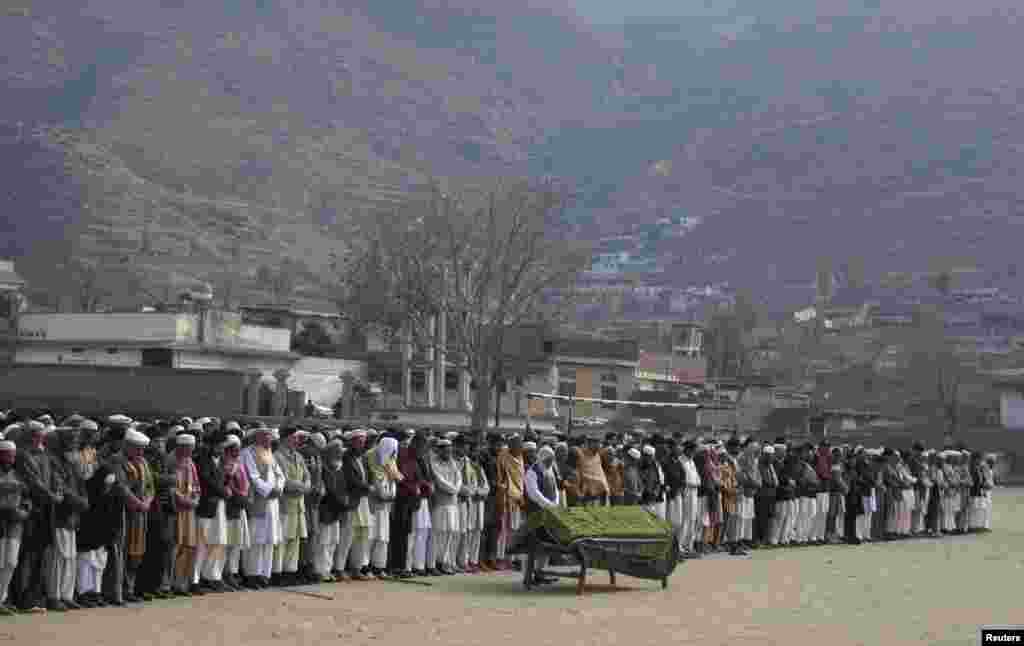
2/9People attend funeral prayers for a victim who was killed by a bomb blast, in Mingora, Swat valley, Pakistan, January 11, 2013.
A string of bombings in Quetta and across Pakistan Thursday killed more than 100 people on one of the nation's deadliest days in years.
Show moreShow less
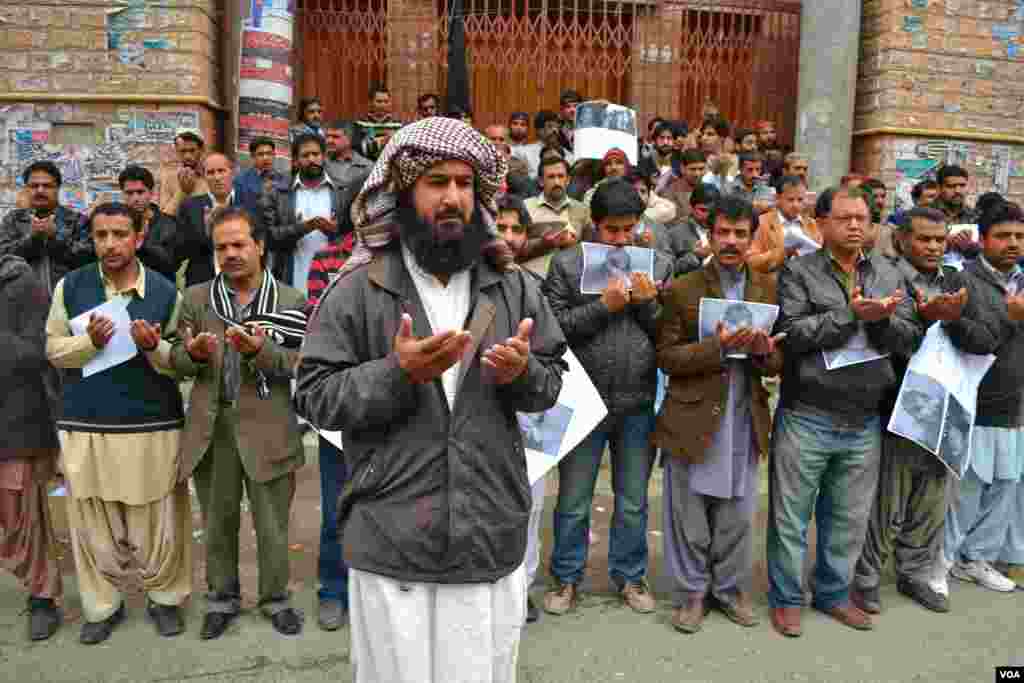
3/9Shi'ite Muslims hold a silent protest a day after deadly blasts in Quetta, Pakistan, January 11, 2013. (H. Samsoor/VOA)
A string of bombings in Quetta and across Pakistan Thursday killed more than 100 people on one of the nation's deadliest days in years.
Show moreShow less
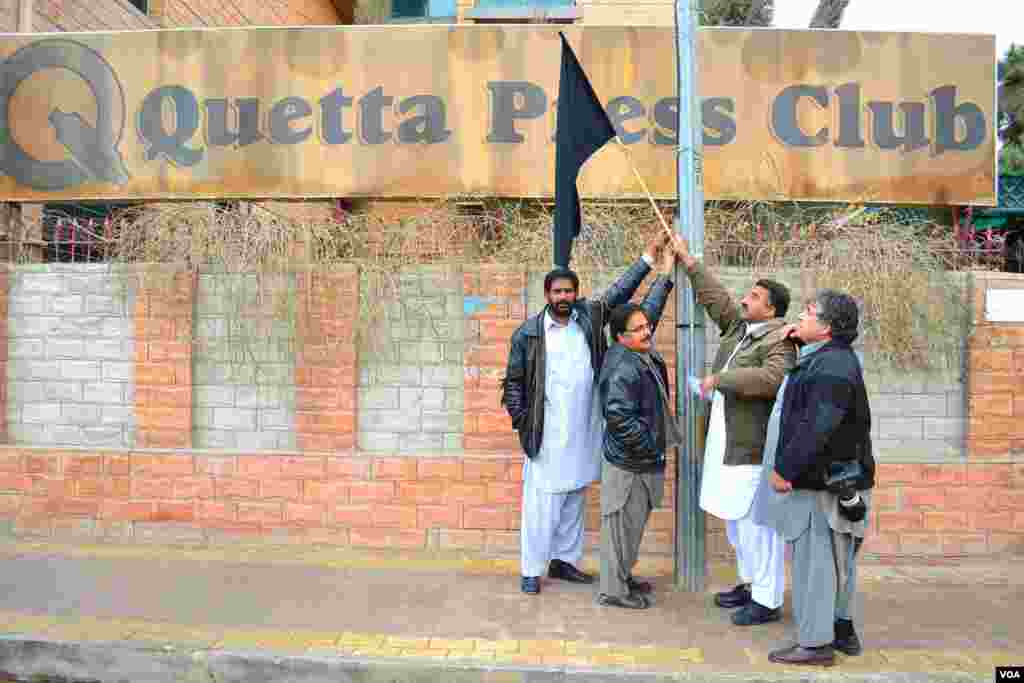
4/9Journalists hold a black flag outside the Quetta Press Club to mourn the three journalists killed in the January 10th explosions in the city, Quetta, Pakistan, January 11, 2013.
A string of bombings in Quetta and across Pakistan Thursday killed more than 100 people on one of the nation's deadliest days in years.
Show moreShow less
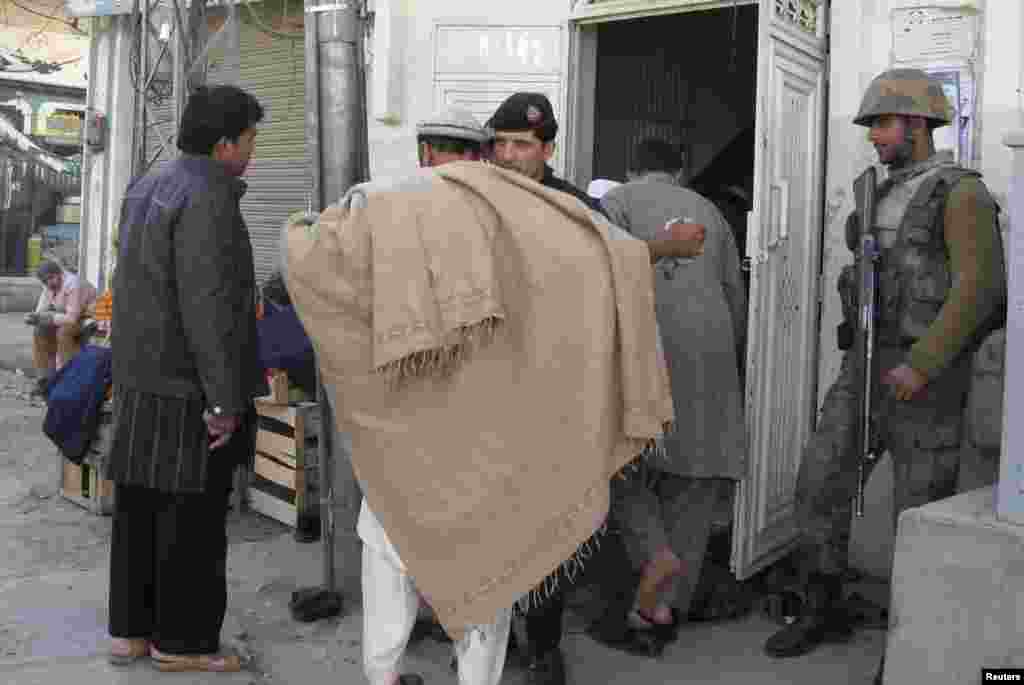
5/9A paramilitary soldier frisks a man at the entrance of a mosque in Mingora, Swat valley, Pakistan a day after deadly bombings, January 11, 2013.
A string of bombings in Quetta and across Pakistan Thursday killed more than 100 people on one of the nation's deadliest days in years.
Show moreShow less
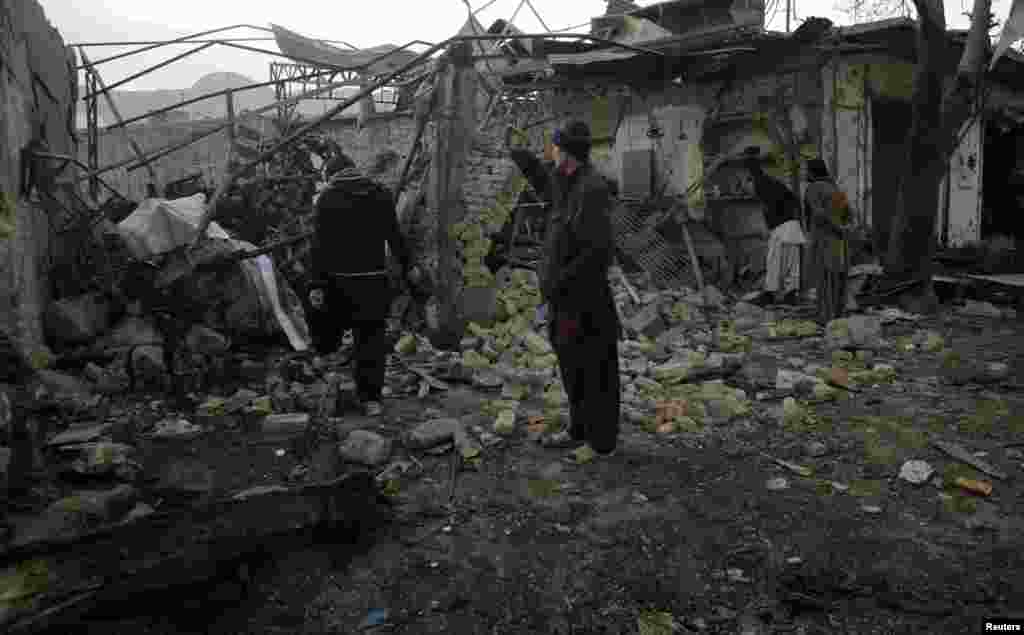
6/9A man takes a photograph with his mobile phone of a house that was damaged by a bomb blast in Quetta, Pakistan, January 11, 2013.
A string of bombings in Quetta and across Pakistan Thursday killed more than 100 people on one of the nation's deadliest days in years.
Show moreShow less
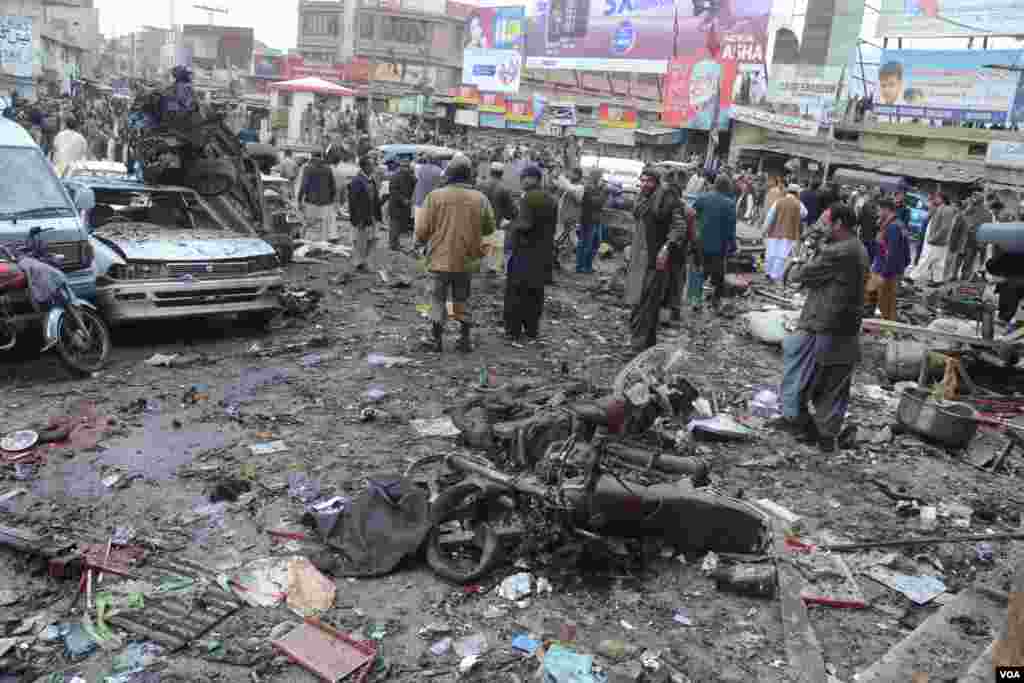
7/9People walk around the debris from a bomb blast in Quetta, Pakistan, January 10, 2013. (Hameed Samsor/VOA)
A string of bombings in Quetta and across Pakistan Thursday killed more than 100 people on one of the nation's deadliest days in years.
Show moreShow less
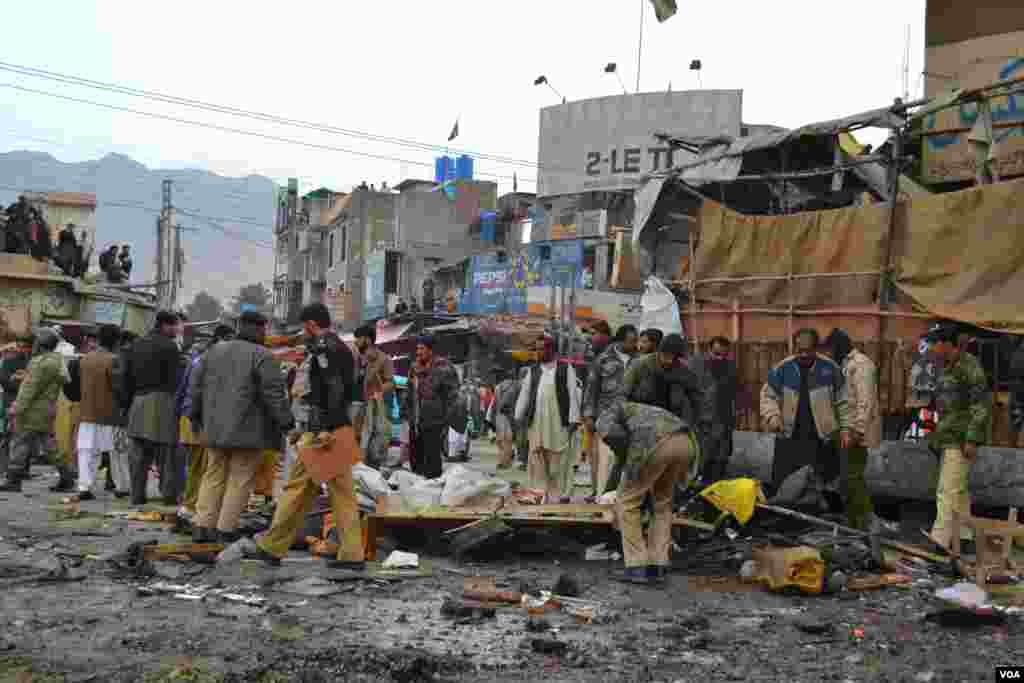
8/9Police and residents at the site of a bomb blast in Quetta, Pakistan, January 10, 2013. (Hameed Samsor/VOA)
A string of bombings in Quetta and across Pakistan Thursday killed more than 100 people on one of the nation's deadliest days in years.
Show moreShow less
9/9The site of bomb blast in Quetta, Pakistan, January 10, 2013. (Hameed Samsor/VOA)
A string of bombings in Quetta and across Pakistan Thursday killed more than 100 people on one of the nation's deadliest days in years.
Show moreShow less
Previous slide
Next slide
Elsewhere in Pakistan Thursday, at least 21 people were killed and more than 70 wounded in a bombing in the city of Mingora, where a crowd had gathered to hear a speech by a religious leader. Mingora is the largest city in northwestern Pakistan's Swat province.
No one has claimed responsibility for that attack.
The Voice of America provides news and information in more than 40 languages to an estimated weekly audience of over 326 million people. Stories with the VOA News byline are the work of multiple VOA journalists and may contain information from wire service reports.