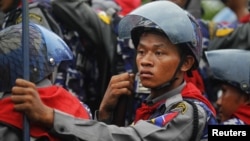
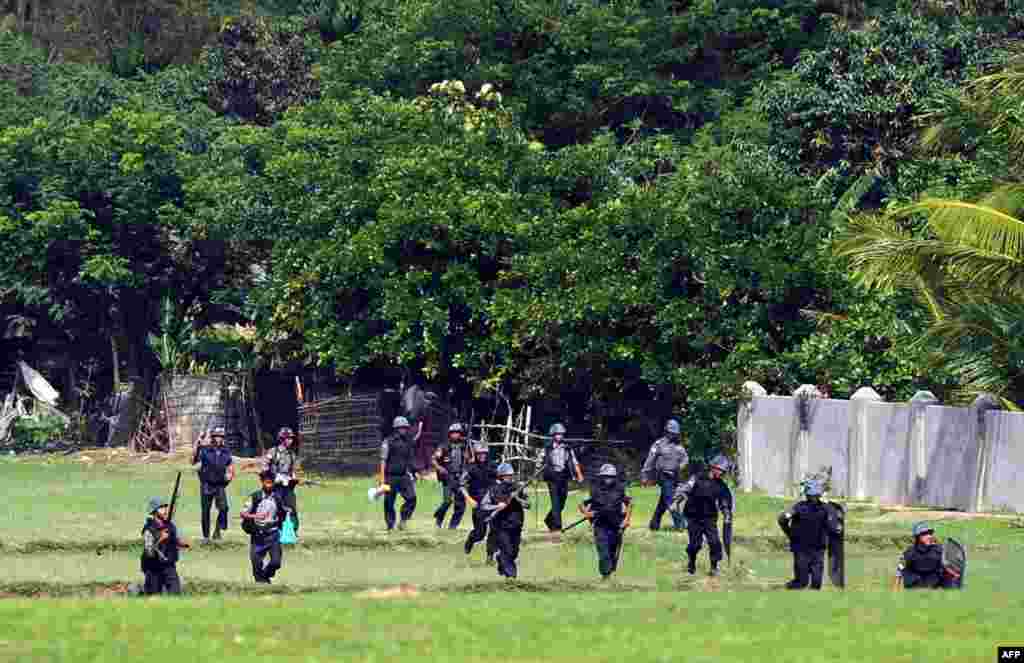
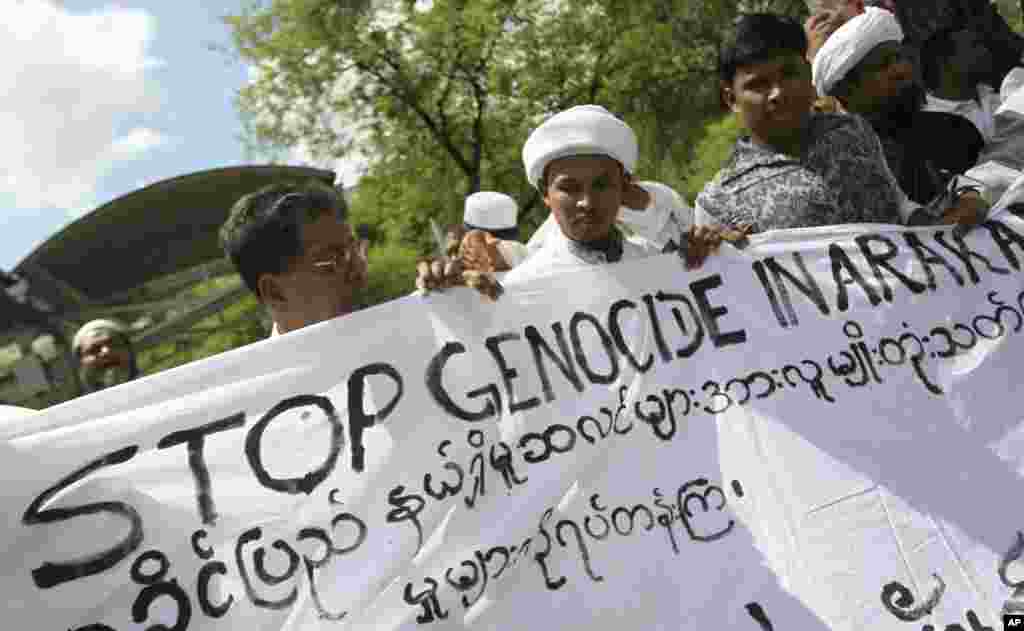
Policemen arrive in their vehicle during fighting between Buddhist Rakhine and Muslim Rohingya communities in Sittwe June 10, 2012.
Burma's president declared a state of emergency Sunday night for a riot-hit western state, wracked by deadly sectarian violence between Buddhists and Muslims.
Thein Sein warned in a televised address to the nation that if the violence in Rakhine state spreads further, it could put the country's moves toward democracy in danger.
He invoked the emergency measure following three days of violence in Rakhine state between Buddhists and members of the Muslim Rohingya ethnic group, in which at least seven people were killed and hundreds of buildings were set ablaze.
The Burmese leader said that violent attacks fueled by "hatred and revenge based on religion and nationality" could spread to other parts of the country. He said if that happens, the country's stability and peace, democratization process and development, which are in transition right now, could be severely affected.
Troops Patrol Western Burma as Sectarian Strife Continues
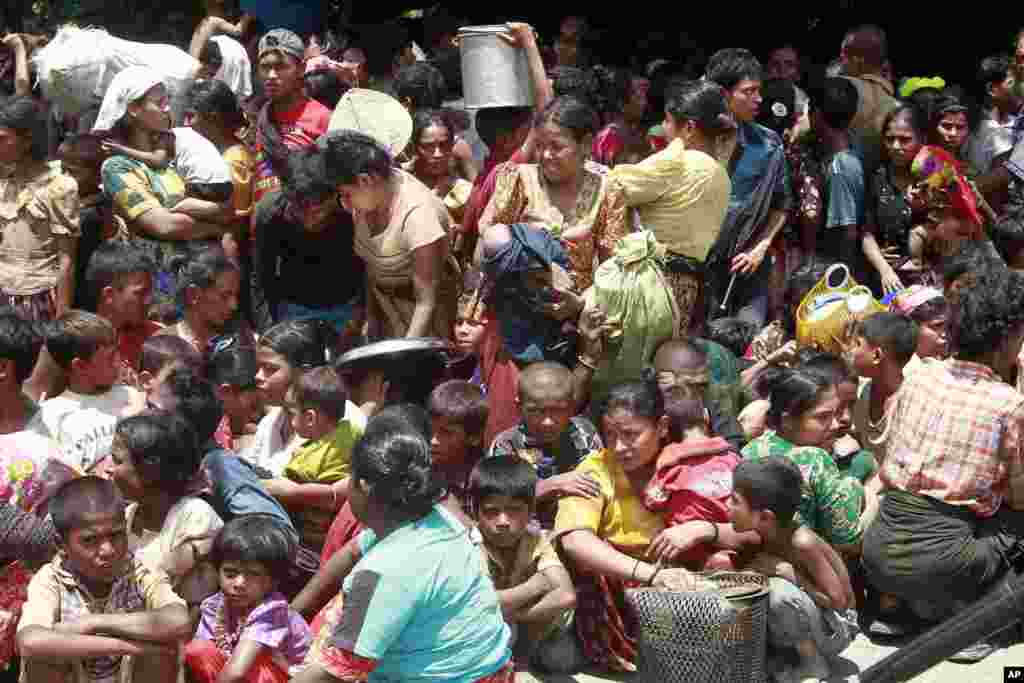
1/13Muslims women and children from villages gather before being relocated to secure areas in Sittwe, capital of Rakhine state in western Burma, where sectarian violence is ongoing, June 12, 2012.
Armed security forces preside over an uneasy calm in western Burma, as international pressure mounts for an end to a week of deadly violence between Muslims and Buddhists.
Show moreShow less
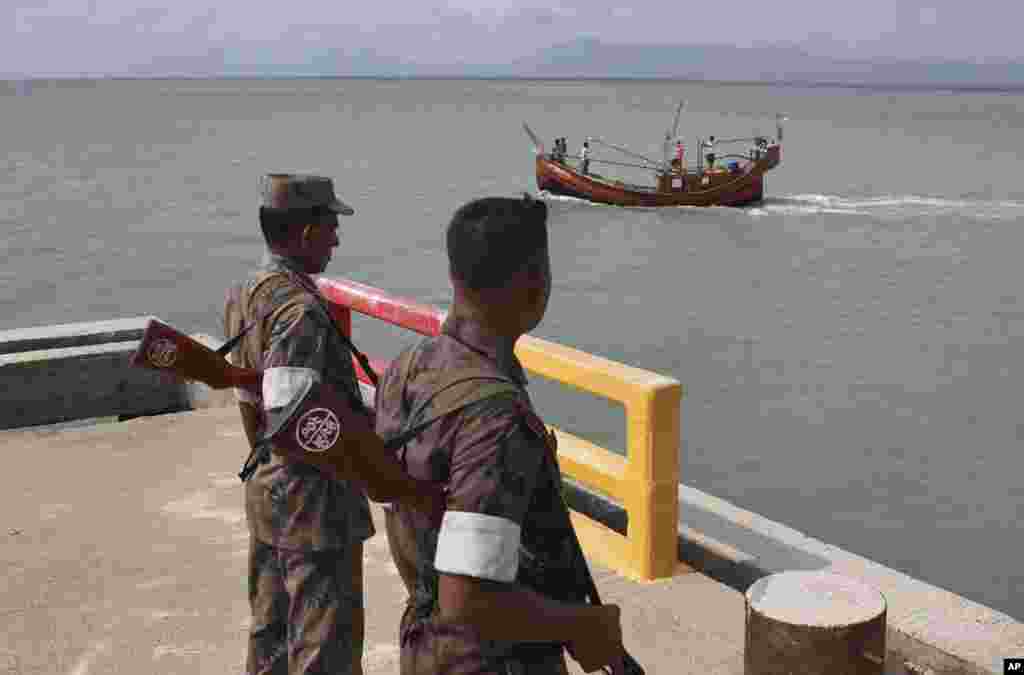
2/13Bangladeshi Border Guard soldiers keep watch at a wharf in Taknaf, Bangladesh, June 12, 2012.
Armed security forces preside over an uneasy calm in western Burma, as international pressure mounts for an end to a week of deadly violence between Muslims and Buddhists.
Show moreShow less
3/132013年4月3日韓國的車輛被拒絕進入朝鮮開城工業區之後,掉頭回去。
Armed security forces preside over an uneasy calm in western Burma, as international pressure mounts for an end to a week of deadly violence between Muslims and Buddhists.
Armed security forces preside over an uneasy calm in western Burma, as international pressure mounts for an end to a week of deadly violence between Muslims and Buddhists.
Show moreShow less
5/13Security forces try to restore order in Rakhine state, Burma, after a wave of deadly religious violence, as the United Nations evacuated foreign workers, June 11, 2012.
Armed security forces preside over an uneasy calm in western Burma, as international pressure mounts for an end to a week of deadly violence between Muslims and Buddhists.
Show moreShow less
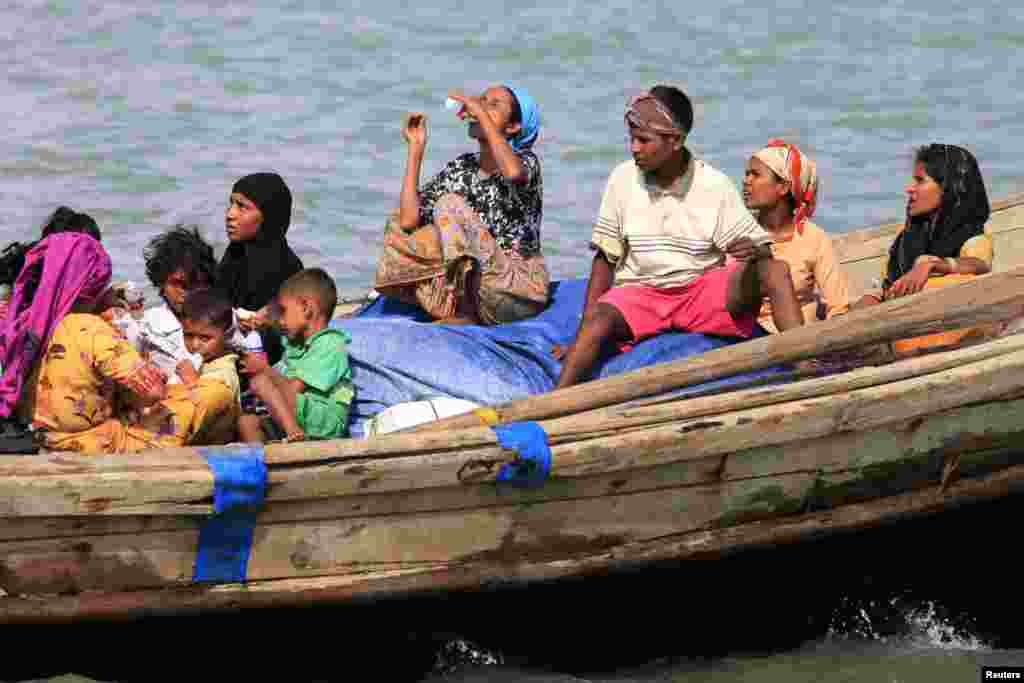
6/13Muslim Rohingya people on a boat cross the river Naf, from Burma into Teknaf, Bangladesh, June 11, 2012.
Armed security forces preside over an uneasy calm in western Burma, as international pressure mounts for an end to a week of deadly violence between Muslims and Buddhists.
Show moreShow less
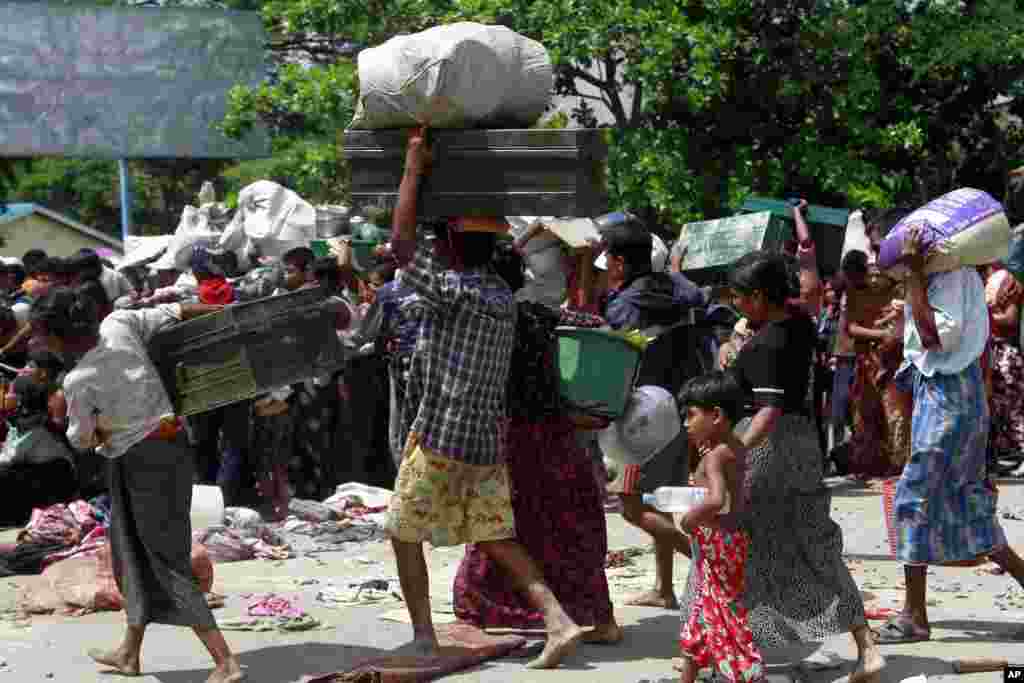
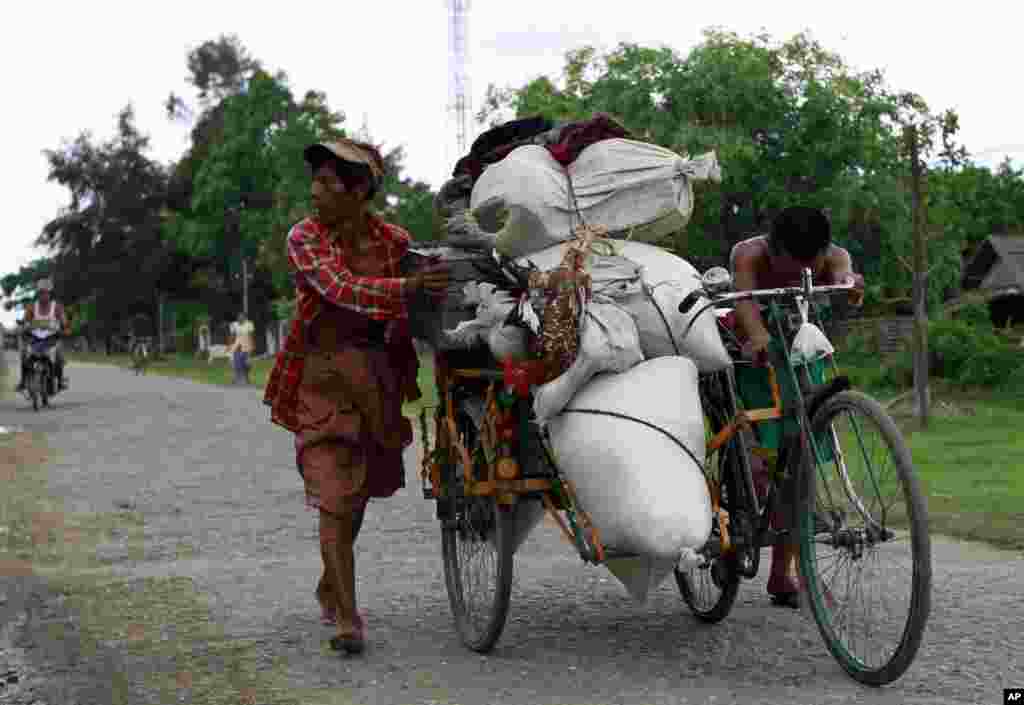
7/13Local residents push a trishaw vehicle carrying their belongings in a village in Sittwe, where sectarian violence is impacting on the local population, June 11, 2012.
Armed security forces preside over an uneasy calm in western Burma, as international pressure mounts for an end to a week of deadly violence between Muslims and Buddhists.
Show moreShow less
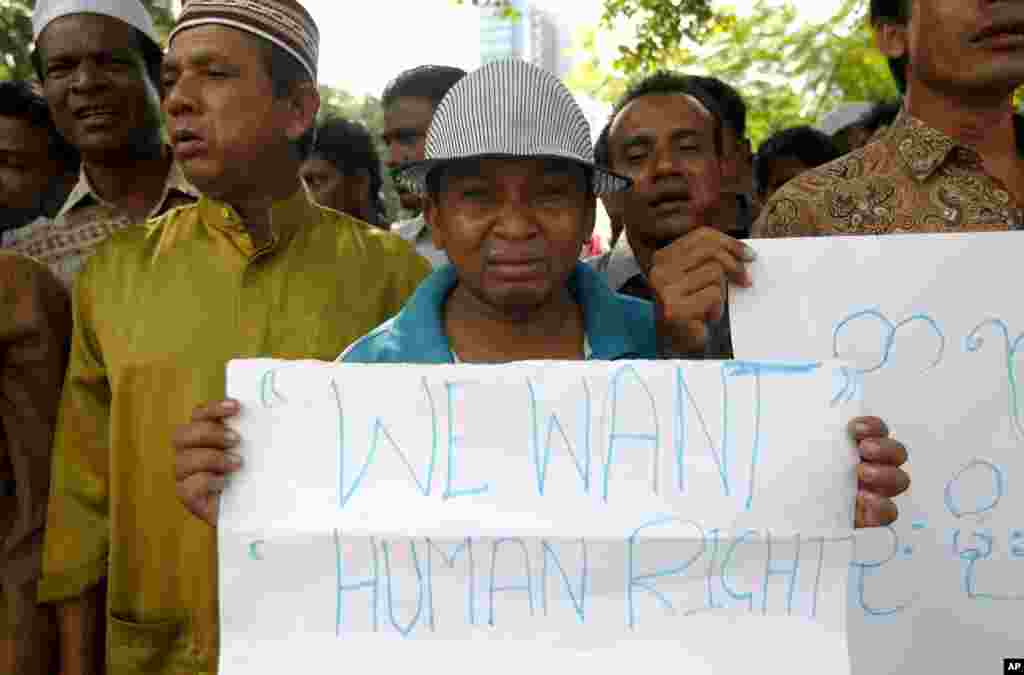
8/13Rohingya protesters gather in front of a U.N. regional office in Bangkok, Thailand, to call for an end to the ongoing unrest and violence in Burma’s Rakhine State, June 11, 2012.
Armed security forces preside over an uneasy calm in western Burma, as international pressure mounts for an end to a week of deadly violence between Muslims and Buddhists.
Show moreShow less
9/13Men carry sacks filled with shellfish on a beach at Diani Beach on the Indian Ocean coast of Kenya, some 30 km (19 miles) south of Mombasa.
Armed security forces preside over an uneasy calm in western Burma, as international pressure mounts for an end to a week of deadly violence between Muslims and Buddhists.
Show moreShow less
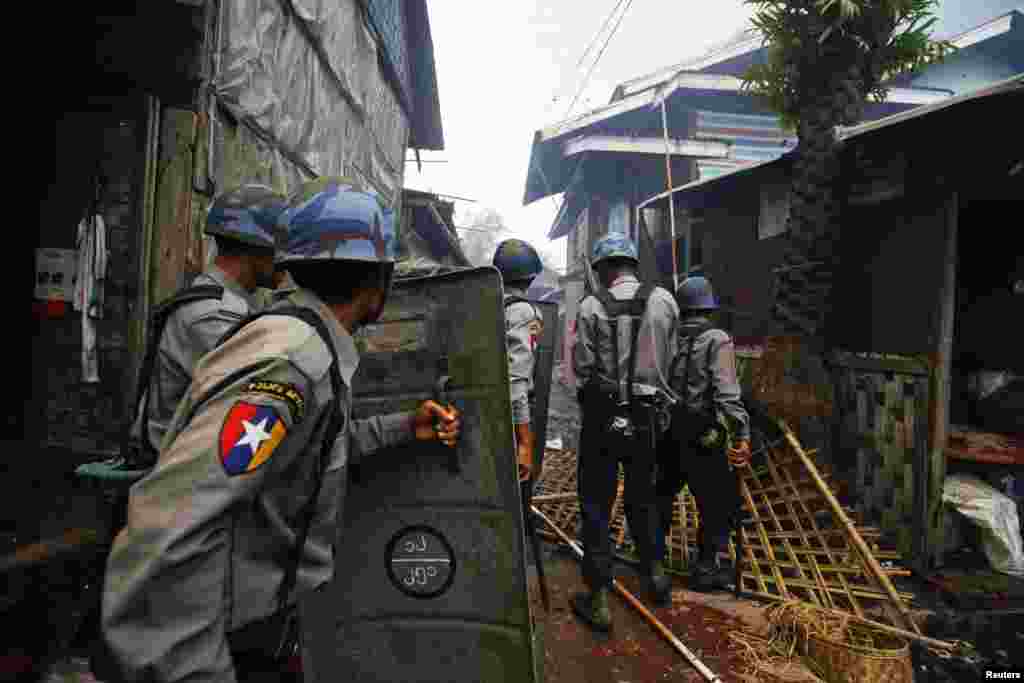
10/13Policemen move towards burning houses during fighting between Buddhist Rakhine and Muslim Rohingya communities in Sittwe, June 10, 2012.
Armed security forces preside over an uneasy calm in western Burma, as international pressure mounts for an end to a week of deadly violence between Muslims and Buddhists.
Show moreShow less
11/13Սերժ Սարգսյանի երդմնակալության օրը, Երևան, 2013թ. ապրիլի 9
Armed security forces preside over an uneasy calm in western Burma, as international pressure mounts for an end to a week of deadly violence between Muslims and Buddhists.
Show moreShow less
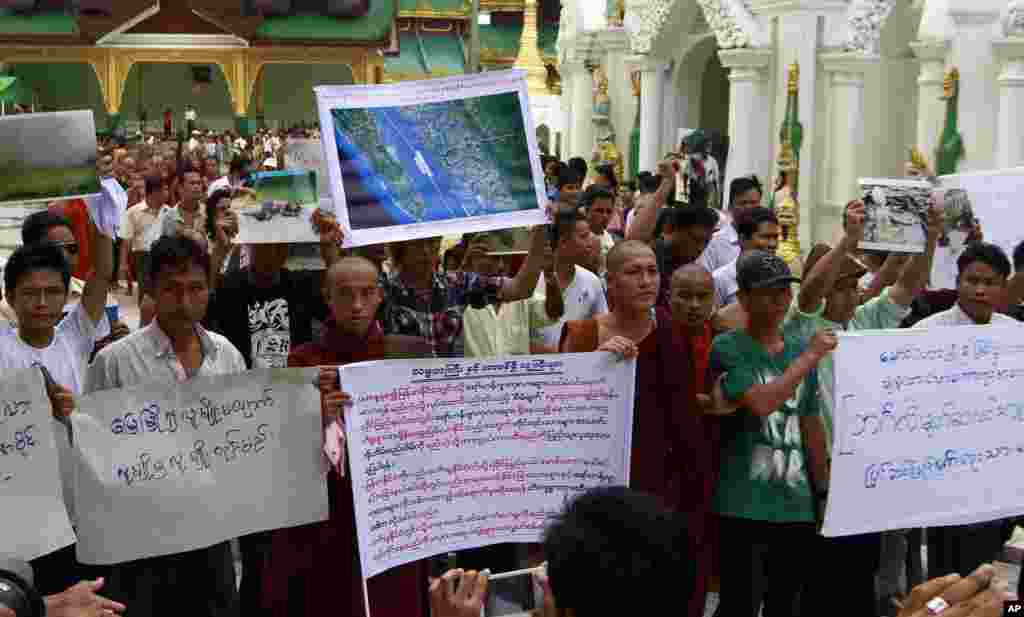
12/13Buddhist monks and ethnic Rakhine people hold placards at Shwedagon pagoda in Rangoon, Burma, June 10, 2012.
Armed security forces preside over an uneasy calm in western Burma, as international pressure mounts for an end to a week of deadly violence between Muslims and Buddhists.
Show moreShow less
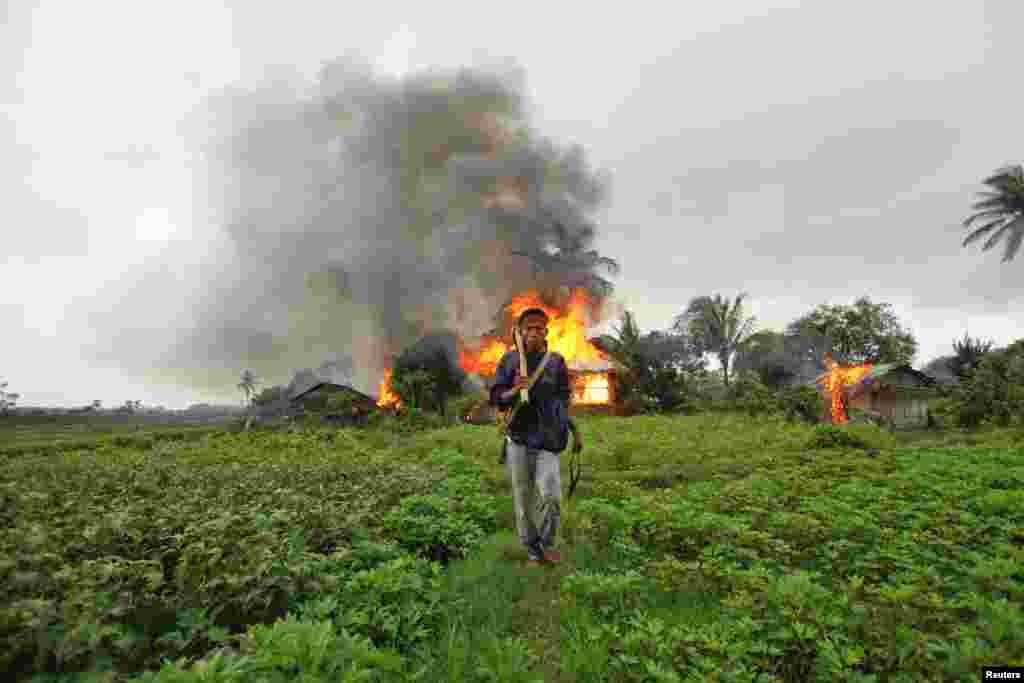
13/13An ethnic Rakhine man holds homemade weapons as he walks in front of houses that were burnt during fighting between Buddhist Rakhine and Muslim Rohingya communities in Sittwe, June 10, 2012.
Armed security forces preside over an uneasy calm in western Burma, as international pressure mounts for an end to a week of deadly violence between Muslims and Buddhists.
Show moreShow less
Previous slide
Next slide
On Saturday, the Burmese government sent additional security forces to Rakhine, near the border with Bangladesh, to restore peace and established a curfew, after overnight rioting between ethnic Rohingya and local Buddhists.
Tensions have been high in Rakhine since last Sunday, when a Buddhist mob attacked a bus and killed 10 Rohingya, mistakenly believing they were responsible for the recent gang-rape and murder of a Buddhist woman.
Burma, also known as Myanmar, does not consider the Rohingya to be Burmese citizens. According to the United Nations there are about 800,000 ethnic Rohingya in the country's western region.
Burma's government has recently begun implementing political reforms, earning approval from Western nations who had long called for change. State media have released an uncharacteristically large amount of information about last week's violent incidents.
The Voice of America provides news and information in more than 40 languages to an estimated weekly audience of over 326 million people. Stories with the VOA News byline are the work of multiple VOA journalists and may contain information from wire service reports.