News / Asia

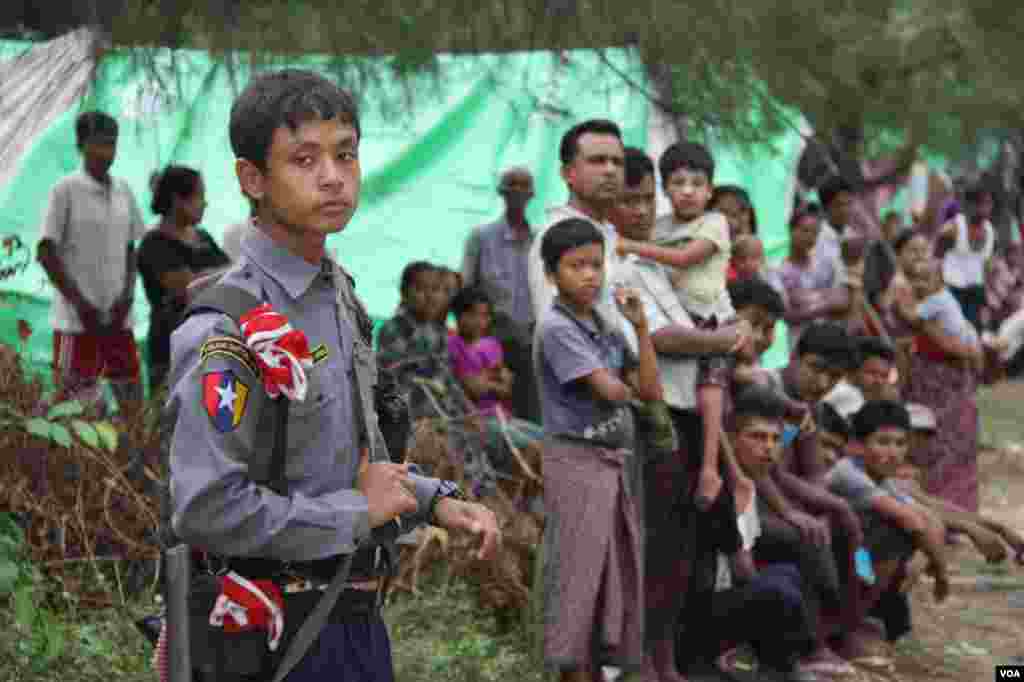
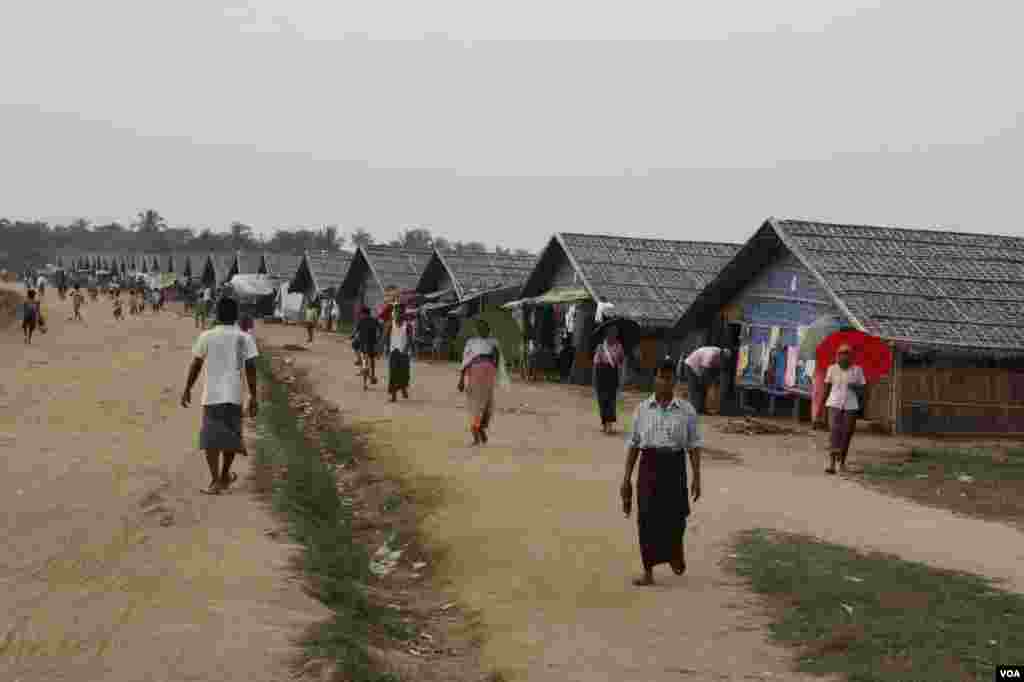
After Rhakine Violence, Burma's Muslims, Buddhists Ponder Segregation

Loading
12:00:00 / -:--:--
TEXT SIZE - +
Daniel Schearf

You May Like

Russia Cracks Down on Gay Activism

Arrest of 30 activists coincided with first-ever gay rights rally in neighboring Ukraine, which was allowed by authorities, protected by police More

In Hong Kong, Beef Over Sammy Kitchen's 3D Cow

Much to the dismay of restaurant owner Sammy Yip, authorities have turned an inhospitable eye toward his giant cow looming over Queen's Road West More

Cambodian Documentary Wins Cannes Prize for Innovative Cinema

In 'The Missing Picture', Rithy Panh uses clay figurines to tell story of Khmer Rouge brutality More

This forum has been closed.
Comment Sorting
Comments
     
by: Dayal Chakma from: CHT, Bangladesh
November 22, 2012 11:45 PM
In 1666 Mughals captured Chittagong from Rakhines and brought the Bengalis to Chittagong. Before the Mughal conquest, inhabitants of Chittagong were Rakhines. Francis Buchanan visited Chittagong in 1799 and wrote, inhabitants of south of the Chittaong city were Rakhines. During the Mughal and British rule, the Bengalis drove out the Rakhines from Chittagong. British brought the Bengalis to Rakhine after the first Anglo Burmese war.

So called Rohingyas are descendents of the Bengali immigrants. After the British left the Bengali immigrants are refusing to go home.

Rakhine people have no option but to drive them out by force. I admire and salute their courage.

In Response

by: Tina from: UK
November 26, 2012 8:09 AM
You have internet access, why don't you google it. You will learn something rather than writing rubbish.

Below is some history lesson for you!

The Kingdom of Mrauk-U was the kingdom that ruled Arakan from 1429 to 1785.[1]

King Narameikhla (1404-1434), or Min Saw Mon, ruler of the Kingdom of Mrauk U in the early 15th century, after 24 years of exile in Bengal, regained control of the Arakanese throne in 1430 with military assistance from the Sultanate of Bengal. The Bengalis who came with him formed their own settlements in the region.[2] Narameikhla ceded some territory to the Sultan of Bengal and recognized his sovoreignity over the areas. In recognition of his kingdom's vassal status, the kings of Arakan received Islamic titles, despite being Buddhists, and legalized the use of Islamic coins from Bengal within the kingdom. Narameikhla minted his own coins with Burmese characters on one side and Persian characters on the other. Arakan remained subordinate to Bengal up until 1531.[2]

Even after gaining independence from the Sultans of Bengal, the Arakanese kings continued the custom of maintaining Muslim titles.[3] The kings compared themselves to Sultans and fashioned themselves after Mughal rulers, despite remaining Buddhist. They also continued to employ Muslims in prestigious positions within the royal administration.[4] From 1531-1629, Portuguese pirates operated from havens along the coast of the kingdom and brought slaves in from Bengal to the kingdom. The Bengali Muslim population thus increased in the 17th century, as they were employed in a variety of workforces in Arakan. Some of them worked as Arabic, Bengali, and Persian scribes in the Arakanese courts, which, despite remaining mostly Buddhist, adopted Islamic fashions from the neighbouring Sultanate of Bengal.


by: Lstmohican from: USA
November 21, 2012 3:07 PM
Since only recently have we seen the publication of the news from Myanmar and Rakhine state, a brief geopolitical background of the region appears to be in order:

1) Rakhine state is part of Myanmar. Rakhine are about 3 million (270/ sq. mi.) indigenous minority people in Myanmar. The Rakhine people trace their societal history back to as far as 3325 B.C.E. and have given a lineal succession of 227 native monarchs and princes down to the last ruler in 1784. At their height the Kingdom extended to Dhaka, the current capital of Bangladesh.

2) The neighboring country to the west is Bangladesh (about the size of Wisconsin) with a population of over 160 million ( 1,800 / sq. mi) got its independence from Pakistan in 1971. During the independence war with Pakistan, about 10 million left Bangladesh to neighboring countries and many returned back after the war.

3) Due to overpopulation and scarcity of resources in Bangladesh, people have been migration to neighboring countries with the majority going towards Rakhine state, as it's population is sparse.

4) About 90% of the population in Bangladesh are Muslims and well armed Islamic Terrorist organizations are abound particularly in the country side. Besides the rape and murder incident in the Rakhine state, the Islamic Terrorists are so brazen that as recently as last week, three soldiers from Myanmar were abducted in broad daylight by the Islamic Terrorists from Bangladesh and it was reported that a body one of the soldiers was found mutilated. Islamic terrorists from Bangladesh and Myanmar are linked with a common goal with worldwide Islamic terrorist organizations including Taliban in Afghanistan.

Based on the above background, it appears that the 3 million indigenous Rakhine people are trying to defend themselves from + 200 million worldwide Islamist Terrorists.

In Response

by: Tina from: UK
November 26, 2012 8:03 AM
Burmese government didn't report anything about a Burmese soldier being killed or kidnap by Muslims. There is no ties to Muslims in Rakhine state to Muslims in other countries let alone any terrorists. You won't get simpathy from anyone by telling lies. Since you have internet access, google for any info you need, including origin of Rakhine people.

Below is some history for you to learn!

The Kingdom of Mrauk-U was the kingdom that ruled Arakan from 1429 to 1785.[1]

King Narameikhla (1404-1434), or Min Saw Mon, ruler of the Kingdom of Mrauk U in the early 15th century, after 24 years of exile in Bengal, regained control of the Arakanese throne in 1430 with military assistance from the Sultanate of Bengal. The Bengalis who came with him formed their own settlements in the region.[2] Narameikhla ceded some territory to the Sultan of Bengal and recognized his sovoreignity over the areas. In recognition of his kingdom's vassal status, the kings of Arakan received Islamic titles, despite being Buddhists, and legalized the use of Islamic coins from Bengal within the kingdom. Narameikhla minted his own coins with Burmese characters on one side and Persian characters on the other. Arakan remained subordinate to Bengal up until 1531.[2]

Even after gaining independence from the Sultans of Bengal, the Arakanese kings continued the custom of maintaining Muslim titles.[3] The kings compared themselves to Sultans and fashioned themselves after Mughal rulers, despite remaining Buddhist. They also continued to employ Muslims in prestigious positions within the royal administration.[4] From 1531-1629, Portuguese pirates operated from havens along the coast of the kingdom and brought slaves in from Bengal to the kingdom. The Bengali Muslim population thus increased in the 17th century, as they were employed in a variety of workforces in Arakan. Some of them worked as Arabic, Bengali, and Persian scribes in the Arakanese courts, which, despite remaining mostly Buddhist, adopted Islamic fashions from the neighbouring Sultanate of Bengal.

In Response

by: Tina from: UK
November 26, 2012 7:20 AM
The Kingdom of Mrauk-U was the kingdom that ruled Arakan from 1429 to 1785.[1]

King Narameikhla (1404-1434), or Min Saw Mon, ruler of the Kingdom of Mrauk U in the early 15th century, after 24 years of exile in Bengal, regained control of the Arakanese throne in 1430 with military assistance from the Sultanate of Bengal. The Bengalis who came with him formed their own settlements in the region.[2] Narameikhla ceded some territory to the Sultan of Bengal and recognized his sovoreignity over the areas. In recognition of his kingdom's vassal status, the kings of Arakan received Islamic titles, despite being Buddhists, and legalized the use of Islamic coins from Bengal within the kingdom. Narameikhla minted his own coins with Burmese characters on one side and Persian characters on the other. Arakan remained subordinate to Bengal up until 1531.[2]

Even after gaining independence from the Sultans of Bengal, the Arakanese kings continued the custom of maintaining Muslim titles.[3] The kings compared themselves to Sultans and fashioned themselves after Mughal rulers, despite remaining Buddhist. They also continued to employ Muslims in prestigious positions within the royal administration.[4] From 1531-1629, Portuguese pirates operated from havens along the coast of the kingdom and brought slaves in from Bengal to the kingdom. The Bengali Muslim population thus increased in the 17th century, as they were employed in a variety of workforces in Arakan. Some of them worked as Arabic, Bengali, and Persian scribes in the Arakanese courts, which, despite remaining mostly Buddhist, adopted Islamic fashions from the neighbouring Sultanate of Bengal.

In Response

by: OngZoMin from: USA
November 22, 2012 12:37 AM
1948: Burma became an independent country with Arakan as one of its Divisions. all Rohingya Muslims also became Burmese citizens according to the Constitution of the Union of Burma.

1962: General Ne Win established military rule by a coup d'état and started a systematic Ethnic Cleansing of Rohingya Muslims.

1982: General Ne Win passed new racism-based Citizenship Laws in Burma, declaring all Rohingya Muslims as illegal immigrants from Bangladesh and deprived them of Burmese citizenship.

1982-present: Systematic state-sponsored Ethnic Cleansing of Rohingya Muslims is in progress, rendering them refugees in their own homeland. The use of vocal forces of the civilized world has not yet been able to halt the continued slaughtering of Ronhigya Muslims in Occupied Arakan.

CONCLUSION:
Thus the Rohingya are the original people of Arakan, who inhabited the land of Arakan from time immemorial. The Rakhine came to illegally and forcefully occupy Arakan in 1044 AD. The Bamar came to illegally and forcefully occupy Arakan in 1784. The Rakhine and the Bamar must, therefore, voluntarily vacate Arakan (which they continue to illegally occupy by use of brutal force), so that the Rohingya Nation can live peacefully in their native land. They should go respectfully back to the land they came from originally in 1044 AD and 1784 AD, respectively.

In Response

by: OngZoMin from: USA
November 22, 2012 12:36 AM
1799: Francis Buchanan-Hamilton, in his 1799 article “A Comparative Vocabulary of Some of the Languages Spoken in the Burma Empire,” stated: "I shall now add three dialects, spoken in the Burma Empire, but evidently derived from the language of the Hindu nation. The first is that spoken by the Mohammedans, who have long settled in Arakan, and who call themselves Rooinga, or natives of Arakan" (tap on the right of the pages to page 237-240, http://www.scribd.com/doc/99047980/1799-Rohingya-or-Rooinga-Name-in-Fifth-Volume-of-A-Comparative-Vocabulary-of-Some-of-the-Languages-Spoken-in-the-Burma-Empire). Thus the Rohingya are not Bangladeshis, who recently illegally migrated to Burma after its independence from the UK in 1948, and that the term Rohingya was not invented by Bangali immigrants in 1950s.

1784: Third invasion of Arakan by Burma; King Bodawpaya invaded and colonized Arakan.

1824–1826: The First Anglo-Burmese War ended in a British victory, and by the Treaty of Yandabo, Burma lost territory previously conquered in Assam, Manipur, and Arakan. In1852, the Second Anglo-Burmese War ended in the British annexation of Pegu province. In1885, the British conquered the remainder of Burma in the Third Anglo-Burmese War resulting in total annexation of the country to British India.

In Response

by: OngZoMin from: USA
November 22, 2012 12:34 AM
1044 AD: Rakhine people (Tibeto-Burman) came into existence after Burmese King Anawrahta’s invasion of Arakan State (First Burmese Invasion of Arakan by Burma).

1406: Invasion by Burmese King Min Khaung Yaza (Second Burmese Invasion of Arakan by Burma).

1430: Arakanese king Narameikhla (aka Meng Soamwun, son of King Rajathu) was the founder and first king (reigned 1404–34) of the Mrohaung dynasty in Arakan. He was forced in the first year of his reign to flee to Bengal, where he became a vassal to King Ahmad Shah of Gaur. He regained control of Arakan in 1430 with the help of King of Bangal. He built a new capital at Mrohaung (in 1433), which remained the capital of Arakan until the 18th century. As a vassal of the Muslim kings of Gaur, Narameikhla used Muslim title, Sulaiman Shah.

1732: Arakanese Muslims were called by different names, Muslims, Mohamaden, Muhamedan, Bagalis, Chittagonian, Rohan, Roshan, but the word Rohingya (derived from Mrohaung, meaning the inhabitants of Mrohaung) was used in 1732 for the first time (Churchill, collection of voyages and travels, London 1732, Vol-6, page-697), (The Classical Journal for September and December 1811, vol-4, London, Page-107).

In Response

by: OngZoMin from: USA
November 22, 2012 12:32 AM
CURE FOR IGNORANCE IS EDUCATION: If you have not heard of the Rohingya, educate yourself about the Rohingya:

THE ROHINGYA IS THE OLDEST INDIGENOUS NATION OF OCCUPIED ARAKAN:

INTRODUCTION:
A detailed study of the recorded history reveals that both the Rakhine and the Bamar races are illegal immigrants in OCCUPIED ARAKAN, the homeland of the Rohingya Nation, who are the earliest known original indigenous people of the land of OCCUPIED ARAKAN.

ROHINGYA NATION'S TIMELINE IN OCCUPIED ARAKAN
The Rohingya Are The Oldest Indigenous People of OCCUPIED ARAKAN And Also The World's Most Persecuted In Their Homeland.
(http://www.salem-news.com/articles/july272012/rakhine-arakan.php)

Before the 8th century: The area now known as Occupied Arakan had been the seat of Hindu dynasties of Indoy-Aryan people. They were the very first ancestors of the Rohingya people.

788 AD: a new dynasty, known as the Chandras, was founded in the city of Vesali. Arab and Persian seafarers after the advent of Islam carried on trade by the sea-route with many parts of the world including Arakan and Burma since 7th century AD. Arab Muslims settled in Arakan and Chittagong coasts in the eight century. Centuries-long intercourse of the original Indoy-Aryan people of Arakan with Arab Muslims gave rise to a unique group of people, who are now known as the Rohingya Nation.

957 AD: Amyathu, the chief of Mro tribe (Mongolian) of Arakan hills invaded Arakan, destroyed the Chandras and seized the throne of Vesali.

Featured Videos

Your JavaScript is turned off or you have an old version of Adobe's Flash Player. Get the latest Flash player.
Video

Video Volunteers Help Revive LA's Concrete River

The Los Angeles River is a concrete drainage channel through much of its 80-kilometer length. It channels waste-water from storm drains and has become a receptacle for much of the city's trash. But as Mike O'Sullivan reports, the river is slowly being restored with the help of volunteers, who take part in an annual clean-up.