News / Science & Technology

Butterfly Study Suggests Animal Self-Medication is Widespread

The way infected monarchs medicate offspring could impact development of drugs for humans

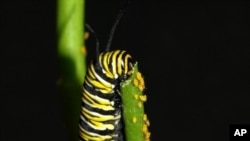
A caterpillar indulges in butterfly weed, a form of protective milkweed which provides a natural resistance to disease.

Multimedia

Audio
TEXT SIZE - +
Rosanne Skirble

Self-medication in the animal kingdom may be even more widespread than previously thought, according to a new study of butterflies which could provide clues for developing chemical compounds for human drugs.

Monarch butterflies protect themselves by what they eat.  According to the study in the journal Ecology Letters, not only are their brillant orange and black colors a warning sign to predators, but the milkweed they consume on their long migratory journey between Canada and Mexico is poisonous to the birds, spiders, frogs and bats that could do them harm.  

Chemicals called cardenolides in milkweed build up in monarch tissues and provide a natural defense at various stages of butterfly development.

Evolutionary biologist Jaap de Roode studies monarchs at Emory University in Atlanta, Georgia and is lead author of the study. In laboratory experiments, De Roode observed that parasite-infected adult females prefer to lay their eggs on milkweed with higher levels of cardenolides that provide better natural resistance against disease.

"This milkweed seems to be able to reduce the infection success of the parasite as well as reduce the growth rate of the parasites," he says. "The monarchs feeding on it will get a lot less sick than the monarchs feeding on [another] species of milkweed that does not contain these chemicals."

De Roode says that non-infected adults don't seem to have a preference where they lay their eggs.  "So somehow they know that they are infected and they know what to do about it."

De Roode says while his data was gathered in a controlled lab experiment, monarchs make the same food choices in the natural world. "What we're finding here is really that these monarchs have evolved a way to medicate their offspring against their parasites."     

Researchers have found that many animals - from apes to elephants to sheep - use plants, clay and even insects to deal with injury, infection and parasites.

You May Like

Experts Weigh In on Challenges of Closing Guantanamo Prison

Former chief military prosecutor at Guantanamo delivers petition to White House with more than 370,000 signatures, demanding facility be closed down immediately More

Karzai to Discuss Enhancing Defense Ties with India

Afghanistan looking for more military aid as it prepares for withdrawal of NATO forces by next year More

India, China Pledge to Overcome Border Tensions

Indian prime minister and Chinese premier attempt to move past tense standoff in the Himalayas during Delhi talks More

Burmese President Opens US Visit with VOA Town Hall Meeting

Ahead of his meeting with President Obama Monday, Thein Sein answered questions on human rights and economic development in his country More

This forum has been closed.
Comments
     
There are no comments in this forum. Be first and add one

Featured Videos

Your JavaScript is turned off or you have an old version of Adobe's Flash Player. Get the latest Flash player.
Video

Video US Oil Surge Could Impact Mideast Geopolitics

The United States will account for a third of new oil supplies over the next five years, and will become energy self-sufficient in 20 years, according to a new report by the Paris-based International Energy Agency (IEA). Although U.S. oil imports from Arab Gulf countries increased last year, analysts predict the U.S. will lose its dependence on Middle East imports, which is expected to have a huge impact on international relations and the balance of power. VOA's Henry Ridgewell reports.