



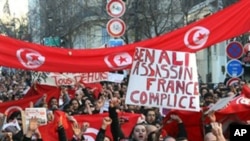
A U.S.-based expert told VOA the Obama Administration must approach the situation in Tunisia with caution.
This comes as the Washington Post, in its Sunday editorial, criticized the Administration for downplaying reforms in the Arab world and giving muted support for democracy and human rights.
The paper said the Tunisia crisis offers urgent lessons for the U.S. administration.
Steven Cook, senior fellow for Middle Eastern Studies at the Washington-based Council on Foreign Relations, said it is up to the citizens of Tunisia to determine where their country goes next.
He said other North African countries should draw lessons from the Tunisian uprising and begin to undertake genuine reforms.
“Nobody would have expected President (Zine El Abidine) Ben Ali, who presided over one of the worst police states in North Africa for the better part of the last quarter century, to have been driven from power so quickly. In terms of how this will affect other countries in North Africa, certainly, I think, the lesson that they should draw from this is that they need to get out ahead of these problems and undertake some genuine reforms,” he said.
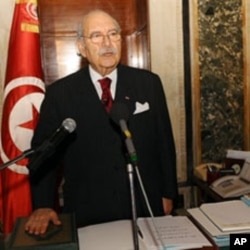
But, Cook said whether North African leaders will draw the same lessons from the Tunisian crisis remains to be seen considering that those leaders have consistently relied on coercion and violence to maintain themselves in power.
Cook said he was not surprised by Sunday’s Washington Post editorial criticizing the Obama Administration for downplaying reforms in the Arab world and giving muted support for democracy and human rights.
“It’s not surprising to me that ‘The Washington Post’ would editorialize along those lines. But, I think caution is the watchword. I think the administration needs to be smart. Certainly, the people of Tunisia, who have spoken want theirs to be a more democratic, open government, and I think the Obama Administration took a very good step by issuing a strong statement. Now the question is determining who’s actually in charge and who the United States can work with, and what policy levers the United States can pull in order to nudge the new Tunisian leaders in the direction of a more democratic future,” Cook said.
In the final analysis, Cook said it would up to Tunisians to determine where their country goes next, and that there is very little the United States can do.
Tunisia’s constitution calls for new presidential elections in 60 days. Cook said everything should be done to organize elections once the violence can be brought under control.
“Certainly, holding to the constitution and organizing the election is, I think, very important and, to the extent that they can do it, I think they should do it. The question is right now stability in Tunisia. There has been continuing violence and protests and the remnant of Ben Ali’s leadership is attempting to sow chaos in the country. But, everything should be done to organize elections and to maintain stability in the country so those elections can take place freely and fairly without the threat of violence,” Cook said.