



News / Africa

Analyst SeesTunisian Unrest as Promising, Warning to Arab World

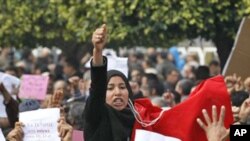
Protesters shout slogans during a demonstration in Tunis, Jan. 19. 2011.

Multimedia

Audio
  • Yale University political science professor Lust spoke with Butty

TEXT SIZE - +
James Butty

Tunisia’s transitional government Wednesday freed all the country’s political prisoners and announced it would go after assets held overseas by former President Zine Al Abidine Ben Ali and his family.

Ellen Lust, associate professor of political science at Yale University in Connecticut told VOA the release of the political prisoners is a welcome development, since most Tunisians feel the prisoners had been unduly punished by the deposed Ben Ali government.

Ellen Lust
Ellen Lust

“I think most people, certainly the people in [the] streets, feel that political prisoners in Tunisia were people who have been unduly punished for opposing a regime that they see as equally worst in terms of corruption and human rights,” she said.

Arab League Secretary-General Amr Moussa Wednesday warned Arab leaders at a summit in Egypt that the Middle East is being "broken" by poverty, unemployment and a general slide in economic conditions.

Moussa told Arab leaders the political upheaval in Tunisia is an indicator of spreading discontent in the Middle East. He said the anger of Arab citizens has reached unprecedented levels

Lust said Arab leaders find their backs against the wall in the wake of the Tunisian unrest.

“It is actually correct that the region sees a lot of unemployment, particularly among the youth. It’s not new. I think it is a warning sign to other leaders who hope that they can stem the tide of change. In many ways, they (Arab leaders) are probably more shaken now. One wouldn’t have thought that this can happen in Tunisia. So, this is a strong warning throughout the region,” Lust said.

She said leaders and citizens throughout the Middle East region are probably looking at the Tunisian unrest and realizing that the people are much more powerful than they have been.

NEW: Follow our Middle East reports on Twitter
and discuss them on our Facebook page.

You May Like

Experts Weigh In on Challenges of Closing Guantanamo Prison

Former chief military prosecutor at Guantanamo delivers petition to White House with more than 370,000 signatures, demanding facility be closed down immediately More

Karzai to Discuss Enhancing Defense Ties with India

Afghanistan looking for more military aid as it prepares for withdrawal of NATO forces by next year More

India, China Pledge to Overcome Border Tensions

Indian prime minister and Chinese premier attempt to move past tense standoff in the Himalayas during Delhi talks More

Burmese President Opens US Visit with VOA Town Hall Meeting

Ahead of his meeting with President Obama Monday, Thein Sein answered questions on human rights and economic development in his country More

This forum has been closed.
Comments
     
There are no comments in this forum. Be first and add one

Featured Videos

Your JavaScript is turned off or you have an old version of Adobe's Flash Player. Get the latest Flash player.
Video

Video US Oil Surge Could Impact Mideast Geopolitics

The United States will account for a third of new oil supplies over the next five years, and will become energy self-sufficient in 20 years, according to a new report by the Paris-based International Energy Agency (IEA). Although U.S. oil imports from Arab Gulf countries increased last year, analysts predict the U.S. will lose its dependence on Middle East imports, which is expected to have a huge impact on international relations and the balance of power. VOA's Henry Ridgewell reports.