



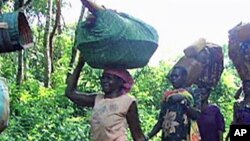
Eleven heads of state and government are to meet Wednesday in the Zambian capital, Lusaka, at a Great Lakes regional summit to look at the problem of illegal exploitation of natural resources in eastern Congo and the negative consequences they say this has had for the region.
Zambian Information Minister Ronnie Shikapwasha told VOA the region had long been concerned about illegal mining.
“Specifically, all the Great Lakes region countries are discussing the amount of the illegal mining of minerals in Congo and that’s (the) main subject of this meeting,” he said.
The Democratic Republic of Congo, one of the largest countries in Africa, shares borders with nine other countries, including Angola, Burundi, Central African Republic, Congo Brazzaville, Rwanda, Sudan, Tanzania, Uganda, and Zambia.
A report earlier this year by Global Witness, a U.K.-based advocacy group, charged that Great Lakes regional governments were not doing enough to stop the trade in illegally-exploited minerals, which human rights groups say is fueling the conflict in eastern Congo.
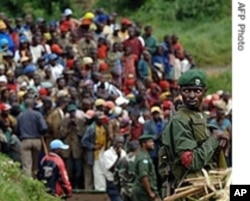
Shikapwasha said the summit is expected to consider a number of suggestions to control the trade in illegal minerals, including a regional certification process.
“The agreement that will come out of the meeting will definitely help to move the process of peace in Congo and the neighboring countries (forward). This will help because there is need for a yardstick by which to monitor the Great Lakes countries in order to ensure that Congo remains peaceful,” Shikapwasha said.
Pre-summit news was dominated by Zambia’s decision to invite Sudanese president Omar al-Bashir, who has been indicted by the International Criminal Court for crimes against humanity in Darfur.
Shikapwasha said Mr. Bashir has decided not to attend the Lusaka meeting.
The Zambian government said last week it would not arrest and surrender President Bashir to the ICC if he came to the meeting.
Shikapwasha said the Zambian government will abide by the decision of the African Union not to arrest the Sudanese leader.
“The State House made a statement that was very categorically clear on the position of Zambia, in that regard. On our part, as Zambians, we consult with everybody else in order to ensure that the position of the African Union, as well as the international community, is agreed upon in order for us to move ahead with agenda. But, we do not see that President Bashir is coming,” Shikapwasha said