Cambodia Mourns Former King Who Shaped Decades of History
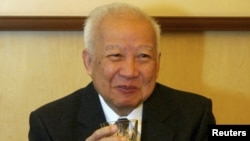
Cambodian King Norodom Sihanouk holds a glass during a meeting with Chinese State Councilor Dai Bingguo (not seen) in Beijing, October 30, 2006.
PHNOM PENH —
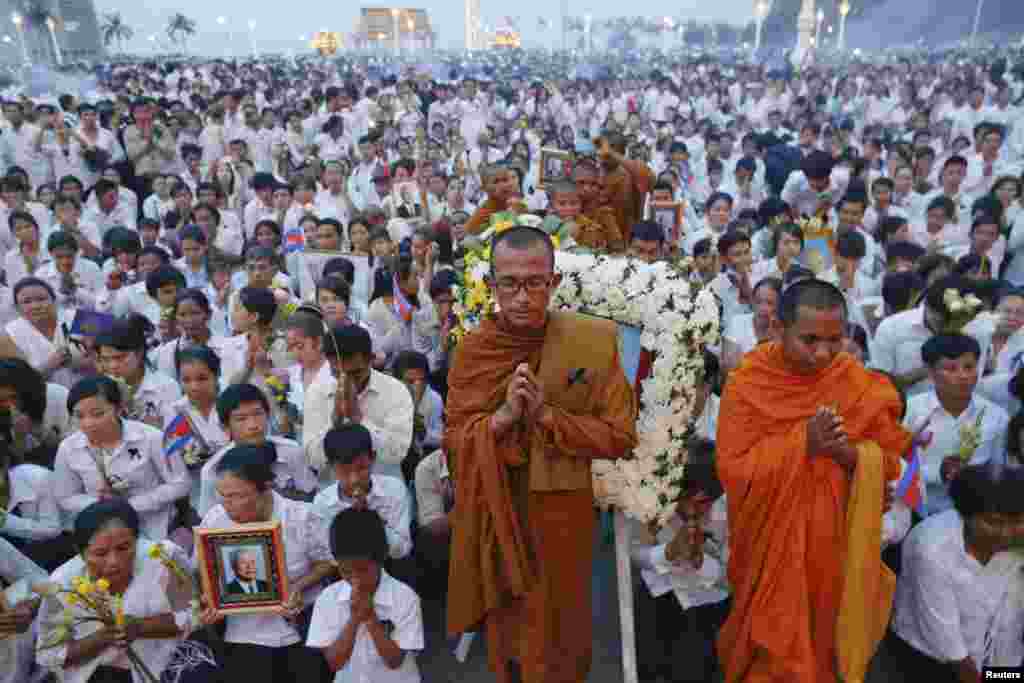
Cambodians awoke Monday to the news that their country’s revered former king, Norodom Sihanouk, died overnight in Beijing. The 89-year-old leaves behind a colorful but tumultuous legacy. To many Cambodians who mourned his death Monday, he will forever be remembered as the father of a nation.
Former Cambodian King Norodom Sihanouk
Former Cambodian King Norodom Sihanouk
Born in 1922, educated in Saigon and Paris
Came to the throne in 1941
Founded Non-Aligned Movement
Was briefly overthrown during Vietnam War and fled to China
Aligned with Khmer Rouge to oppose Vietnam's influence in Cambodia
Returned from exile in 1991 and to the throne in 1993
Abdicated to his son, Norodom Sihamoni, in 2004
Had been receiving medical treatment in China since January, 2012
Sihanouk’s death came amid one of the country’s most important religious festivals, Pchum Ben, when Cambodians pay respect to their ancestors.
At a pagoda in the capital, monks chanted while people made symbolic offerings of food to deceased relatives. Kong Sidoeun waited while his elderly mother prayed. He says the death of the man known to Cambodians as the "King-Father", came as a shock to his entire family.
“I feel shock, and unbelievable … our King-Father passed away. It’s very, very sad. I read this information to my family, and my family, my mother, my relative very shocked,” he said.
For half a century, Cambodia’s history was intertwined with Sihanouk’s. He led the country to independence from France in 1953. But his public support of the Khmer Rouge, following the 1970 coup that unseated him, also bolstered support for the communist movement that would devastate the country five years later.
Cambodia Prepares for Cremation of Former King
1/11Mourners offer prayers to the late former Cambodian King Norodom Sihanouk in Phnom Penh, January 31, 2013.
Cambodian authorities have completed preparations for the cremation Monday of the country’s former king, Norodom Sihanouk, who died in October at age 89.
Show moreShow less
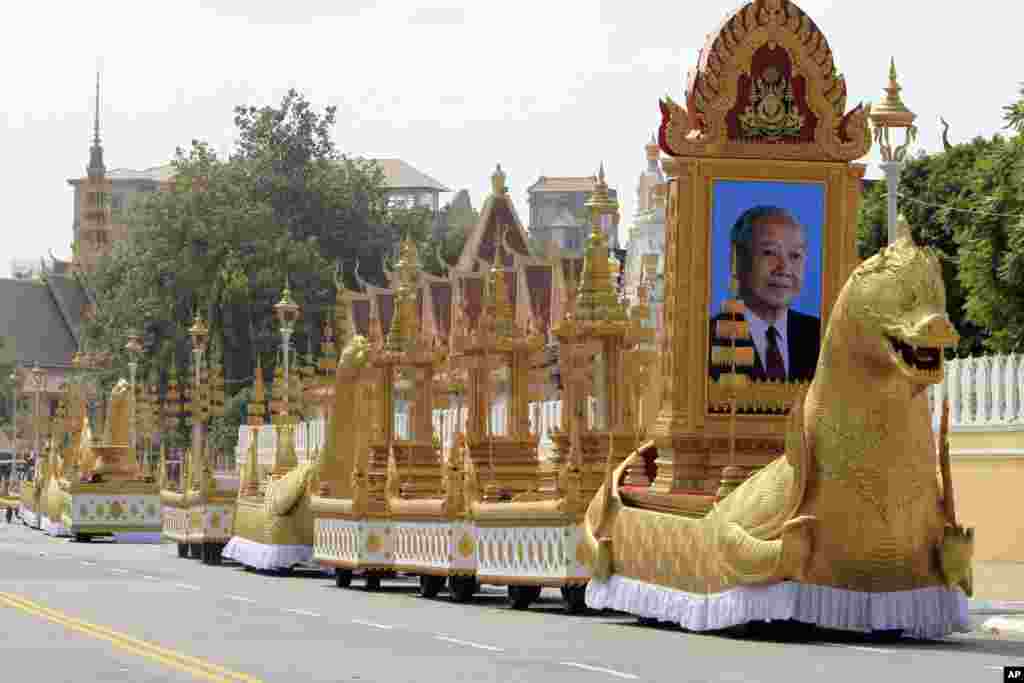
2/11The royal funeral convoys are prepared for late former King Norodom Sihanouk in Phnom Penh, January 31, 2013.
Cambodian authorities have completed preparations for the cremation Monday of the country’s former king, Norodom Sihanouk, who died in October at age 89.
Show moreShow less
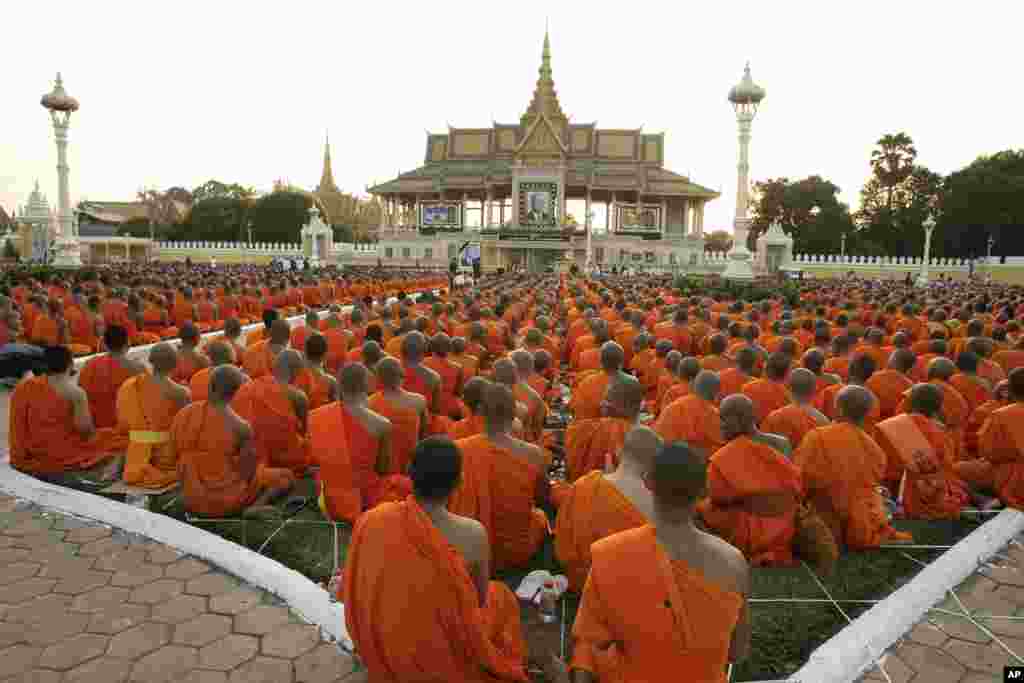
3/11Buddhist monks offer prayers to late former King Norodom Sihanouk ahead of his cremation in front of the Royal Palace in Phnom Penh, January 26, 2013.
Cambodian authorities have completed preparations for the cremation Monday of the country’s former king, Norodom Sihanouk, who died in October at age 89.
Show moreShow less
4/11Cambodian honor guards welcome the body of the late former King Norodom Sihanouk at Phnom Penh International Airport, October 17, 2012. (Heng Reaksmey/VOA)
Cambodian authorities have completed preparations for the cremation Monday of the country’s former king, Norodom Sihanouk, who died in October at age 89.
Show moreShow less
5/11Bou Kry, one of Cambodia's two Buddhist patriarchs, sits in a royal truck leading the procession that carries the coffin and body of late former King Norodom Sihanouk from the airport to the Royal Palace.(Heng Reaksmey/VOA)
Cambodian authorities have completed preparations for the cremation Monday of the country’s former king, Norodom Sihanouk, who died in October at age 89.
Show moreShow less
6/11A Buddhist monk holds flowers as he joins others waiting for the coffin of the former king Norodom Sihanouk to arrive at the Royal Palace in Phnom Penh October 17, 2012.
Cambodian authorities have completed preparations for the cremation Monday of the country’s former king, Norodom Sihanouk, who died in October at age 89.
Show moreShow less
7/11Thousands of mourners gather at the gates of the Royal Palace minutes after the coffin of former king Norodom Sihanouk arrived in Phnom Penh October 17, 2012.
Cambodian authorities have completed preparations for the cremation Monday of the country’s former king, Norodom Sihanouk, who died in October at age 89.
Show moreShow less
8/11Mount Sinabung spews ash as seen from Payung village in Karo district, North Sumatra province, Indonesia, Feb. 3, 2014.
Cambodian authorities have completed preparations for the cremation Monday of the country’s former king, Norodom Sihanouk, who died in October at age 89.
Show moreShow less
9/11Thousands of mourners pray at the gates of the Royal Palace after the coffin of former king Norodom Sihanouk entered in Phnom Penh October 17, 2012.
Cambodian authorities have completed preparations for the cremation Monday of the country’s former king, Norodom Sihanouk, who died in October at age 89.
Show moreShow less
10/11People pray as they see the coffin of former king Norodom Sihanouk on a royal truck along a street in Phnom Penh October 17, 2012.
Cambodian authorities have completed preparations for the cremation Monday of the country’s former king, Norodom Sihanouk, who died in October at age 89.
Show moreShow less
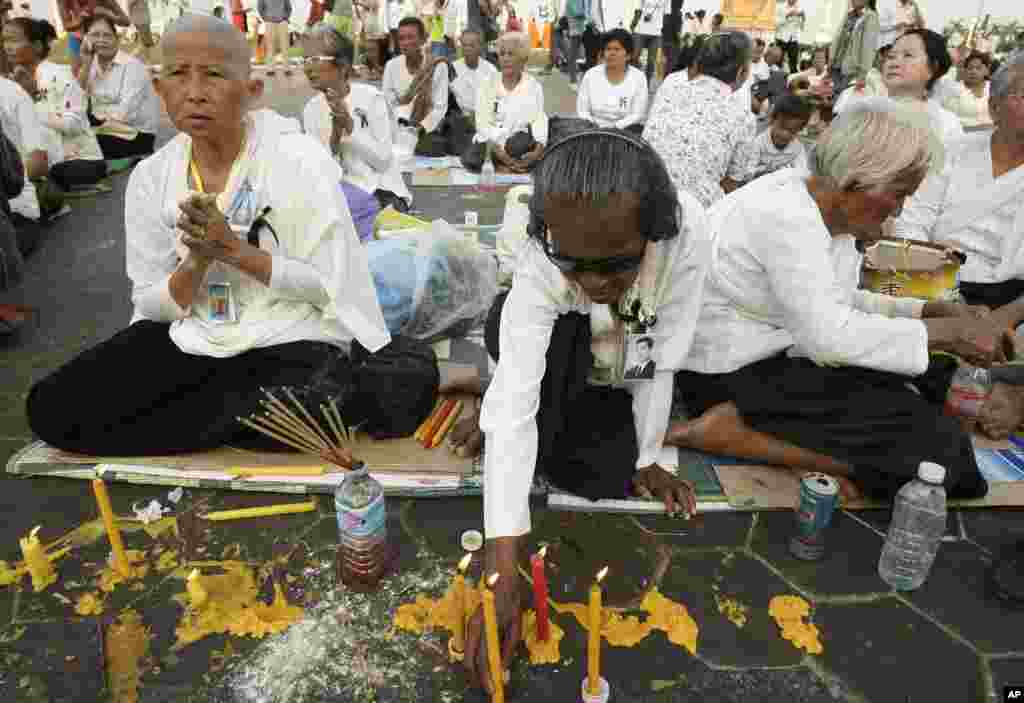
11/11Mourners burn incense and offer prayers at the Royal Palace displaying a portrait of their former King Norodom Sihanouk in Phnom Penh, Cambodia, October 17, 2012.
Cambodian authorities have completed preparations for the cremation Monday of the country’s former king, Norodom Sihanouk, who died in October at age 89.
Show moreShow less
Previous slide
Next slide
Still, Sihanouk remains revered by many here. That is particularly true among older Cambodians, who associate him with the country’s post-independence years.
“I heard from my father, my mother and also I observed from the people, nationwide, they think during his period, under his control, the country is very developed. People live with safety during that time," Sidoeun stated. "It mean that in the region, Cambodia is one of developed countries at that time so it’s a very good achievement.”
At some government buildings in the capital, flags were flown at half-mast. Local television stations aired tributes to Cambodia’s former king. Minister of Information Khieu Kanharith says Sihanouk ushered his nation into the modern world.
“You know, when I was a young one. I used to quote his work. Now when I am old, the relationship is more than personal … It’s a great loss for the whole country,” Kanharith added.
Kanharith says officials are making preparations for a royal funeral. Sihanouk’s son and the current monarch, King Norodom Sihamoni, flew to Beijing, along with Prime Minister Hun Sen, to repatriate the King-Father’s remains.