



Cambodia's government, with the help of international lenders and foreign investors, is funneling investment into the country's vast rural areas. Although the development projects are welcome in this impoverished country, there are worries that they also set the stage for the displacement of the poor. Here's our report from Cambodia's Kampong Thom province.
Cambodia's economy relies on garment exports, tourism and construction. Rural areas are largely untapped.
"So the government needs to work hard to diversify its export commodities, export products, add more value by processing more, let's say agriculture production in the country and thereby create more jobs to help the economy grow faster," said Puto Kamayana.
Country director Puto Kamayana says the Asian Development Bank is helping build roads, power plants, railways and irrigation systems, like this one in Kampong Thom province.
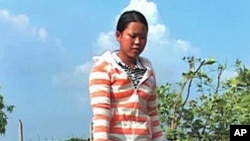
Souem came here to plant in the dry season on her relative's plot, using water from the irrigation system.
"In my home province, we have difficulty in accessing water," said Souem. "It does not provide sufficient water like what we have here."
These development projects increase interest from investors wanting to plant export crops such as rubber. China, Kuwait and South Korea are among the countries that have signed deals with Cambodia's government to create large plantations.
This 18-year-old plantation worker says he makes $120 a month, a decent wage for his family.
While big plantations provide jobs, rights groups say they drive the price of land higher, and force many small farmers off their land.
Soeum fears she might lose this land.
"But we don't know what to do because the government has not issued land title on our place yet," she said.
David Pred of Bridges Across Borders, a group that helps farmers, says big plantations are unsustainable because they leave many families with nothing.
"I think it's inevitable that people are going to demand in greater numbers accountability and better governance from their leaders," said David Pred.
The government has granted nearly a million hectares to companies to develop plantations in the countryside, were 92 percent of poor Cambodians live. For them, the hope is that the plantations provide enough jobs to make up for the small farms lost.