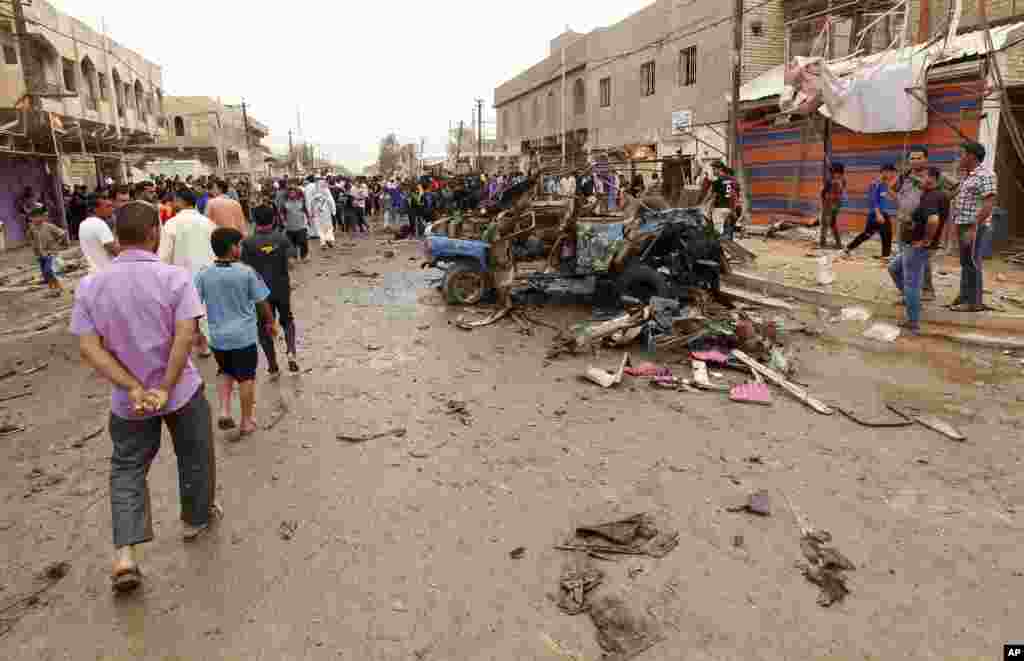
1/7Onlookers gather outside Zain al-Abideen mosque, a Shi'ite place of worship, near where a suicide bomb attack occurred, Hilla, Iraq, May 21, 2013.
More attacks have rocked Iraq, which is experiencing its worst sectarian violence since U.S. troops withdrew in December 2011.
Show moreShow less
2/7An Iraqi woman passes by the scene of a car bomb attack in Kamaliyah, a predominantly Shi'ite area of eastern Baghdad, May 20, 2013.
More attacks have rocked Iraq, which is experiencing its worst sectarian violence since U.S. troops withdrew in December 2011.
Show moreShow less
3/7Mourners stand beside coffins of four members of a family killed in Basra bomb attacks, during a funeral in Najaf, Iraq, May 20, 2013.
More attacks have rocked Iraq, which is experiencing its worst sectarian violence since U.S. troops withdrew in December 2011.
Show moreShow less
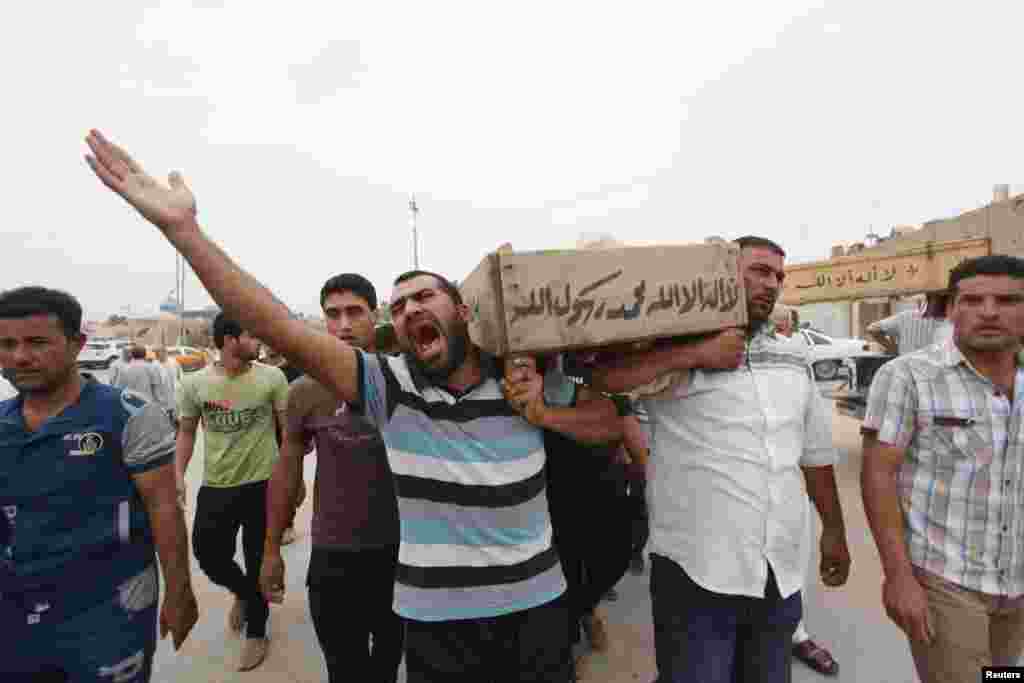
4/7Relatives carry the coffin of an Iraqi police officer killed by militants, Najaf, Iraq, May 20, 2013.
More attacks have rocked Iraq, which is experiencing its worst sectarian violence since U.S. troops withdrew in December 2011.
Show moreShow less
5/7Residents gather at the site of a bomb attack in Basra, Iraq, May 20, 2013.
More attacks have rocked Iraq, which is experiencing its worst sectarian violence since U.S. troops withdrew in December 2011.
Show moreShow less
6/7A wrecked truck is removed from the site of a car bomb attack in front of a crowded popular restaurant in Basra, Iraq, May 20, 2013.
More attacks have rocked Iraq, which is experiencing its worst sectarian violence since U.S. troops withdrew in December 2011.
Show moreShow less
7/7People look at the scene of a car bomb attack in a predominantly Shi'ite area of eastern Baghdad, May 20, 2013.
More attacks have rocked Iraq, which is experiencing its worst sectarian violence since U.S. troops withdrew in December 2011.
Show moreShow less
Previous slide
Next slide
CAIRO —
A wave of car bombings and suicide attacks against Shi'ite Muslims ripped through Iraqi cities Monday, killing at least 76 people and wounding scores more, extending the worst sectarian violence since U.S. troops withdrew from the country in December 2011.
Monday's violence was extensive in Baghdad, where at least nine car bombs exploded at busy market places, crowded bus stops, and other areas of Shi'ite neighborhoods.
Burned-out vehicles and twisted metal littered the roadside near a car repair shop in a working-class district ravaged by one of the blasts. A young man who works at the repair shop says the force of the blast propelled people and debris in all directions.
The explosions followed another series of bloody car-bomb attacks Friday, aimed at mostly Sunni targets. Nearly 70 people were killed in those attacks.
Iraqi Prime Minister Nouri al-Maliki said at a news conference Monday afternoon that the recent wave of violence was starting to resemble the worst period of sectarian strife to hit Iraq between 2005 and 2007. He said most Iraqis oppose such violence.
Maliki said that the violence does not reflect the will of the Iraqi people. He said political activists are stoking tensions to create a cover for acts of violence and carry out the agenda of foreign parties.
Bitter sectarian feuds
The rising violence in Iraq comes as a bitter and brutal sectarian conflict rages in neighboring Syria.
Analyst Maria Fantappie of the International Crisis group says the Syrian conflict is fueling some of the violence in Iraq, but that the domestic political stalemate and Maliki's unwillingness to compromise with his Sunni opponents is the main catalyst for the violence.
"On one side you have the government, which has given very piecemeal concessions without really undertaking negotiations," she said. "And on the other side you have the protesters, who are very divided and they did not, over the past five months, succeed in forming a united block that could be a counterpart for the government in the negotiations."
Fantappie said that attempts to hold negotiations appear to be stalled. She said the government's harsh security measures and weak response to protesters´demands gave the green light to members of the former resistance to respond with an armed fight.
The United Nations said 712 people were killed in April, making it the deadliest month in Iraq since June 2008.