


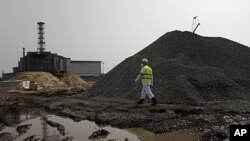
In Ukraine they call them ‘Chernobylites’. People affected by the accident at the Chernobyl Nuclear Power Plant in then-Soviet Ukraine. Residents evacuated after the April 26, 1986 disaster lost their homes as well as their health. And the workers sent in to clean up also developed health problems.
Now that access to the Chernobyl Exclusion Zone has become possible, some evacuees are returning to visit their abandoned neighborhoods for the first time since those tragic events of 25 years ago.
Twenty-five-year-old Ivanna was just 6 months old when Reactor Number Four exploded at Chernobyl, and Pripyat - founded in 1970 to house workers for the plant - was evacuated. Over the years, she heard many stories from her parents about the city where she was born.
"I wanted to go there," she said. "I was drawn to that place. I would ask my mother - ‘Mama, when can we finally go?’”
At the time of the Chernobyl disaster, Ivanna’s older brother Yevhen was seven years old. "My childhood was very happy there, in Pripyat. Then came the constant moves, visits to clinics," he said.
The Makarevych family now lives on the outskirts of the capital. Kyiv. But mother Nadiya, who worked as a medical assistant in Pripyat ,and father Vasyl, who made cement blocks at the plant, still cannot forget the town where they were so happy.
It was paradise on earth. We had a river nearby, woods nearby, multitudes of children all around, all young. There were many flowers. It was so beautiful," she said.
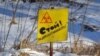
This former paradise is now known as the Exclusion Zone. Scattered throughout the area, the family finds checkpoints, barbed wire and stations that measure radiation levels.
To get to their apartment, the Makarevych family needs a special pass. They will also need to overcome quite a few physical obstacles.
The family finally arrives at the apartment. The door easily gives in and memories come flooding back. "This is the frame of my crib. My father made it himself, by hand," she said.
Coming Home to Chernobyl's Desolation Zone, photo gallery by VOA's Diana Markosian
The morning of the accident, Ivanna’s crib stood below an open window. No one knew of the explosion or the radiation leak, and no one said anything. That morning Nadiya had sent her son off to school and was set to wash the windows and paint the balcony in preparation for May Day celebrations.
Having visited their own apartment, the family goes next door. After the evacuation, they lost contact with their neighbors, so they scratch their telephone number in Kyiv on the wall - just in case.
Ivanna searches for her birth records in Pripyat’s Maternity Ward without success.. But her brother Yevhen finds his teacher’s grade book in the building where he went to school.
"Here I am, here I am ! Makarevych: 3, 3, 3, 5," he said.
Even the date of the accident April 26, 1986 has been entered: Makarevych, Yevhen - present.
At the end of the day, these Pripyat evacuees stand alone among the abandoned buildings of a ghost town. They came here with the intention of leaving behind their fears. But it appears they only re-opened old wounds that have held them captive for a quarter of a century.