


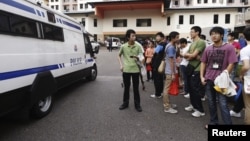
China has expressed "great concern" about Singapore's arrest of four Chinese bus drivers accused of involvement in a rare strike in the Southeast Asian nation earlier this week.
Singapore police arrested the four Chinese immigrant workers on Wednesday and Thursday and charged them with inciting an illegal strike, an offense punishable by up to a year in prison and a maximum fine of $1,600. One of the men faces an additional charge of posting Internet messages that encouraged his co-workers to strike.
The four were among 171 Chinese bus drivers who went on strike on Monday to protest being paid less than their Malaysian counterparts who work for the same Singaporean state-run transport company, SMRT Corporation. The strike was over by Wednesday, when most of the workers, who are not unionized, reported back for duty.
The Chinese Embassy in Singapore released a statement on Thursday, expressing concern about the arrests and saying it was trying to arrange consular access to the four detained drivers as soon as possible. It called for the "legitimate rights and interests" of the Chinese workers to be protected. Singaporean authorities promised to examine the drivers' grievances.
When the strike began, the Chinese Embassy also urged the bus drivers to abide by Singaporean laws and avoid affecting public travel. Local laws prohibit workers in essential services such as transportation from going on strike without giving at least 14 days' notice.
Singapore has long used such laws to keep a lid on labor unrest and political dissent. Its last strike was organized by shipyard workers in 1986.
The government of the wealthy city-state also has had to rely on hundreds of thousands of migrants from less-developed Asian nations to ease a chronic shortage of labor for low-skilled jobs deemed undesirable by Singaporeans.
Foreign workers make up about one-third of Singapore's population of 5.1 million. Many migrants also work in mid- or high-level positions in the international financial center and port, drawing complaints from locals who have to compete with foreigners for jobs.
Singapore police arrested the four Chinese immigrant workers on Wednesday and Thursday and charged them with inciting an illegal strike, an offense punishable by up to a year in prison and a maximum fine of $1,600. One of the men faces an additional charge of posting Internet messages that encouraged his co-workers to strike.
Chinese Migrants in Singapore
Chinese Migrants in Singapore- Singapore is home to 200,000 Chinese migrants
- Most work in construction, manufacturing, maritime and service industries
- They apply for work permits through agents who charge substantial commission fees
- Many work long hours without overtime pay, some accuse employers of exploitation
- Singapore labor laws offer protection to both migrant and local workers
The Chinese Embassy in Singapore released a statement on Thursday, expressing concern about the arrests and saying it was trying to arrange consular access to the four detained drivers as soon as possible. It called for the "legitimate rights and interests" of the Chinese workers to be protected. Singaporean authorities promised to examine the drivers' grievances.
When the strike began, the Chinese Embassy also urged the bus drivers to abide by Singaporean laws and avoid affecting public travel. Local laws prohibit workers in essential services such as transportation from going on strike without giving at least 14 days' notice.
Singapore has long used such laws to keep a lid on labor unrest and political dissent. Its last strike was organized by shipyard workers in 1986.
The government of the wealthy city-state also has had to rely on hundreds of thousands of migrants from less-developed Asian nations to ease a chronic shortage of labor for low-skilled jobs deemed undesirable by Singaporeans.
Foreign workers make up about one-third of Singapore's population of 5.1 million. Many migrants also work in mid- or high-level positions in the international financial center and port, drawing complaints from locals who have to compete with foreigners for jobs.
Some information for this report was provided by AFP and Reuters.