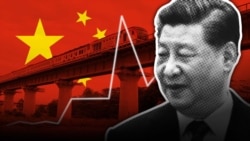



America's biggest creditor -- China -- is signaling deep unhappiness over this week's deal to raise the U.S. debt ceiling and the way it was accomplished.
A Chinese credit rating agency Wednesday downgraded U.S. debt, saying the deal does nothing to address the underlying problem. And the official Xinhua news agency dismissed the negotiating process that produced the deal as "a madcap farce of brinksmanship."
Zhou Xiaochuan, the governor of China's central bank, used more measured language but issued a similar message. He called for Washington to take concrete and responsible steps to rebuild confidence in U.S. Treasury bonds, saying uncertainties are a threat to the global economic recovery.
Zhou welcomed Tuesday's deal, but said he will be watching closely to see how it is implemented. He also said China will continue seeking to diversify its investments.
China's Dagong credit rating agency said it was downgrading U.S. debt from A-plus to A because the deal does nothing to improve the United States' ability to repay its debts.
Analysts said the downgrade was unlikely to affect interest rates since better-known American agencies like Moody's and Fitch have decided to leave the United States with its top AAA rating. But Dagong's analysis closely tracked a commentary published a day earlier by the People's Daily newspaper, which speaks for the leaders of China's ruling Communist Party.
Patrick Chanovec, an associate professor at Tsinghua University's school of economics in Beijing, told VOA that Dagong has always been highly critical of U.S. debt. But he said that the "messy" process that led to the debt deal has shaken a lot of nerves among major investors.
Xinhua on Wednesday said the United States has a "runaway debt addiction" which has tarnished its credibility and remains as a ticking time bomb. It said Tuesday's debt deal had served only to make the fuse an inch longer.
The agency said the "world rattling" debt fight had exposed a willingness of American politicians to "politicize the economics while trivializing the politics." In their fight for political advantage, it said, Washington politicians are threatening to detonate a "bomb of mass destruction" that will create shock waves around the world.
China holds the world's largest foreign exchange reserves at $3.2 trillion, with about two-thirds of that believed to be invested in dollars.
Despite the central bank's desire to diversify into other currencies, analysts said China has few viable alternatives for its massive earnings. The People's Daily acknowledged the same point in its commentary Tuesday.