


A Chinese Internet activist says Beijing police have offered to protect him after he revealed a sex scandal involving a Communist party official in the central city of Chongqing.
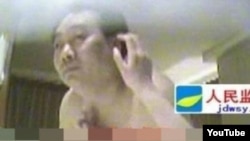
Zhu Ruifeng broke the scandal on his website November 20, uploading images that he said were from a 2007 video of a Chongqing district party chief having sex with an 18-year-old mistress.
The images went viral on Chinese social media sites, prompting authorities to investigate. They quickly confirmed the authenticity of the video and fired the official, Lei Zhengfu, on Friday.
Chongqing: Facing More Scandal
Speaking to VOA Tuesday, Zhu said he has videos incriminating other Chongqing officials and needs time to verify the images before making them public. He also said he believes Chongqing authorities have been monitoring his phone in recent days, and he accused them of intimidation.
Beijing-based Zhu said a police officer in the Chinese capital called him to express concern for his safety and to offer security guarantees. "Officials of the Beijing Public Security Bureau, as well as leaders from (Beijing's) Xicheng district branch are paying attention to this situation," he said.
In an editorial published Tuesday, the state-run China Daily newspaper welcomed what it called the "prowess" of Zhu and other activists who use the Internet as a "tool against abusive officials."
Government Praises Activism
The paper said rumors about Lei's "philandering and corruption" had circulated locally for years, but Chinese authorities did not launch an investigation until the sex tape was posted online.
It said Lei's case shows the effectiveness of social media in triggering government action, and it urged anti-corruption leaders to "embrace" Internet activists as a "close ally."
China's main anti-corruption agency issued a statement Monday saying it recognizes a need for authorities to "seriously address" corruption problems "reported by the masses."
Chongqing's anti-corruption body said Monday its investigation of Lei Zhengfu is continuing, and it pledged to release the results to the public. It also said Lei's rapid dismissal met with "overwhelming support" from Chinese Internet users.
Critics: Beijing Fails to Lead
Other Chinese bloggers were not impressed. In an article published Tuesday on activist website Global Voices, Hong Kong-based media activist Oiwan Lam said some Internet users complained that the government is failing to take the lead in fighting corruption.
U.S. digital rights advocate Eva Galperin said Beijing's praise of Zhu Ruifeng also does not represent an easing of government restrictions on social media sites such as Weibo and Renren.
"For the central government, Internet activism ... that singles out a few 'bad apples' [corrupt officials] is fine, but political and social red lines remain," said Galperin, an international freedom of expression coordinator at the San Francisco-based Electronic Frontier Foundation. "Allowing [such] activism does not mean, for example, that Tibetan activists will see any increased tolerance."
Exposing 'Bad Apples'
Chinese state media have credited Internet users with exposing two other recent corruption cases.
In September, bloggers posted photos of Shaanxi provincial official Yang Dacai wearing luxury watches beyond the reach of his salary, leading authorities to fire him.
In October, Internet users revealed that Guangdong provincial official Cai Bin owned dozens of homes, resulting in another investigation.
Galperin said Chinese authorities do not appear to respond in the same way to all scandals that surface online.
"With the Internet as heavily filtered and censored as it is in China, it is hard to know for certain how many scandals are being suppressed for every one that is being responded to," she said.
Yibing Feng of VOA's Mandarin Service contributed to this report.
Zhu Ruifeng broke the scandal on his website November 20, uploading images that he said were from a 2007 video of a Chongqing district party chief having sex with an 18-year-old mistress.
The images went viral on Chinese social media sites, prompting authorities to investigate. They quickly confirmed the authenticity of the video and fired the official, Lei Zhengfu, on Friday.
Chongqing: Facing More Scandal
Speaking to VOA Tuesday, Zhu said he has videos incriminating other Chongqing officials and needs time to verify the images before making them public. He also said he believes Chongqing authorities have been monitoring his phone in recent days, and he accused them of intimidation.
Beijing-based Zhu said a police officer in the Chinese capital called him to express concern for his safety and to offer security guarantees. "Officials of the Beijing Public Security Bureau, as well as leaders from (Beijing's) Xicheng district branch are paying attention to this situation," he said.
In an editorial published Tuesday, the state-run China Daily newspaper welcomed what it called the "prowess" of Zhu and other activists who use the Internet as a "tool against abusive officials."
Government Praises Activism
The paper said rumors about Lei's "philandering and corruption" had circulated locally for years, but Chinese authorities did not launch an investigation until the sex tape was posted online.
It said Lei's case shows the effectiveness of social media in triggering government action, and it urged anti-corruption leaders to "embrace" Internet activists as a "close ally."
China's main anti-corruption agency issued a statement Monday saying it recognizes a need for authorities to "seriously address" corruption problems "reported by the masses."
Chongqing's anti-corruption body said Monday its investigation of Lei Zhengfu is continuing, and it pledged to release the results to the public. It also said Lei's rapid dismissal met with "overwhelming support" from Chinese Internet users.
Critics: Beijing Fails to Lead
Other Chinese bloggers were not impressed. In an article published Tuesday on activist website Global Voices, Hong Kong-based media activist Oiwan Lam said some Internet users complained that the government is failing to take the lead in fighting corruption.
U.S. digital rights advocate Eva Galperin said Beijing's praise of Zhu Ruifeng also does not represent an easing of government restrictions on social media sites such as Weibo and Renren.
"For the central government, Internet activism ... that singles out a few 'bad apples' [corrupt officials] is fine, but political and social red lines remain," said Galperin, an international freedom of expression coordinator at the San Francisco-based Electronic Frontier Foundation. "Allowing [such] activism does not mean, for example, that Tibetan activists will see any increased tolerance."
Exposing 'Bad Apples'
Chinese state media have credited Internet users with exposing two other recent corruption cases.
In September, bloggers posted photos of Shaanxi provincial official Yang Dacai wearing luxury watches beyond the reach of his salary, leading authorities to fire him.
In October, Internet users revealed that Guangdong provincial official Cai Bin owned dozens of homes, resulting in another investigation.
Galperin said Chinese authorities do not appear to respond in the same way to all scandals that surface online.
"With the Internet as heavily filtered and censored as it is in China, it is hard to know for certain how many scandals are being suppressed for every one that is being responded to," she said.
Yibing Feng of VOA's Mandarin Service contributed to this report.