


China says the international community should avoid interfering in Burma's November elections. The call comes at the start of Burma's military leader Than Shwe four-day state visit.
As Beijing prepared to welcome Burma's Senior General Than Shwe, the Chinese Foreign Ministry rebuffed international criticism of the close ties between the two Asian neighbors.
Foreign Ministry spokeswoman Jiang Yu said that Burma is a friendly neighbor to China. She went on to say that Burma's election in November is an internal matter.
Jiang says countries critical of Burma's government should refrain from what she describes as any negative impact on its political process - especially during the run-up to the elections.
Several governments, including the United States, say it does not appear the elections, the first in 20 years, will be fair. Human-rights groups and Burmese opposition members say the elections will allow the military to continue to dominate the government.
Jiang says General Than Shwe will meet Chinese President Hu Jintao and Premier Wen Jiabao while in the country. She says the visit will further cement the already close ties between the neighbors.
General Than Shwe also will tour the Shanghai Expo and Shenzhen, the economic powerhouse where China's rapid industrial development began.
Human-rights groups have criticized China over its support for Burma. Most developed nations have imposed economic sanctions on the government because of its poor human-rights record, but China has never done so.
But last year, Beijing publicly rebuked Burma after fighting between its army and an ethnic minority group's militia sent more than 30,000 refugees into China.
Regional political analysts say on this visit General Than Shwe will seek continued economic and diplomatic support from Chinese leaders. But they are likely to urge him to avoid causing instability in the region.
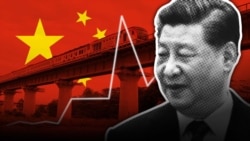
China is now Burma's third largest trading partner and investor after Thailand and Singapore. Bilateral trade totaled $2.9 billion in 2009.