News / Asia

China Tightens Controls on Internet Use

A man uses a computer at an Internet cafe in Beijing, Friday, Dec. 28, 2012. China is increasing already tight controls on Internet use and electronic publishing after embarrassing online reports about official abuses.
TEXT SIZE - +
China’s legislature has approved new rules that will tighten government control of the Internet by requiring users to register their real names, and demanding Internet companies censor online material.

The state-run Xinhua News Agency says lawmakers approved the measures Friday at the closing meeting of a five-day session of the Standing Committee of the National People's Congress.

Beijing says the regulations are aimed at protecting the personal information of Web users and cracking down on abuses such as junk e-mail. The rules also aim to “safeguard national security and social public interests,” according to Xinhua. They have the same legal effect as a law.

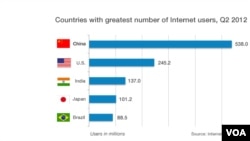
China has long tried to get Internet users to register their real names rather than pseudonyms with service providers, but with half a billion netizens, the task has been an uphill battle. The new regulations aim to change that and, for the first time, lay the written groundwork to police companies that are not complying with the government’s censorship policies.


Identity protection or censorship?

The decision says network service providers will “strengthen management of information released by users” by instantly stopping the transmission of “illegal information” once it is spotted and by taking relevant measures. Those measures, Xinhua reports, include removing the information and saving records, before reporting it to authorities.

The rules did not say what constitutes illegal information.

Beijing has a complex information management system that includes blocking foreign websites like YouTube and Facebook, censoring Internet searches for sensitive words and phrases and deploying an army of bloggers to steer online discourse away from potentially volatile political and social issues.

Despite that, the growth of China’s Internet has lead to a growth in online calls for reform. Complaints on Chinese microblogs about corruption, abuse of power, human rights violations and environmental pollution have led to action offline, including street protests and the dismissal or resignation of corrupt officials.

Fighting corruption

Human rights and free speech advocates say real-name registration will curtail people's ability to report, often anonymously, corruption and official abuses.

Li Fei, a Standing Committee member, dismissed those concerns Friday at a news conference in Beijing.

"We still call on the public to expose any corruption by all means after the law comes out," he said. "The illegal and corrupted will be punished.”

Online chatter about a string of sex and financial scandals has led to the downfall of several local officials in recent weeks.

Duncan Clark, a Beijing-based consultant and a senior adviser to Stanford University's Graduate School of Business, said China seems to be trying to strike a balance between information control and government accountability.

"We’ve seen for a long time the Internet being used to expose corruption but what’s been interesting in the recent few weeks, which may be a counter current to these new crackdowns on the Internet, is a lot of this has been followed up,” he said, describing the Internet as a “scary thing” for many officials who don’t want their actions questioned.

The new normal?

The latest Internet regulations come amid a crackdown on virtual private networks, or VPNs, which Web users need to get around China’s so-called “Great Firewall.”

Chinese officials say there has been no change in the policy toward VPN providers, which they say must be registered with the government. But the move has caused an uproar among Chinese netizens, as well as foreign companies and journalists who say the crackdown is preventing them from doing their jobs.

Clark said there is often a spike in Internet controls around sensitive events, like the recent 18th Communist Party Congress that elected China’s new generation of leaders. He said after such events, there is a general lack of enforcement, followed by another drive ahead of another big event. But this time is different, he said.
 
“Since the Party Congress, we’ve seen increased measures, not lessened,” Clark said. “So the big question ... is, when we get to the spring of next year, when the new leadership takes up the formal positions in the new government, is this the new normal?”


Additional reporting by Victor Beattie.

You May Like

India, China Pledge to Overcome Border Tensions

Indian prime minister and Chinese premier attempt to move past tense standoff in the Himalayas during Delhi talks More

Burmese President Opens US Visit with VOA Town Hall Meeting

Ahead of his meeting with President Obama Monday, Thein Sein answered questions on human rights and economic development in his country More

Video Washington Week: Focus on Burma, US Government Scandals

President Thein Sein visits the White House on Monday, Congressional probes of multiple scandals are continuing More

This forum has been closed.
Comment Sorting
Comments page of 2
 Previous    
by: Handerson from: china
December 28, 2012 11:14 PM
Acutually, those regulations can not bring any benefit to the personal information pretection and the internet development, on the contrary, that will make personal information leak out everywhere. Because of those rules, i'll refuse to register even at the cost of far away from the web.

Chinese government is always "good" at playing "social public interests", as a matter of fact, they haven't done any survey or ballot, they just do it by only several days and persons who work for government instead of social or science called "lawyers or experts", especially on a closing meeting.

Therefore, this regulations haven't any public interests, the reason that they approve it is that they are afraid of the report and flesh search about the evil such as corruption.


by: Anonymous from: R. P. China
December 28, 2012 6:51 PM
I'm a Chinese. I want to complain about that the figure in the top. It cannot show the real scene of today's Internet cafe in China. Why VOA didn't label the stamp time of the pic? It must be very old. Nowadays in China, Internet cafes are high quality and looks very beautiful

In Response

by: Freedom of CHN from: China
January 02, 2013 5:48 AM
Chinese are catching up with the latest world,and we will be the leader of the future.Of course,we firstly need to reform ourselves.

In Response

by: Kate Woodsome from: Washington
December 29, 2012 12:04 AM
Thanks for your feedback. The file photo originally paired with this article was from 2005 - far too old to reflect present-day Internet cafes in China, as you note. We have updated the photo with one taken in Beijing on Dec 28, 2012.


by: Jonathan Huang from: canada
December 28, 2012 11:25 AM
I dont see what is the problem with the real name registering. Should we be responsible for what we are saying? If you are telling the truth then there is nothing to be afraid of, if you are lying then you should be accountable.
For sure it is a bad news for those coward rumourers hiding behind the screen with their secret agenda.

In Response

by: dario
December 29, 2012 9:23 AM
What if you disagree with a law that they pass? or the way you or a friend have been treated by the authorities? & you want to let the world know about it.
They will know exactly who you are, and will find a reason to punish you.
Its all about control!


by: Zack Shoemaker
December 28, 2012 9:06 AM
China says.....who believes anything China says? We do, because we don't want to think about what all that 'Made in China' stuff we buy. That would bring forth a feeling of guilt. Produce what you consume, or at least, don't fund the communists.


by: Lanche from: Colorado
December 28, 2012 8:58 AM
So this is what it looks like when you lose your Freedom. It could happen very easily here in America too. Your average American has no idea what they voted for in our leaders. But you can slowly see your rights being taken away and then increasing exponentially on a daily basis. Better wake up America!!!!

In Response

by: dario
December 29, 2012 9:21 AM
Absolutely spot on! Its all about control, because when they increase the pressure on the population, if you speak out against these global tyrants, they know exactly who you are and will get you on some charge! The New World Order is upon us, you'd better believe it!

Comments page of 2
 Previous    

Featured Videos

Your JavaScript is turned off or you have an old version of Adobe's Flash Player. Get the latest Flash player.
Video

Video Boston Bomber Spent 6 Months in Russia’s Most Violent Republic

The news of the Boston Marathon bombings circled the globe, and resonated here in Dagestan, a majority Muslim republic in Russia, on the shores of the Caspian Sea. Last year, Tamerlan Tsarnaev, the older of two brothers suspected of the bombings and a long-time Boston resident, returned to Dagestan, where he had lived for a year during his youth. Dagestan was the land of his maternal ancestors. But in the last two years, this republic of 3 million people has gained notoriety as the region with the highest level of political and religious violence in all of Russia. VOA's James Brooke reports from Makhachkala, Russia.