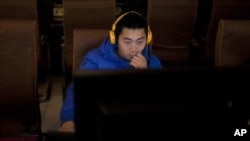
A debate about government censorship involving China's influential Southern Weekly magazine continues to generate discussion on popular websites Tuesday. Despite efforts by online monitors to censor discussion, some prominent supporters of the publication found ways to send coded messages of support.
Li Chengpeng, a well-known blogger with more than six million followers on Weibo, China's Twitter-like service, commented on his post being deleted twice by censors.
“You can delete the world, but you cannot delete dignity,” he wrote.
Other users have posted similar messages, complaining that their posts had been “harmonized” - a Chinese expression that refers to online censorship of sensitive comments.
Such messages highlight the tightening of online censorship accompanying the standoff between journalists of the Southern Weekly and authorities, who allegedly changed the magazine's annual New Year address. The editorial, which originally called for constitutional reforms in China, was replaced with a piece that praised the Communist party.
Related - Chinese Paper Has Long History of Challenging Authorities
The censorship allegations have caused a stir online, with scholars and analysts calling for radical reform of the country's media management system.
“What we support is not just one newspaper, but it is the right of freedom of expression for citizens,” a Beijing-based user called One True Word wrote on his microblog account, “What we oppose is not just some ferocious government official, but a repulsive system that oppresses humanity.“
On his verified Weibo account, Zheng Tingxin, an editor at Southern People Weekly, owned by the same media group of Southern Weekly, posted a picture showing cameras being installed in front of the weekly's Guangzhou headquarters.
Hundreds of protesters had gathered in front of the magazine's office on Monday, bearing chrysanthemum and jasmine flowers and carrying banners in support of the publication.
On Tuesday, a scuffle broke out between supporters of the magazine and a smaller group of leftists holding posters of Chairman Mao and carrying banners that read “Support the Communist Party, support Maoism, and support the attacks against the traitor press.”
Related - Chinese Continue Protest Against Media Censorship
Such pro-party slogans echo allegations made by state-owned media that the protests have been orchestrated by “hostile foreign forces,” and that they will not impact on the way China manages the media.
“There is one common knowledge,” an editorial by the populist Global Times newspaper read. ”In the current political situation, the kind of "media freedom” these people's hearts aspire to is not possible in China. Chinese media can only develop in accordance with the reality in China, media reform ought to be a part of China's overall reform.”
In response, microblog messages shot back at what they say is the Chinese official media's hypocritical stance.
“Marx, Engels, Lenin, Stalin, are they all hostile foreign forces?” A designer based in Beijing wrote on his microblog account.
So far, there has been no official comment from authorities on the alleged interference of propaganda department about the newspaper's new year editorial.
Hu Xijin, editor of the Global Times, urged authorities to respond.
“After several days of public ferment over the Southern Weekly affair, the case is not only a friction between the editorial and the management sides of the newspaper, but it has spread to the whole Internet,” Hu wrote on Tuesday. “There has been no response from Chinese officials and I think there should be… ”
This standoff comes in the middle of a leadership shift that will end in March, when Xi Jinping and Li Keqiang will officially take the lead of China's government.
Some observers believe that the incident might give the leadership the chance to implement their calls for reform, which have intensified after Xi Jinping took over as the Communist party chief.
Zhang Xin, one of China's most successful real estate developers wrote on her microblog account that history is defined by the least anticipated events.
“Who would have thought that something like this Southern media incident could happen? How do we deal with it? The resolution to reform of the new leadership is at a test here," she said. "Doesn't reform mean more openness? And, doesn't more openness mean more freedom? And, isn't more freedom but more realism?”
Media reports on Tuesday suggested that the magazine's editors are to meet with propaganda officials in an effort to resolve the dispute.
Li Chengpeng, a well-known blogger with more than six million followers on Weibo, China's Twitter-like service, commented on his post being deleted twice by censors.
“You can delete the world, but you cannot delete dignity,” he wrote.
Other users have posted similar messages, complaining that their posts had been “harmonized” - a Chinese expression that refers to online censorship of sensitive comments.
Such messages highlight the tightening of online censorship accompanying the standoff between journalists of the Southern Weekly and authorities, who allegedly changed the magazine's annual New Year address. The editorial, which originally called for constitutional reforms in China, was replaced with a piece that praised the Communist party.
Related - Chinese Paper Has Long History of Challenging Authorities
The censorship allegations have caused a stir online, with scholars and analysts calling for radical reform of the country's media management system.
“What we support is not just one newspaper, but it is the right of freedom of expression for citizens,” a Beijing-based user called One True Word wrote on his microblog account, “What we oppose is not just some ferocious government official, but a repulsive system that oppresses humanity.“
On his verified Weibo account, Zheng Tingxin, an editor at Southern People Weekly, owned by the same media group of Southern Weekly, posted a picture showing cameras being installed in front of the weekly's Guangzhou headquarters.
Hundreds of protesters had gathered in front of the magazine's office on Monday, bearing chrysanthemum and jasmine flowers and carrying banners in support of the publication.
On Tuesday, a scuffle broke out between supporters of the magazine and a smaller group of leftists holding posters of Chairman Mao and carrying banners that read “Support the Communist Party, support Maoism, and support the attacks against the traitor press.”
Related - Chinese Continue Protest Against Media Censorship
Such pro-party slogans echo allegations made by state-owned media that the protests have been orchestrated by “hostile foreign forces,” and that they will not impact on the way China manages the media.
“There is one common knowledge,” an editorial by the populist Global Times newspaper read. ”In the current political situation, the kind of "media freedom” these people's hearts aspire to is not possible in China. Chinese media can only develop in accordance with the reality in China, media reform ought to be a part of China's overall reform.”
In response, microblog messages shot back at what they say is the Chinese official media's hypocritical stance.
“Marx, Engels, Lenin, Stalin, are they all hostile foreign forces?” A designer based in Beijing wrote on his microblog account.
So far, there has been no official comment from authorities on the alleged interference of propaganda department about the newspaper's new year editorial.
Hu Xijin, editor of the Global Times, urged authorities to respond.
“After several days of public ferment over the Southern Weekly affair, the case is not only a friction between the editorial and the management sides of the newspaper, but it has spread to the whole Internet,” Hu wrote on Tuesday. “There has been no response from Chinese officials and I think there should be… ”
This standoff comes in the middle of a leadership shift that will end in March, when Xi Jinping and Li Keqiang will officially take the lead of China's government.
Some observers believe that the incident might give the leadership the chance to implement their calls for reform, which have intensified after Xi Jinping took over as the Communist party chief.
Zhang Xin, one of China's most successful real estate developers wrote on her microblog account that history is defined by the least anticipated events.
“Who would have thought that something like this Southern media incident could happen? How do we deal with it? The resolution to reform of the new leadership is at a test here," she said. "Doesn't reform mean more openness? And, doesn't more openness mean more freedom? And, isn't more freedom but more realism?”
Media reports on Tuesday suggested that the magazine's editors are to meet with propaganda officials in an effort to resolve the dispute.