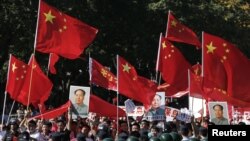
Demonstrators holding posters of China's late Chairman Mao Zedong, Chinese national flags and banners march past riot policemen during a protest on the 81st anniversary of Japan's invasion of China, outside the Japanese embassy in Beijing, September 18, 2
A Chinese official says the recent wave of anti-Japan protests in China involving a territorial dispute reflects a firm resolution by Chinese citizens to safeguard sovereignty.
China's Xinhua news agency quotes a Foreign Ministry spokesman as urging Japan's government to listen to the Chinese peoples' objection to Japan's announcement that it will buy islands in the East China Sea.
The protests died down Wednesday, as authorities sent out text messages telling the public not to demonstrate near the Japanese Embassy in Beijing. The embassy said it had no information about protests in other Chinese cities.
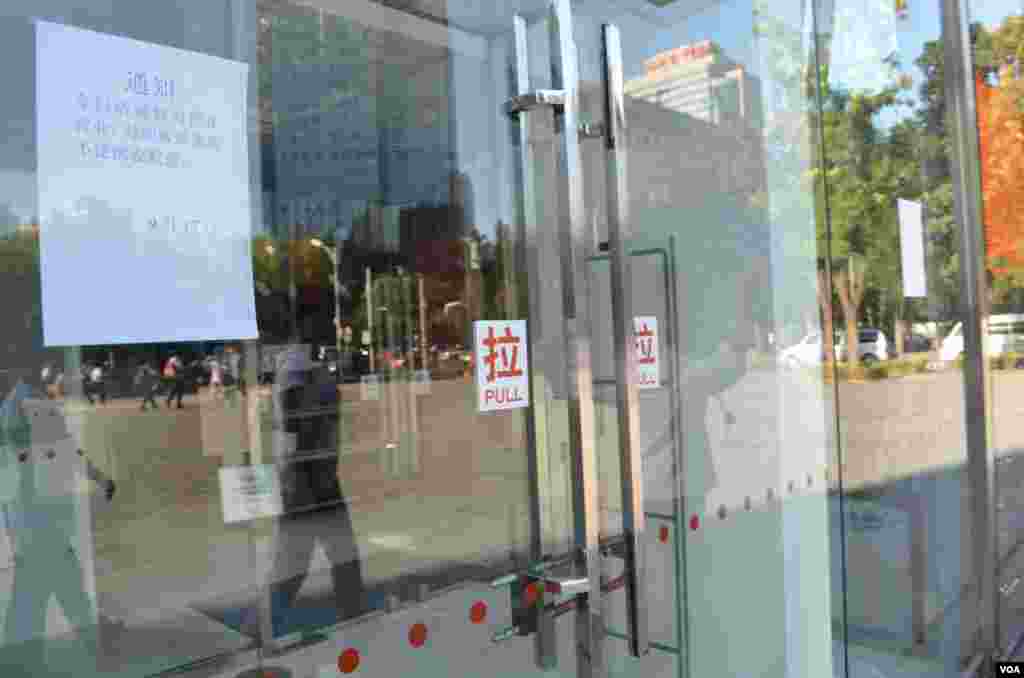
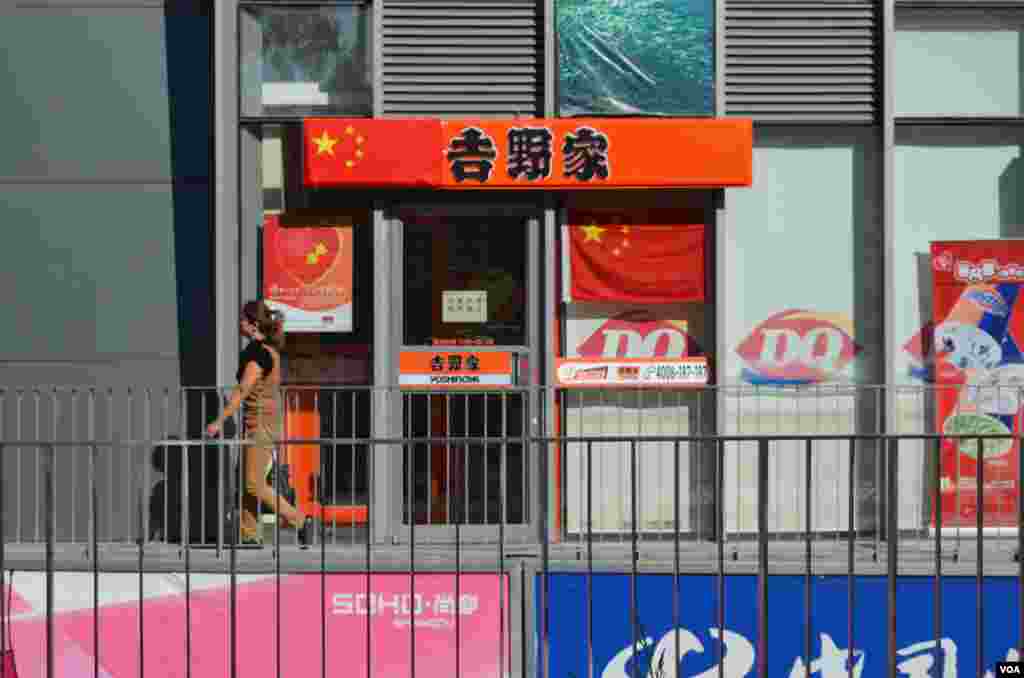
Meanwhile, demonstrators marched outside the Japanese embassy in Beijing. The protesters carried posters of China's late Chairman Mao Zedong, Chinese national flags, and banners to mark the 81st anniversary of Japan's invasion of China as riot policeman watched. Scores of Japanese businesses and Japan's embassy halted services in China, in anticipation of a possible escalation in violent protests over the territorial dispute between Asia's two biggest economies.
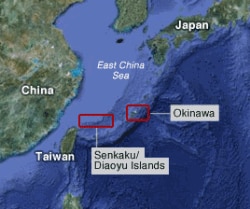
Protesters demonstrated for several days and some become violent after Japan said last week it would buy some of the uninhabited islands from a private Japanese landowner. The islands, controlled by Japan and claimed by China, are known as Senkaku in Japan and Diaoyu in China.
On Tuesday, at least 1,000 protesters marched outside the Japanese Embassy in Beijing, holding signs, chanting nationalistic slogans and calling for China to defend its claim to the islands. Many Japanese companies, including Honda, Toyota, Mitsubishi and Panasonic, have reduced operations in China because of sporadic violence.
Also Tuesday, Japan's Coast Guard said at least two Chinese government vessels entered territorial waters near the islands. The vessels were among 11 Chinese ships spotted Tuesday in the region.
Chinese Protest Japan
1/8Anti-Japan protesters throw water bottles towards the Japanese Embassy while marching on a street outside the embassy, Beijing, China, September 18, 2012.
Chinese demand their country defend its claim to Japanese-controlled islands in the East China Sea. The protests coincide with the anniversary of Japan's 1930 invasion of China.
Show moreShow less
2/8Protesters hold images they claim show Japanese imperial army soldiers who killed Chinese during World War II at an anti-Japan protest in Chengdu, Sichuan, China, Sepember 18, 2012.
Chinese demand their country defend its claim to Japanese-controlled islands in the East China Sea. The protests coincide with the anniversary of Japan's 1930 invasion of China.
Show moreShow less
3/8Demonstrators are surrounded by uniformed policemen and paramilitary policemen during a protest against Japan in Chengdu, in southwest China's Sichuan province, September 18, 2012.
Chinese demand their country defend its claim to Japanese-controlled islands in the East China Sea. The protests coincide with the anniversary of Japan's 1930 invasion of China.
Show moreShow less
4/8A woman walks past paramilitary police officers standing guard during anti-Japan protests near the Japanese Consulate General, Shanghai, China, September 18, 2012.
Chinese demand their country defend its claim to Japanese-controlled islands in the East China Sea. The protests coincide with the anniversary of Japan's 1930 invasion of China.
Show moreShow less
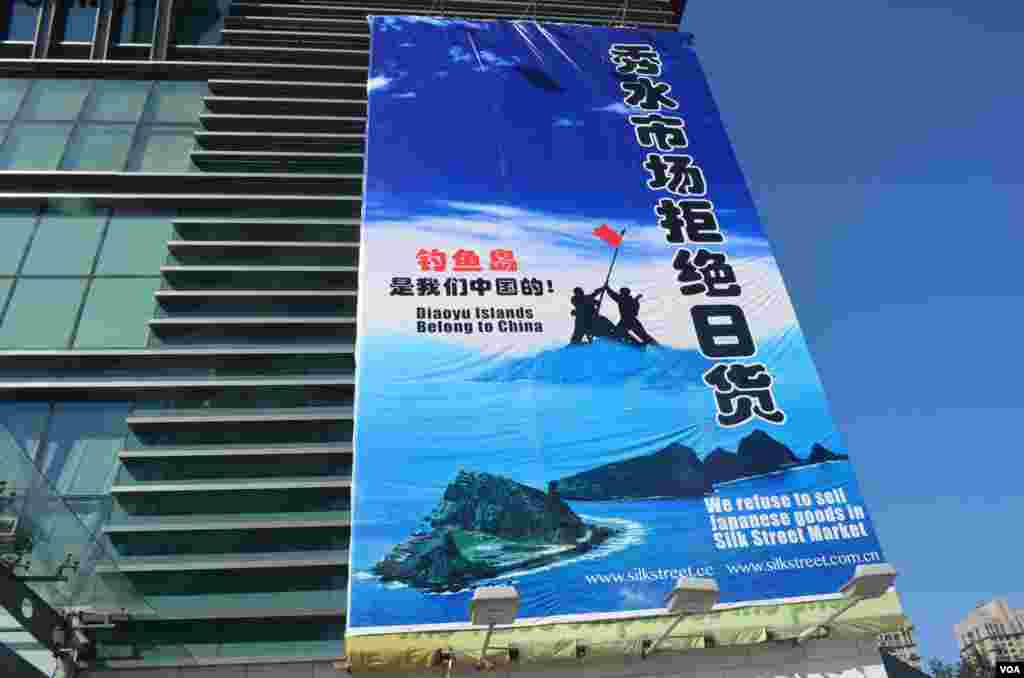
5/8Beijing's Silk Market, a popular tourist destination, launched a boycott of Japanese products for the anniversary of Japan's 1930 invasion of China. Banners delcare that boycott and that the Diaoyu Islands belong to China, September 18, 2012. (VOA)
Chinese demand their country defend its claim to Japanese-controlled islands in the East China Sea. The protests coincide with the anniversary of Japan's 1930 invasion of China.
Show moreShow less
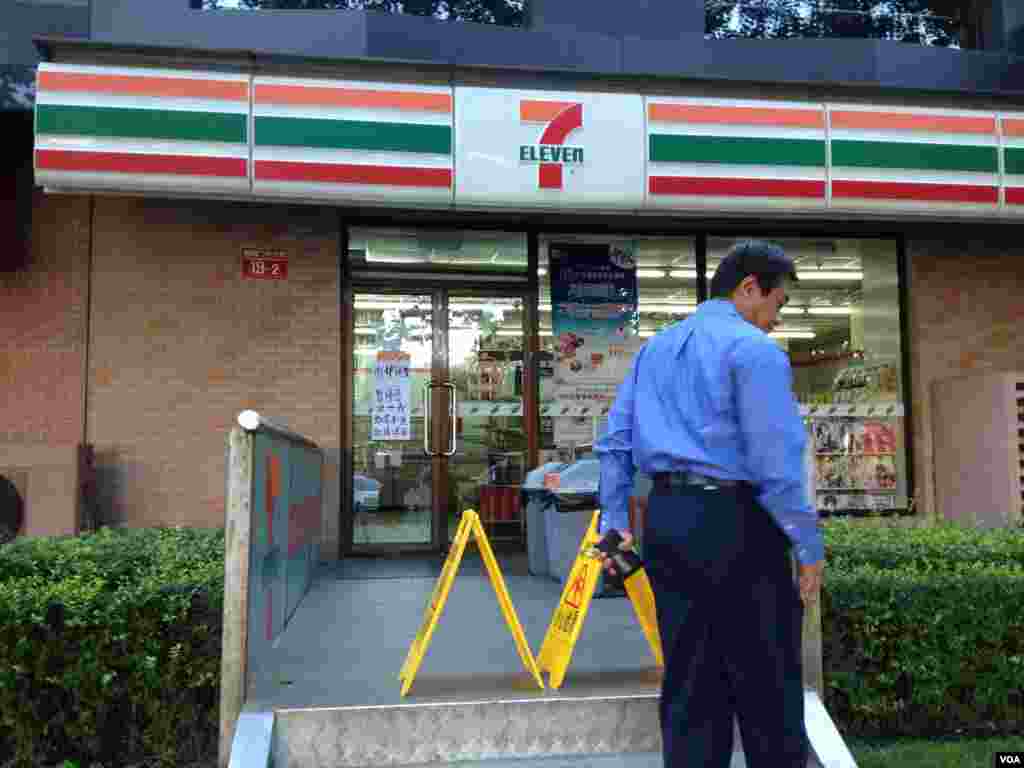
6/8This Japanese owned and operated 7-11 suspended its operations. The state-run China Daily newspaper reports that nearly 200 of the convenience stores closed across China Tuesday, September 18, 2012. (VOA)
Chinese demand their country defend its claim to Japanese-controlled islands in the East China Sea. The protests coincide with the anniversary of Japan's 1930 invasion of China.
Show moreShow less
7/8A sign at Japanese clothing store Uniqlo's entrance said it would "temporarily close" starting Monday, Beijing, China, September 18, 2012. (VOA)
Chinese demand their country defend its claim to Japanese-controlled islands in the East China Sea. The protests coincide with the anniversary of Japan's 1930 invasion of China.
Show moreShow less
8/8Most Japanese retailers were closed on Tuesday following the looting and destruction of other businesses and factories in China. In many establishments, owners hung Chinese flags to prevent attacks, Beijing, China, September 18, 2012. (VOA)
Chinese demand their country defend its claim to Japanese-controlled islands in the East China Sea. The protests coincide with the anniversary of Japan's 1930 invasion of China.
The Voice of America provides news and information in more than 40 languages to an estimated weekly audience of over 326 million people. Stories with the VOA News byline are the work of multiple VOA journalists and may contain information from wire service reports.