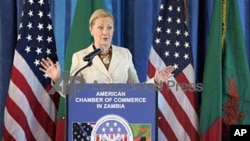
U.S. Secretary of State Hillary Clinton is backing Defense Secretary Robert Gates' warning to the NATO alliance that all member states must pay their fair share and participate in their own defense. Secretary Clinton took part in a forum on U.S. trade preferences.
In his last major policy speech as defense secretary, Gates warned of a dwindling appetite among U.S. lawmakers to subsidize NATO members who, he says, “are apparently unwilling to devote the necessary resources or make the necessary changes to be serious and capable partners in their own defense.”
In Libya, for example, Gates says all 28 NATO members voted for the mission against Libyan leader Moammar Gadhafi, but fewer than a third are taking part in those strikes. He says it is not that most of those members are unwilling, but that they no longer have the resources.
Clinton says Gates' remarks underscore how NATO must never be complacent. “We all have to step up and share the burdens that we face in responding to 21st century threats. And many members are doing just that. Every country in the alliance, including of course our own, is under financial pressure. We are being asked to cut spending on national security at a time when we are living in an increasingly unpredictable world,” she said.
Clinton said she fully agrees with the defense secretary that all nations bear the responsibility to ensure the safety and security of their citizens, which requires an adequate investment in defense.
“As the events in the Middle East and North Africa have shown, we cannot predict where threats will occur and we have to be ready, willing, and able to work together,” said the secretary of state.
Clinton says the 60-year-old transatlantic alliance has always come together to make the tough decisions, and she believes that is not going to change.
Gates says the risk is that future generations of U.S. politicians who were not shaped by the Cold War may not consider the return on America's investment in NATO worth its cost.
Clinton Backs Gates on NATO Burden-Sharing