



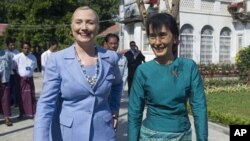
U.S. Secretary of State Hillary Clinton held in-depth discussions with democracy leader Aung San Suu Kyi in Rangoon Friday on the final day of her three-day landmark visit to Burma.
After their meeting at the Nobel peace laureate's home, where she had been under house arrest for most of the past two decades, the two held hands on the veranda as they talked to reporters.
Clinton praised Aung San Suu Kyi's "steadfast and clear" leadership, saying that the U.S. wants to see Burma take its rightful place in the world. She called the democracy leader an inspiration.
Aung San Suu Kyi said she was happy with the way in which the United States is engaging with Burma and thought it would make the process of democratization easier.
Neither woman mentioned tough sanctions in effect against the government but Secretary Clinton said Thursday during a visit to Burma's capital Naypyidaw that any step Burma takes toward political reform will be carefully considered.
She urged the government to speed up reconciliation efforts by releasing more political prisoners and stop violent campaigns against ethnic minorities. Clinton also urged Burma to end any "illicit" military ties to North Korea and respect international consensus against the spread of nuclear weapons.
She spoke to reporters after a historic meeting with Burmese President Thein Sein who has overseen tentative steps to reform since he took over in March. The former military officer hailed what he called a new chapter in U.S.-Burmese relations.
Clinton is the first U.S. secretary of state to visit Burma in 50 years.
The new Burmese government has released about 200 political prisoners, eased some press restrictions and opened a dialogue with some of its critics, including Aung San Suu Kyi.
The Nobel peace prize laureate was freed from house arrest last year after spending much of the previous 20 years in detention. Her party won a national election in 1990 by a landslide, but was stopped from taking power. She confirmed Wednesday that she will run for parliament in upcoming elections.
The United States and other Western nations imposed sanctions on the former Burmese military government because of its harsh human rights abuses, including military operations against ethnic groups and the jailing of up to 2,000 political prisoners.
Clinton stressed Thursday that the sanctions will not be lifted until Burma makes concrete steps toward democracy.
Some information for this report was provided by AP and Reuters.