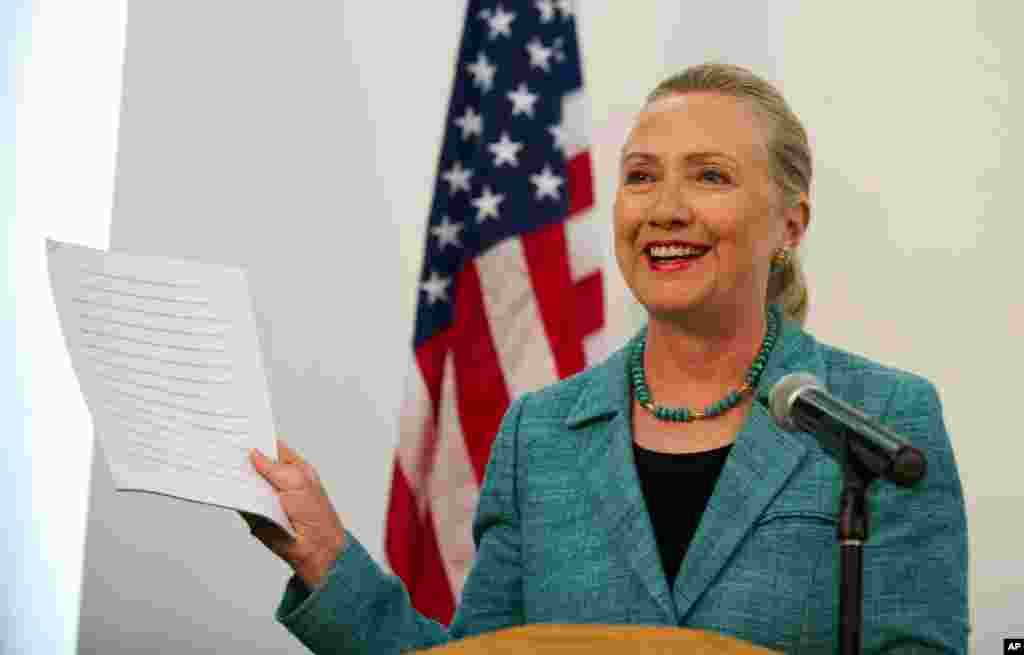
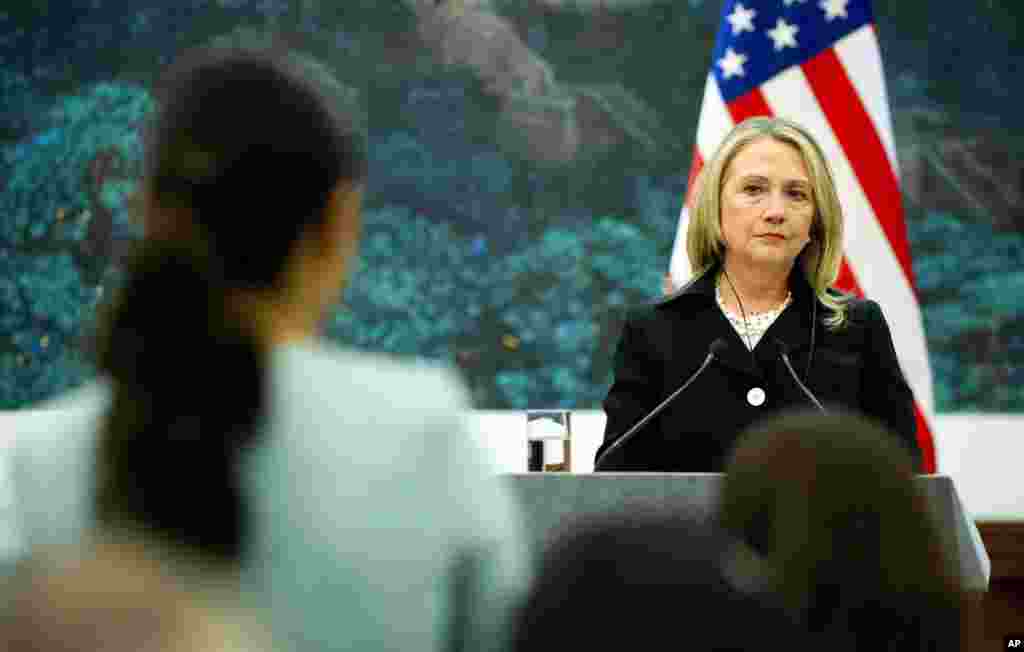
U.S. Secretary of State Hillary Rodham Clinton delivers remarks for the launch of the Brunei-U.S. English Language Enrichment Project for ASEAN at Universiti Brunei Daussalam in Bandar Seri Begawan, Brunei, September 7, 2012.
U.S. Secretary of State Hillary has arrived in Russia for a meeting of Asia-Pacific leaders, while a Chinese state newspaper is warning Washington not to use the annual economic summit to focus on political differences.
Clinton arrived Friday in the far eastern Russian city of Vladivostok after wrapping up her six-nation tour of Asia that largely focused on the territorial disputes between China and several key U.S. allies.
The Asia Pacific Economic Cooperation (APEC) summit is expected to highlight efforts to re-energize world and regional economic growth. The 21-member APEC forum accounts for 40 percent of the world's population, 54 percent of economic output and 44 percent of trade.
But conflicts in the South China Sea are also expected to be a priority for Clinton, to the displeasure of China. The Communist Party-controlled Global Times newspaper on Friday urged the U.S. not to use the summit to push political agendas such as territorial disputes, saying it could lead to quarrels and divisions.
Clinton and Chinese leaders appeared to make little progress on resolving their differences on the South China Sea disputes during two days of meetings in Beijing earlier this week. But on Thursday, Clinton promised to continue standing firm on U.S. interests, even if they differ from those of China.
Washington has urged Southeast Asian leaders to present a unified front in dealing with China. China prefers negotiating individually with each rival claimant, a position that gives it more strength. China claims nearly all of the 3.5 million-square-kilometer South China Sea, an energy rich region that is also claimed in part by the Philippines, Brunei, Malaysia, Taiwan and Vietnam.
While in Russia, Clinton is also expected to meet with Russian President Vladimir Putin to discuss views on how to stop bloodshed in Syria, where government forces are fighting an 18-month battle against rebels. The U.S. wants the ouster of Syrian President Bashar al-Assad, while Russia opposes any foreign intervention.
Photo Gallery: Hillary Clinton's Asia Tour
Hillary Clinton's Visit to Asia
1/14U.S. Secretary of State Hillary Clinton (C) autographs a sack of coffee beans with the flags of East Timor and the U.S. , at the Timor Coffee Cooperative in Dili September 6, 2012.
Show moreShow less
2/14US Secretary of State Hillary Clinton during a press conference in East Timor, Sept 6, 2012
Show moreShow less
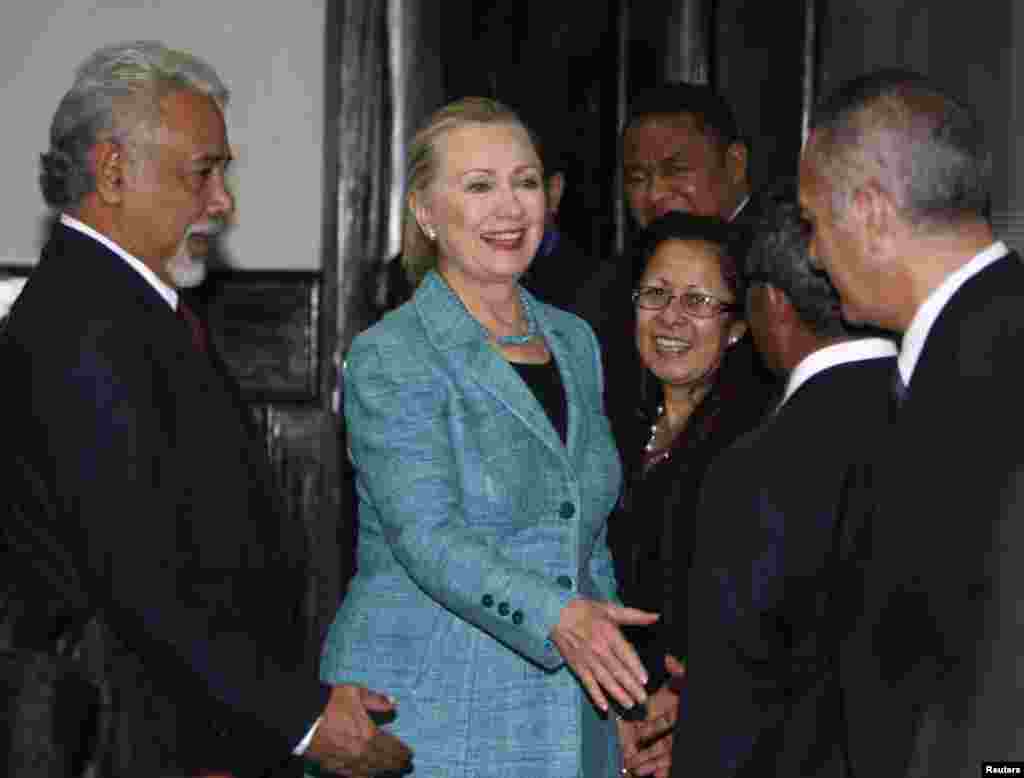
3/14U.S. Secretary of State Hillary Clinton (C) shakes hands with staff members next to East Timor's Prime Minister Xanana Gusmao (L) at the Prime Minister's office in Dili September 6, 2012.
Show moreShow less
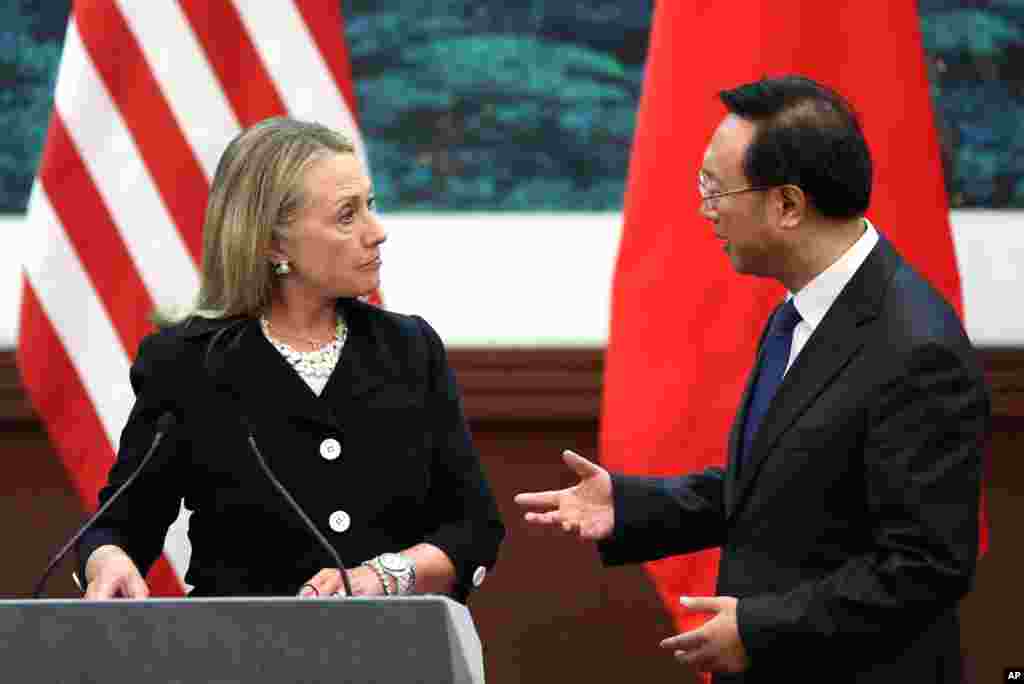
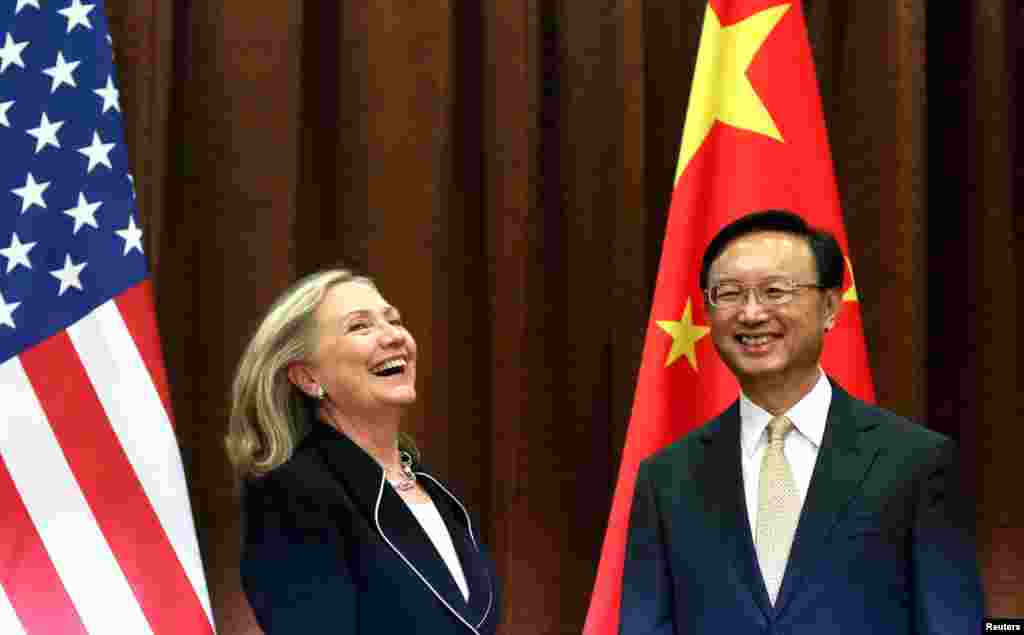
4/14Chinese Foreign Minister Yang Jiechi, right, talks with U.S. Secretary of State Hillary Clinton after attending a press conference at the Great Hall of the People in Beijing, September 5, 2012.
Show moreShow less
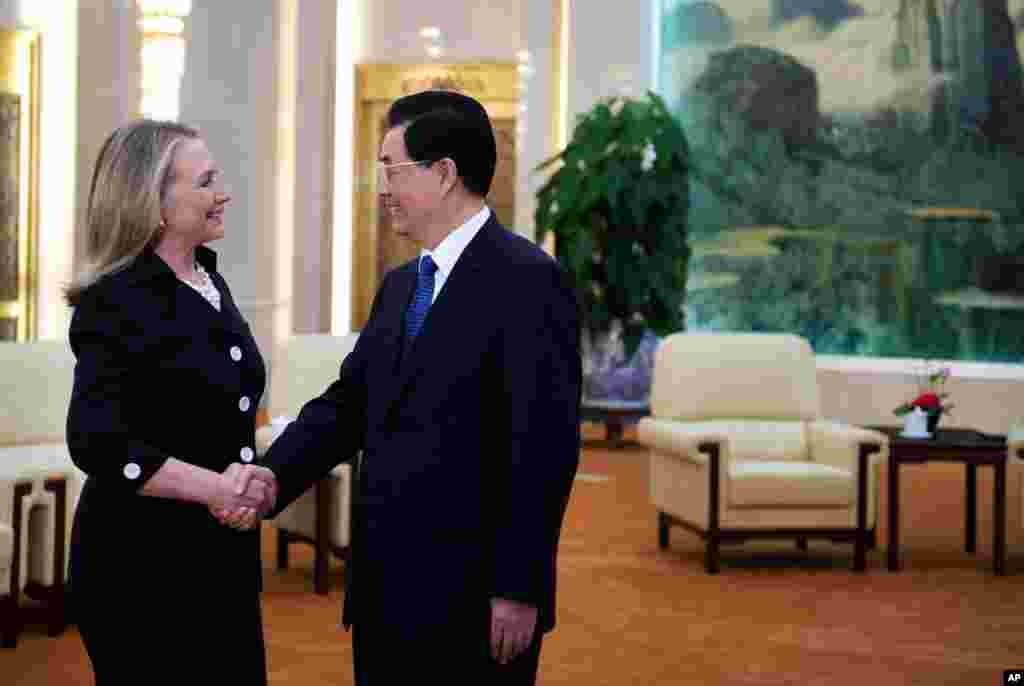
5/14Clinton shakes hands with Chinese Premier Wen Jiabao at the Zhongnanhai leadership compound in Beijing, September 5, 2012.
Show moreShow less
6/14Clinton takes questions from the Chinese press during a joint press conference with her Chinese counterpart at the Great Hall of the People in Beijing, September 5, 2012.
Show moreShow less
7/14Clinton meets with Chinese President Hu Jintao at the Great Hall of the People in Beijing, September 5, 2012.
Show moreShow less
8/14Chinese Foreign Minister Yang Jiechi meets with Clinton in Beijing September 4, 2012.
Show moreShow less
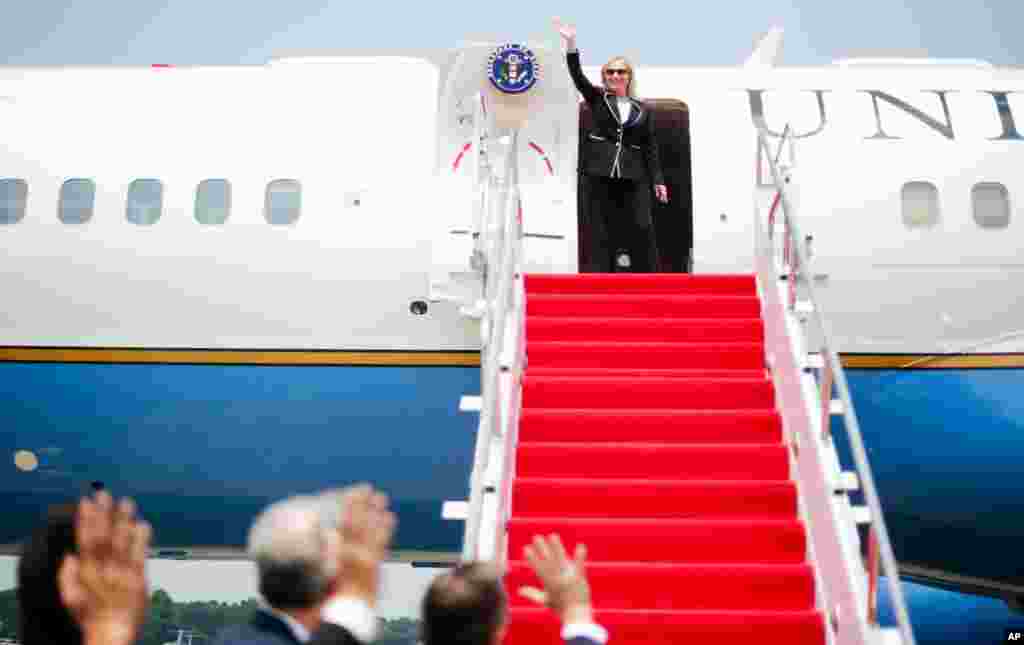
9/14Clinton waves as she departs Halim Perdanakusuma International Airport in Jakarta, Indonesia, September 4, 2012.
Show moreShow less
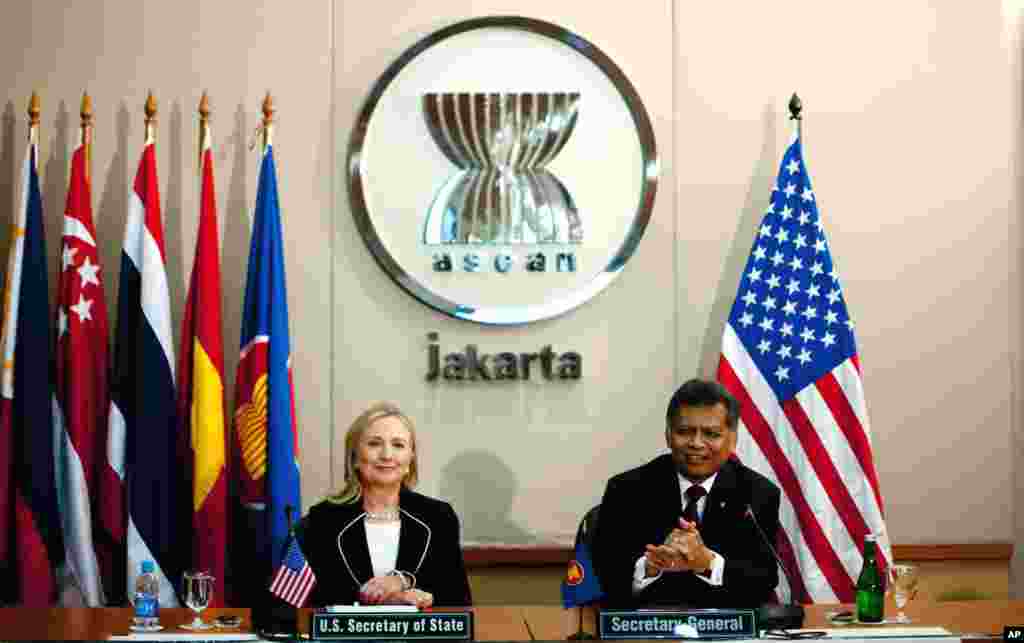
10/14Clinton speaks with ASEAN Secretary-General Surin Pitsuwan during a meeting at the ASEAN Secretariat in Jakarta, September 4, 2012.
Show moreShow less
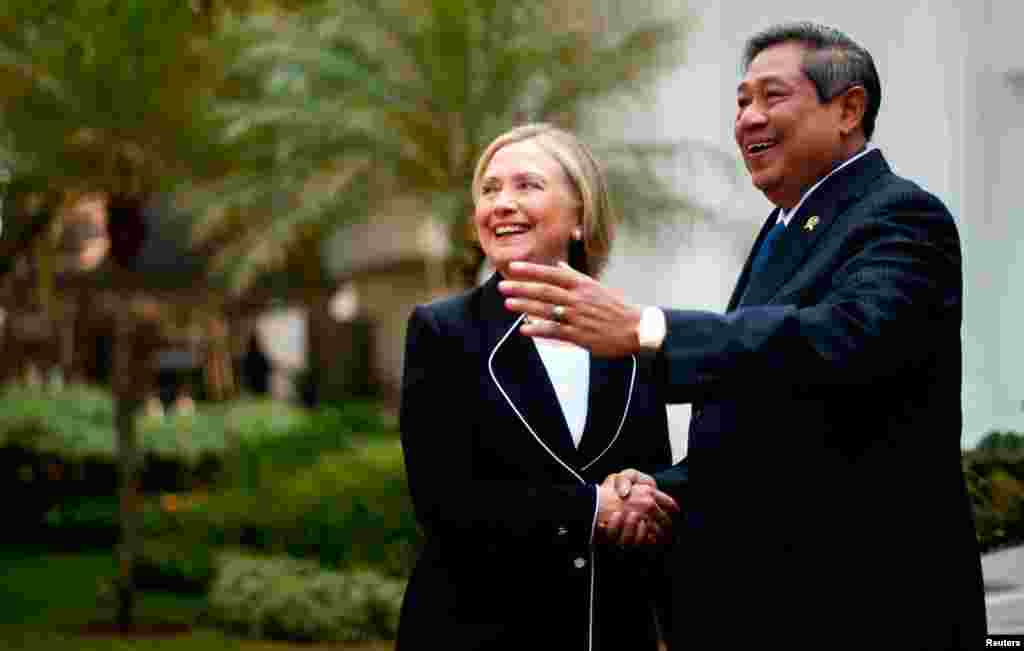
11/14Clinton shakes hands with Indonesian President Susilo Bambang Yudhoyono upon her arrival for a bilateral meeting at the Presidential Palace in Jakarta, September 4, 2012.
Show moreShow less
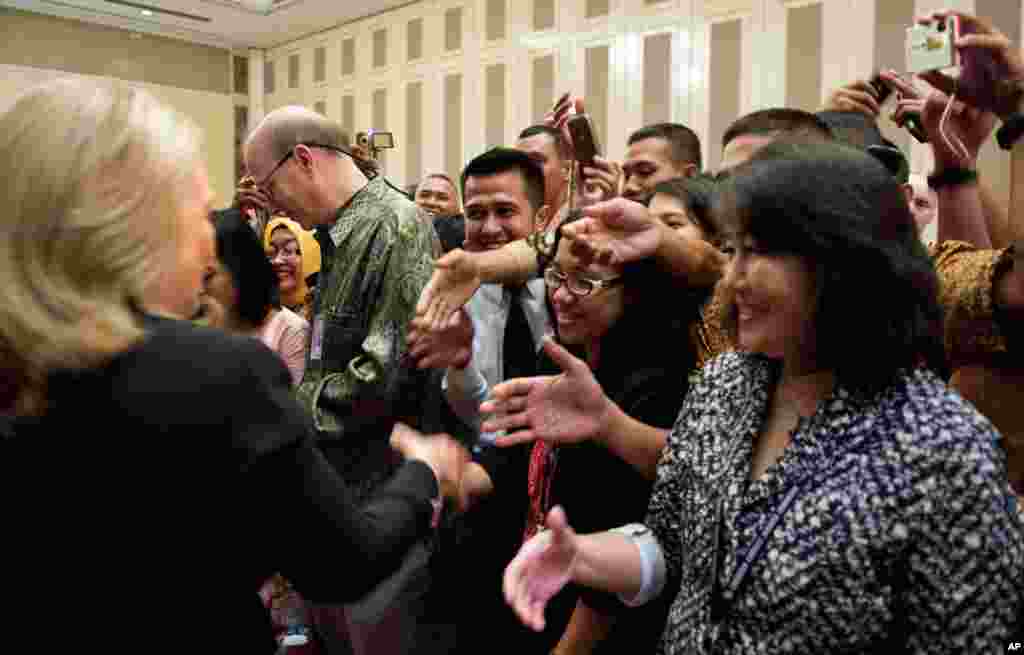
12/14Clinton meets with U.S. embassy staff and family members during a meet and greet in Jakarta, September 4, 2012.
Show moreShow less
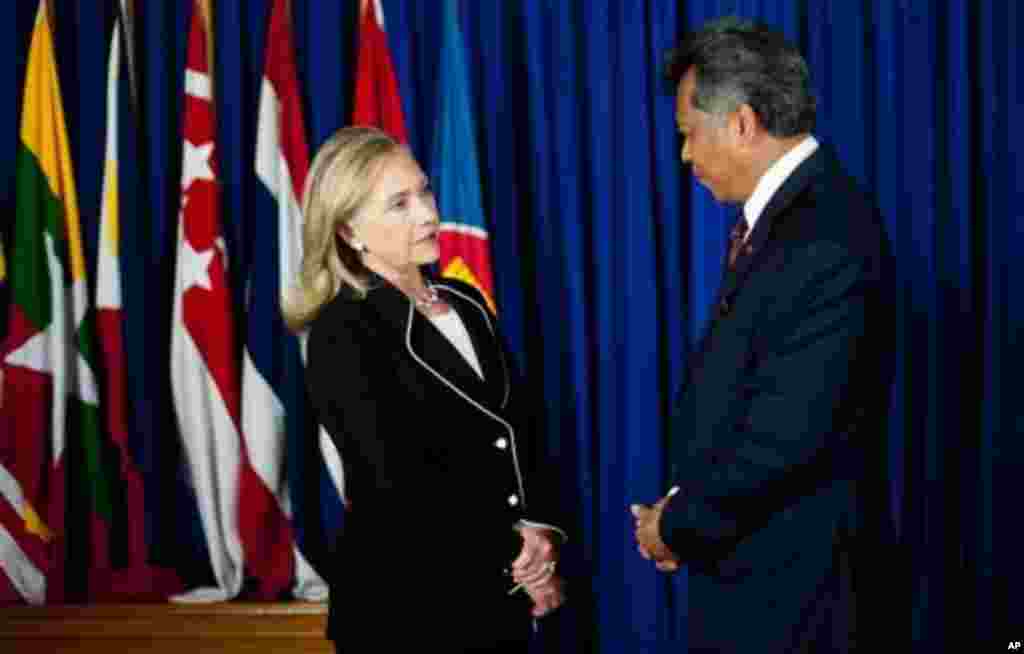
13/14Clinton speaks with ASEAN Secretary General Surin Pitsuwan, Jakarta, September 4, 2012.
Show moreShow less
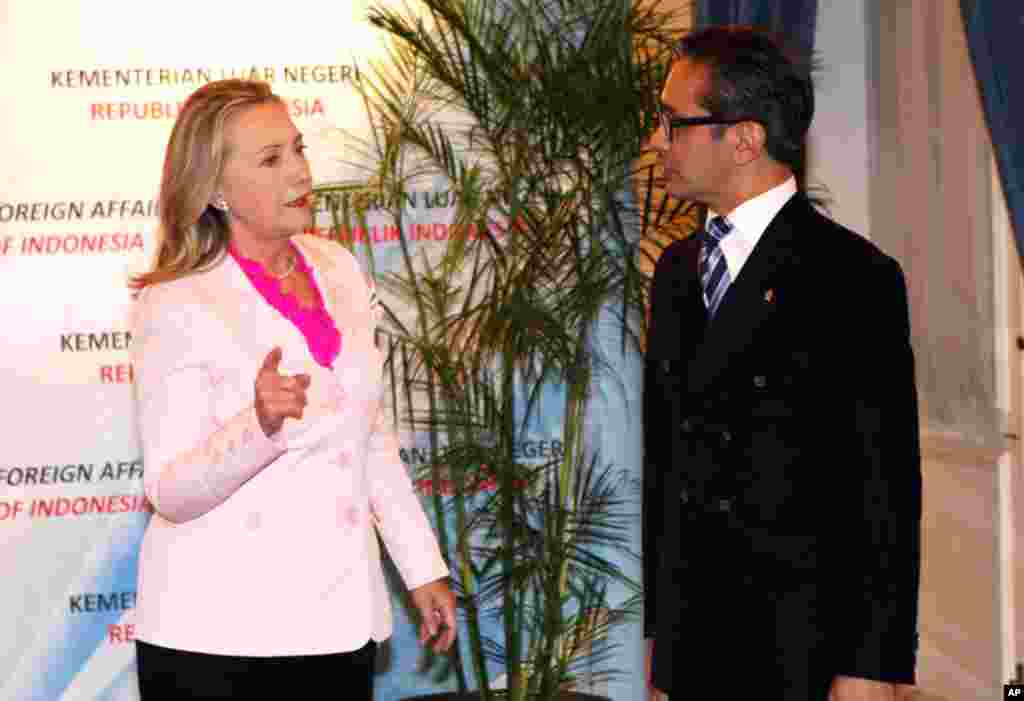
14/14Clinton talks to Indonesian Foreign Minister Marty Natalegawa prior to their meeting in Jakarta, September 3, 2012.
The Voice of America provides news and information in more than 40 languages to an estimated weekly audience of over 326 million people. Stories with the VOA News byline are the work of multiple VOA journalists and may contain information from wire service reports.