Controversy Surrounds Commercializing of Mandela's Image
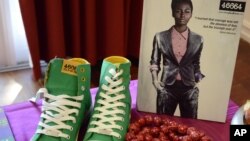
Green casual shoes and a red beaded necklace on show at a fashion range launch, inspired by South African President Nelson Mandela's 94th birthday in Johannesburg, June 29, 2012.
JOHANNESBURG — Nelson Mandela turns 94 on Wednesday, July 18. Despite being retired from public life, a recent study shows that the South African national hero is the second most well-known brand in the world, just behind Coca-Cola. Loved by everyone, the former president is bankable, and controlling the commercialization of his image is an everyday struggle.
46664 fashion line
Green, red, striped... the new collection of the 46664 fashion line does resemble the style of shirts worn by Nelson Mandela. The brand was launched last year, and is named after Mandela's prisoner number when he was incarcerated at Robben Island. But the brand's CEO, Wayne Bebb, says he is not exploiting the fame of South Africa’s first black president.
"We are not allowed to commercialize Nelson Mandela," he said. "We do not use his image in any of our clothing. You will see very, very rarely any image of him in our marketing campaign."
Indeed, Mandela's face does not appear on the clothes. Instead, the brand logo shows Mandela's hand. At that is apparently okay with the Nelson Mandela Centre of Memory - the organization is in charge of controlling the commercialization of Nelson Mandela's image.
Foundation spokesperson Sello Hatang says the task is enormous with everything from unauthorized clocks, T-shirts, mugs, and even a fast food chain.
"I think the last one was... I think it was calendars that populated the whole thing with Madiba's [a title of respect derived from his Xhosa clan name] image," said Hatang. "So that was the one that we've stopped. Commercialization is something that exists and is something that we try to work hard for people to understand that Mr. Mandela himself felt that discomfort with it."
Related photo gallery
Nelson Mandela
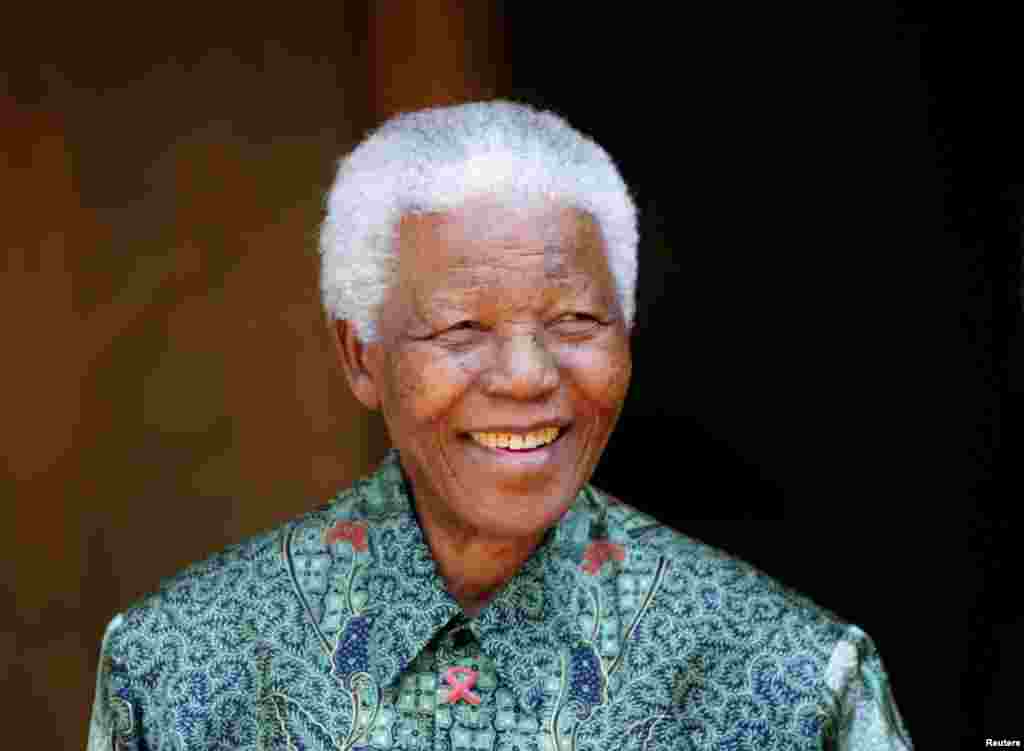
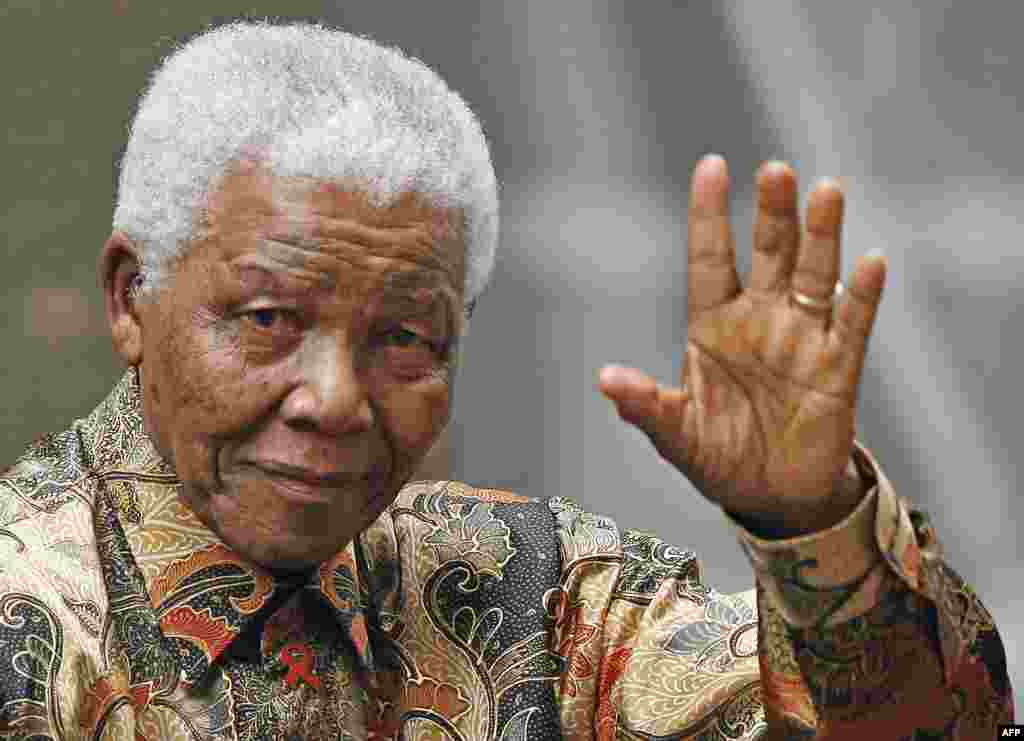
1/16Nelson Mandela smiles for photographers at his home in Johannesburg September 22, 2005.
Show moreShow less
2/16Nelson Mandela and his then wife, Winnie, salute well-wishers as he leaves Victor Verster prison on Feb. 11, 1990.
Show moreShow less
3/16This undated photograph shows Nelson Mandela and his former wife, Winnie.
Show moreShow less
4/16South African State President Frederik Willem de Klerk and Deputy President of the African National Congress Nelson Mandela prior to talks, Cape Town, May 2, 1990.
Show moreShow less
5/16Nelson Mandela, is seen as he gives the black power salute to 120,000 ANC supporters in Soweto's Soccer City stadium, Feb. 13, 1990.
Show moreShow less
6/16Then-African National Congress President Nelson Mandela salutes the crowd in Galeshewe Stadium near Kimberley, South Africa, Feb. 25, 1994.
Show moreShow less
7/16Nelson Mandela and Britain's Queen Elizabeth II ride in a carriage outside Buckingham Palace on the first day of a state visit to Britain, July 9, 1996.
Show moreShow less
8/16President Nelson Mandela and Britain's Prince Charles shake hands alongside members of the Spice Girls, Nov. 1, 1997.
Show moreShow less
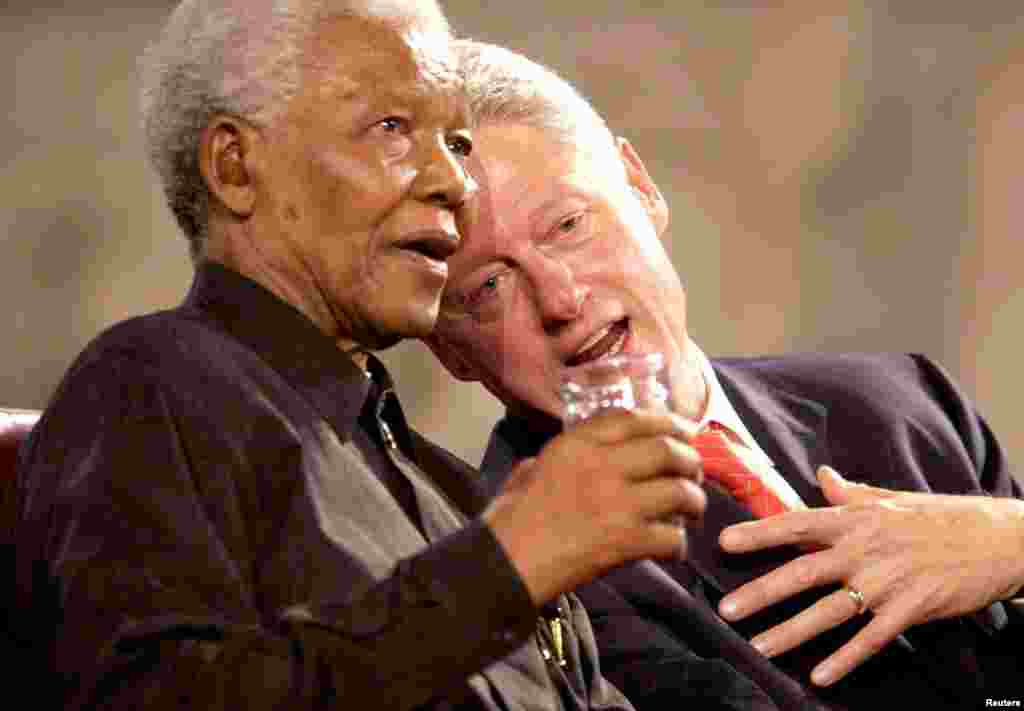
9/16Former U.S President Bill Clinton and former South African President Nelson Mandela speak during a Gala night in Westminster Hall, London, July 2, 2003.
Show moreShow less
10/16Oscar winning South African actress Charlize Theron weeps at her meeting with former South African President Nelson Mandela at the Nelson Mandela Foundation in Houghton, March 11,2004.
Show moreShow less
11/16Nelson Mandela and his wife, Graca Machel, wave to the audience during a Live 8 concert in Johannesburg, July 2, 2005.
Show moreShow less
12/16Nelson Mandela jokes with youngsters as they celebrate his 89th birthday at the Nelson Mandela Children’s Fund in Johannesburg, July 24, 2007.
Show moreShow less
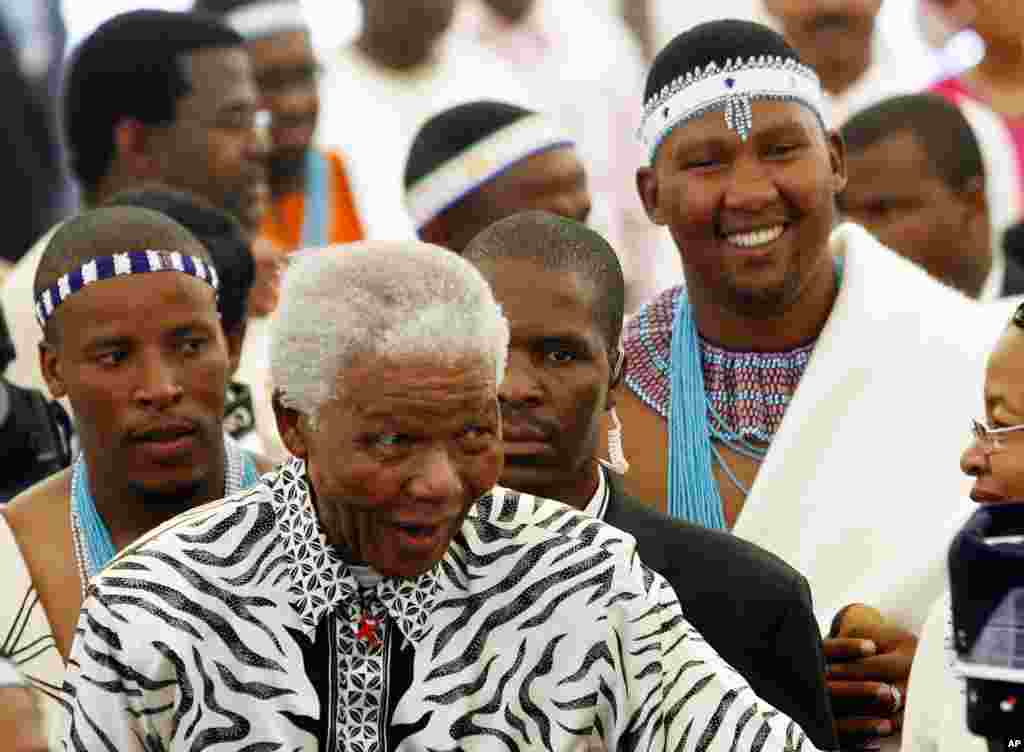
13/16Former South African president Nelson Mandela, center, followed by his grandson Mandla Mandela, rear right, arrives at the ceremony in Mvezo, South Africa, April 16, 2007.
Show moreShow less
14/16Nelson Mandela waves to the media as he arrives outside 10 Downing Street, London, August 28, 2007.
Show moreShow less
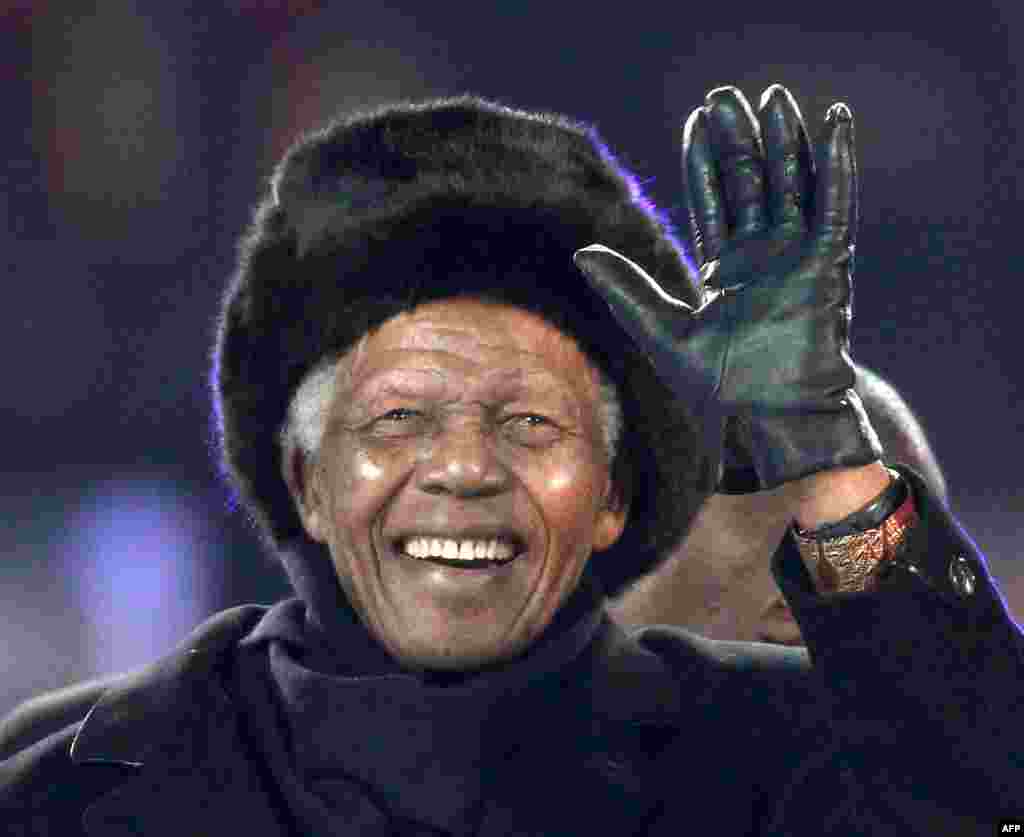
15/16Nelson Mandela waves as he arrives to attend the 2010 World Cup football final Netherlands vs. Spain on July 11, 2010 at Soccer City stadium in Soweto.
Show moreShow less
16/16Nelson Mandela poses for a photograph after receiving a torch to celebrate the African National Congress' centenary in his home village Qunu, May 30, 2012.
Show moreShow less
Previous slide
Next slide
Protecting Mandela's image
From letters to lawyers, the foundation has an array of legal means to protect the Mandela name. But Hatang says the organization also relies heavily on the public.
"In most instances, it's members of the public that express their horror whenever a company wants to abuse Madiba's image. So we rely heavily on members of the public fighting it. There is also a need for us to not only focus on the man, but on his legacy," said Hatang.
For advertiser Jeremy Sampson, CEO of the brand consultancy agency Interbrand Sampson, it's a fairly new phenomenon to have a person becoming a brand.
"I think it's only quite recently that people have thought of other people as being brands," he said. "A brand is basically about adding value, bringing an aura to something. In the case of Nelson Mandela, he's got trademarks on his name, is that Mandela, or Nelson Mandela, perhaps on his face, because it's almost becoming as well known as Che Guevara or someone like that. And for that reason, I think you have to get lawyers involved, trademarks insurers, managing the whole process."
Managing that process and knowing where to draw the line can be tricky.
Financing charity
The Nelson Mandela Centre of Memory does endorse various products related to the former president. Some of them have sparked controversy. A few years ago, 46664 - Mandela's HIV prevention organization - partnered with luxurious brand Mont-Blanc to produce an expensive bangle tagged with the famous prison number. Critics said such a luxury item was not in keeping with Mandela's modesty.
But the Centre notes that a sizeable percentage of the revenues from endorsed products go to charity and causes important to the former president. And not every initiative associated with the Mandela brand is for profit; some are for activism - including Mandela Day - celebrated every year on his birthday July 18.
Hatang says the day is meant to encourage South Africans and all people to get involved in community service and walk in Mandela's footsteps.
"We then remind people that there is a mechanism where you express your admiration for the man, to express your love for the man," said Hatang. "As the slogan says this year: that you must take action, inspire change. You can then do a Mandela day not just on his birthday, but do it every day."
Mandela Day will also be the day the 46664 clothing line will go international. The brand will be launched in North America, and soon in Europe as well as in other African countries such as Namibia and Mozambique.
The Voice of America provides news and information in more than 40 languages to an estimated weekly audience of over 326 million people. Stories with the VOA News byline are the work of multiple VOA journalists and may contain information from wire service reports.