October Marks 50th Anniversary of Cuban Missile Crisis
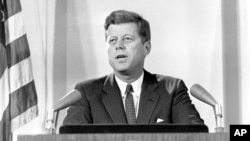
President John F. Kennedy reports to nation on Cuban missile crisis Nov. 2, 1962
WASHINGTON —
This month marks the 50th anniversary of the Cuban Missile Crisis, a confrontation between the United States and the Soviet Union that brought the world to the brink of nuclear war. Historians say there were several key events that led to the decision by Soviet leader Nikita Khrushchev to station nuclear missiles in Cuba in October 1962.
In January 1961 John F. Kennedy assumed office as president of the United States. One of his major foreign policy dilemmas was how to deal with Fidel Castro, a Cuban nationalist who in 1959 overthrew General Fulgencio Batista, the country’s American-backed president. Castro ultimately allied himself with the Soviet Union.
In April 1961, Mr. Kennedy launched the Bay of Pigs invasion, an unsuccessful attempt by a CIA-trained force of Cuban exiles to overthrow Mr. Castro.
The Cuban Missile Crisis
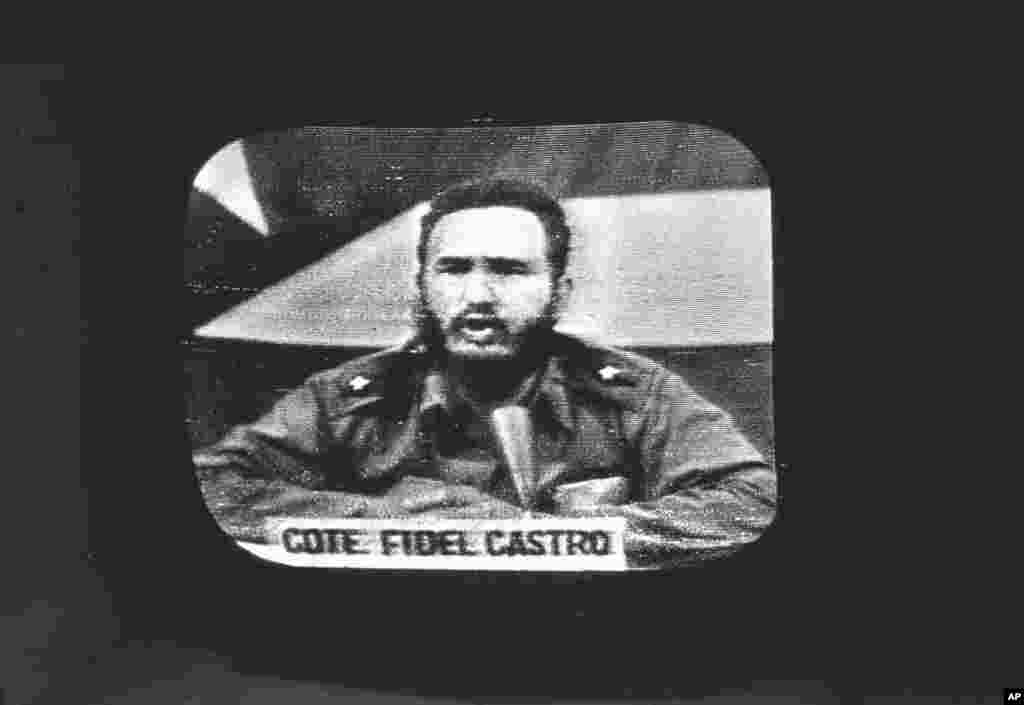
1/7This file photo shows Cuban President Fidel Castro replying to U.S. President John F. Kennedy's naval blockade via Cuban radio and television on October 23, 1962.
This month marks the 50th anniversary of the Cuban Missile Crisis - a confrontation between the United States and the Soviet Union that brought the world to the brink of nuclear war.
Show moreShow less
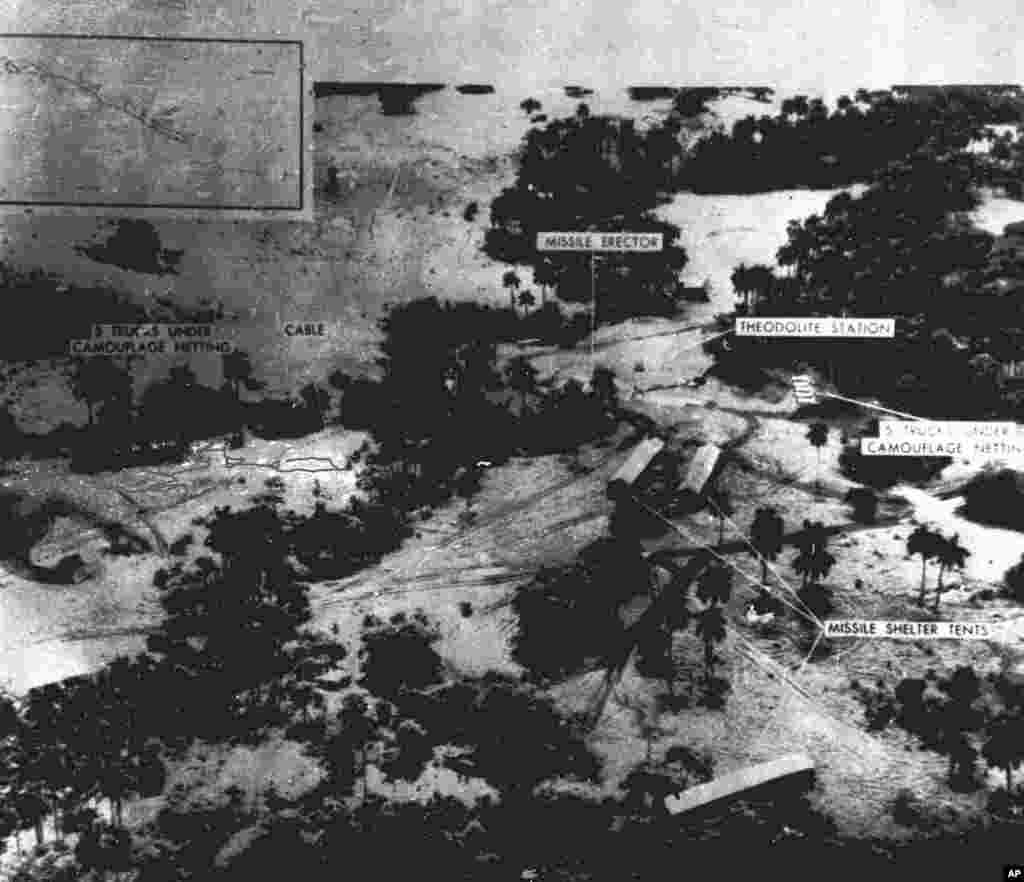
2/7This is a low level photograph released by the U.S. Defense Department made October 23, 1962 of the medium range ballistic missile site under construction in the San Cristobal area of Cuba.
This month marks the 50th anniversary of the Cuban Missile Crisis - a confrontation between the United States and the Soviet Union that brought the world to the brink of nuclear war.
Show moreShow less
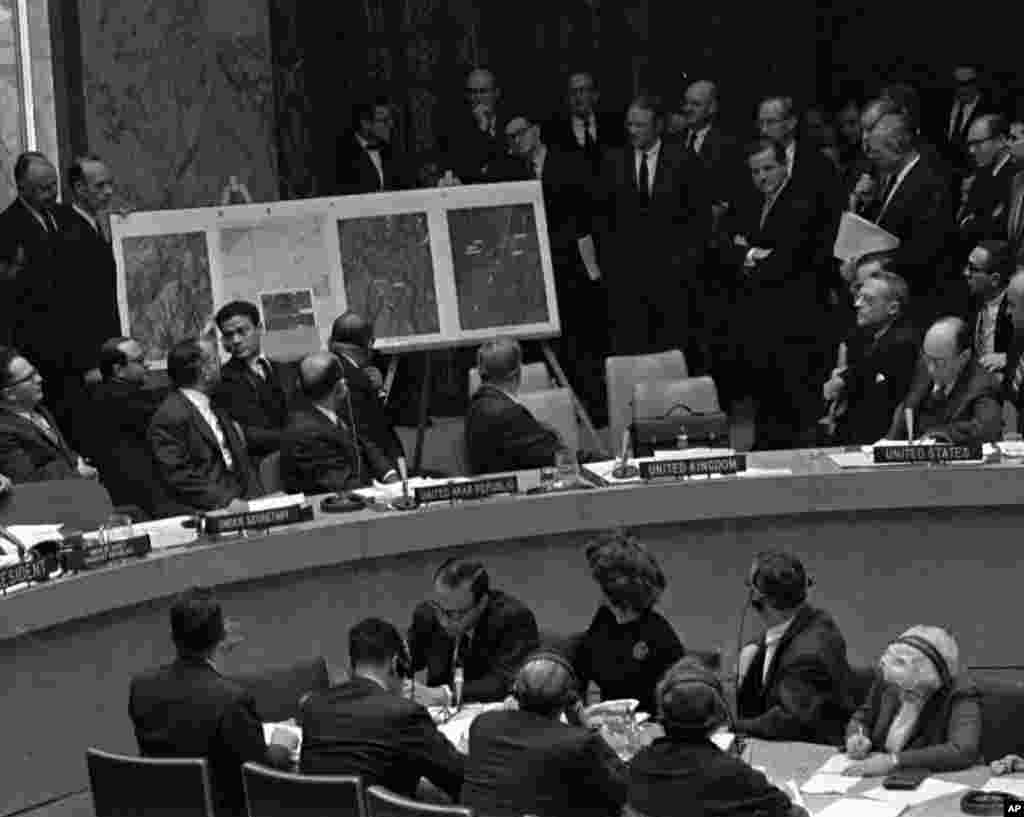
3/7In this October 25, 1962 file photo, U.S. Ambassador Adlai Stevenson, far right, describes aerial photographs of launching sites for intermediate range missiles in Cuba during an emergency session of the United Nations Security Council at U.N. Headquarter
This month marks the 50th anniversary of the Cuban Missile Crisis - a confrontation between the United States and the Soviet Union that brought the world to the brink of nuclear war.
Show moreShow less
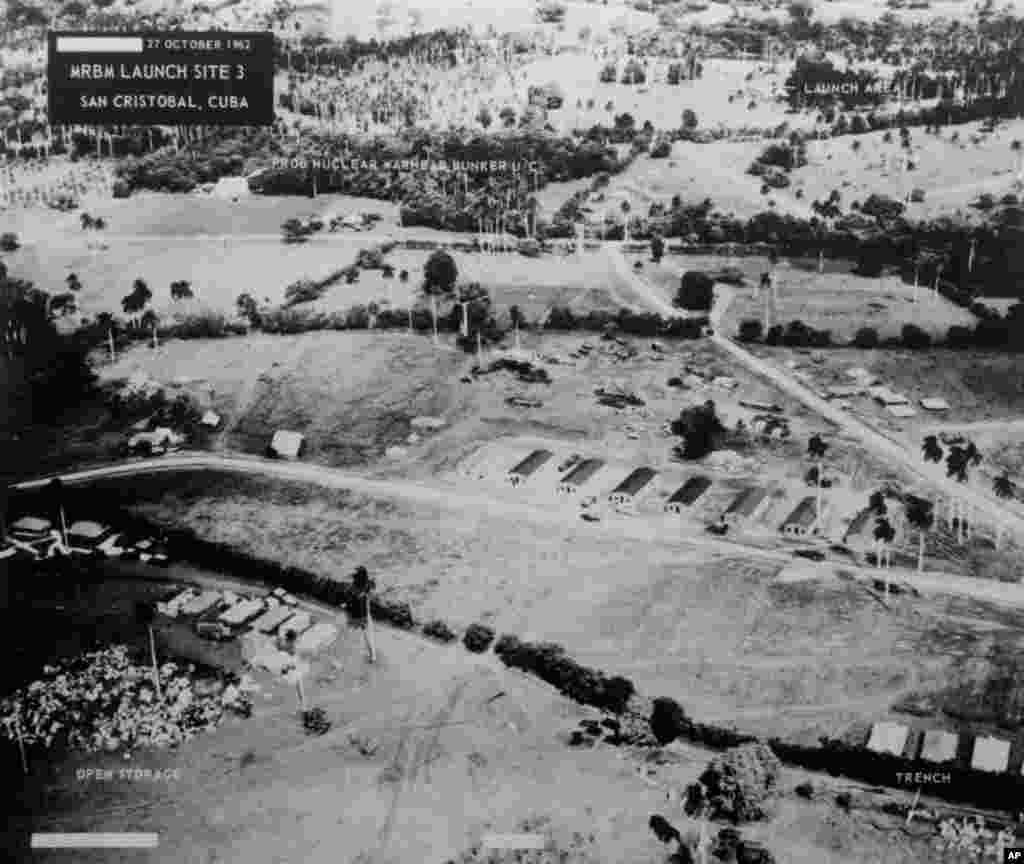
4/7This aerial reconnaissance photo is of the San Cristobal medium range ballistic missile site No. 3 in Cuba. The U.S. Department of Defense says, shows the site at its maximum readiness on October 27, 1962.
This month marks the 50th anniversary of the Cuban Missile Crisis - a confrontation between the United States and the Soviet Union that brought the world to the brink of nuclear war.
Show moreShow less
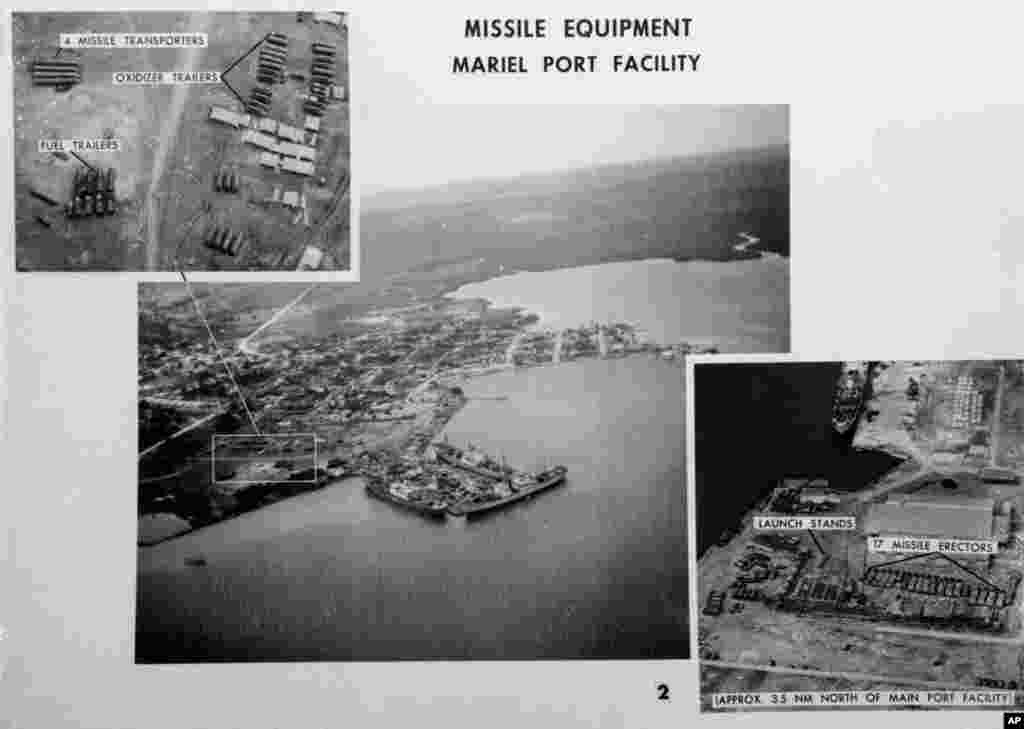
5/7This file photo shows pictures released by the U.S.Defense Department of Mariel naval port in Cuba on November 4, 1962. The department identified the ships at dockside as Soviet freighters. Photo at upper left is a blowup of missile equipment in outline
This month marks the 50th anniversary of the Cuban Missile Crisis - a confrontation between the United States and the Soviet Union that brought the world to the brink of nuclear war.
Show moreShow less
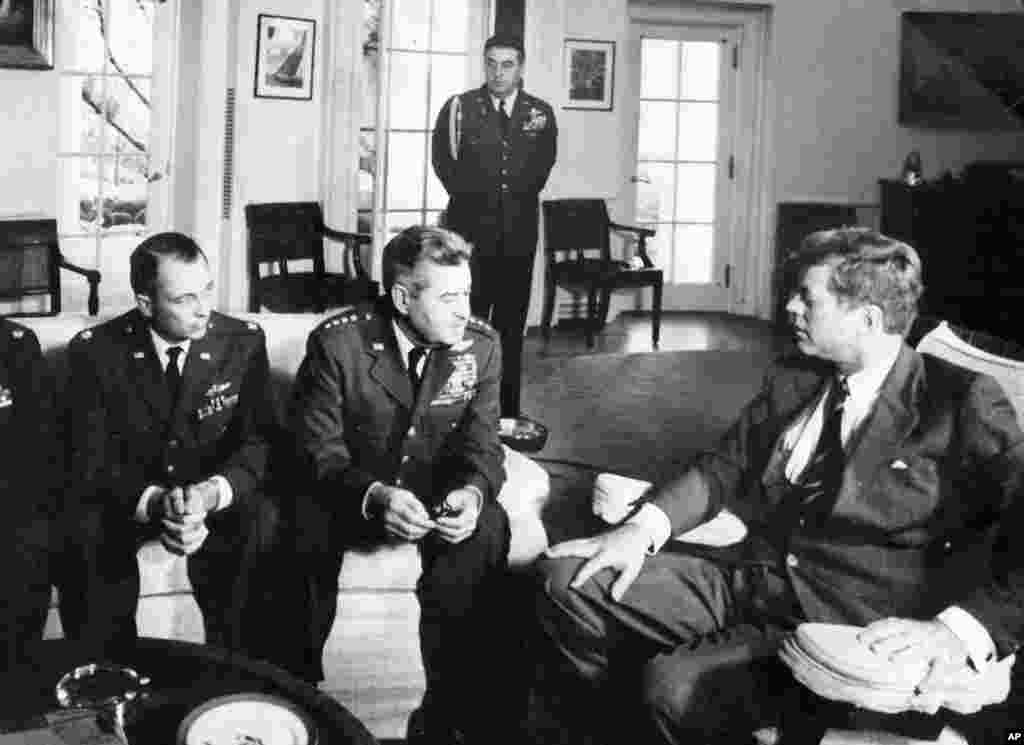
6/7Then-Major Richard ``Steve'' Heyser, left, and General Curtis LeMay, then Air Force chief of staff, center, meet with President John F. Kennedy in the White House in Washington in this 1962 picture, to discuss U-2 spy plane flights over Cuba.
This month marks the 50th anniversary of the Cuban Missile Crisis - a confrontation between the United States and the Soviet Union that brought the world to the brink of nuclear war.
Show moreShow less
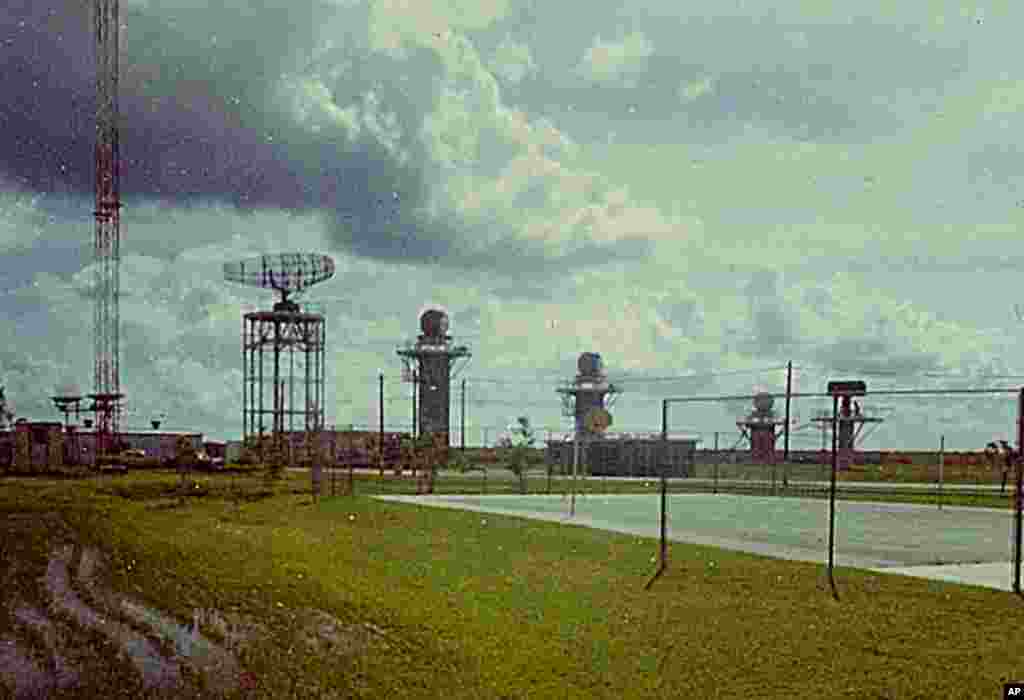
7/7Radar towers fill the area near the Dan Beard Research Center near the Nike missile site inside the Everglades National Park, Florida, as seen in a photo from 1968.
This month marks the 50th anniversary of the Cuban Missile Crisis - a confrontation between the United States and the Soviet Union that brought the world to the brink of nuclear war.
Show moreShow less
Previous slide
Next slide
Moscow helps Cuba
Sergei Khrushchev, son of the former Soviet leader, said Moscow had to help Fidel Castro.
“The Soviet Union, as a superpower, has the obligation to defend all their allies and their clients, even risking nuclear war,” he said. “Soviet intelligence gathered information that Americans planned to invade Cuba sometime in autumn, maybe in October. And so through that period, Cuba became for the Soviet Union the same as West Berlin for the United States - small, useless piece of land deep inside hostile territory,” Khrushchev said.
Graham Allison, author of a book on the Cuban Missile Crisis, said at that time, the Soviet Union had a huge advantage over the United States in terms of conventional troops in Europe.
“The U.S. was committed to and determined to defend (West) Berlin at all means,” he said. “Khrushchev had been trying to ‘solve the problem’ of (West) Berlin by which he meant absorb it into the Soviet sphere. And the U.S., both under Eisenhower and under Kennedy, were determined that this was not going to happen and were prepared to risk nuclear war over it. So the Berlin developments were, in effect, a kind of twin to the Cuban missile crisis,” Allison said.
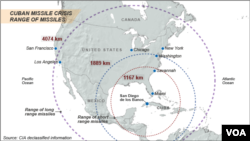
Cuban Crisis, missile range
Moscow must defend allies
Sergei Khrushchev saw the same potential outlook, but from the Soviet and Cuban sides.
“If you will not defend it, even risking nuclear war,” he said, “you will lose face and your other allies will not trust you. And you know that the United States had plans to use nuclear weapons if Soviets tried to take control of West Berlin. So it was a very similar situation on both sides,” said Khrushchev.
In June 1961, President Kennedy and Soviet leader Khrushchev held a summit meeting in Vienna, Austria. The issue of West Berlin dominated the session, but no progress was made. Many experts said Khrushchev came away believing the U.S. President was inexperienced and weak, and that might have contributed to the Soviet leader’s decision to station missiles in Cuba.
Finally, many analysts, including Graham Allison, said Moscow had another motivation to help Castro. “From the perspective of Khrushchev and the Soviet Union,” Allison said, “this was their success story in the Western hemisphere and they were committed to try and keep it alive.” An effort, said experts that brought the world to the brink of nuclear war.
Andre de Nesnera is senior analyst at the Voice of America, where he has reported on international affairs for more than three decades. Now serving in Washington D.C., he was previously senior European correspondent based in London, established VOA’s Geneva bureau in 1984 and in 1989 was the first VOA correspondent permanently accredited in the Soviet Union.