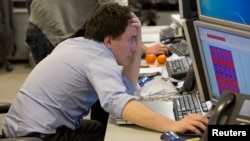
A trader looks at his screen on the IG Group trading floor in London March 18, 2013. The surprise decision by eurozone leaders to partially fund a bailout of Cyprus by taxing bank deposits sent shockwaves through financial markets on Monday.
Cyprus banks will remain closed until Thursday to prevent a run on accounts as the Mediterranean island nation considers imposing a first-ever bank deposit tax.
The proposed bank levy has rattled investors. Stock markets throughout the world dropped Monday in the aftermath of the bailout for tiny Cyprus. Stocks in Asia plunged two percent or more, with European and U.S. indexes falling by smaller amounts.
The proposed bank tax would hit everyone with money in Cypriot banks, including foreign nationals.
Cyprus moved to revamp terms of the bank deposit tax imposed by its international lenders as part of a $13 billion bailout to keep from going bankrupt.
Cypriot officials were working with the lenders to cut or eliminate the tax on small investors, while raising it on those with bigger accounts. For the second day in a row, Cyprus's parliament postponed a vote on a new plan and rescheduled it for Tuesday.
Cypriot Leaders Continue Debt Negotiations
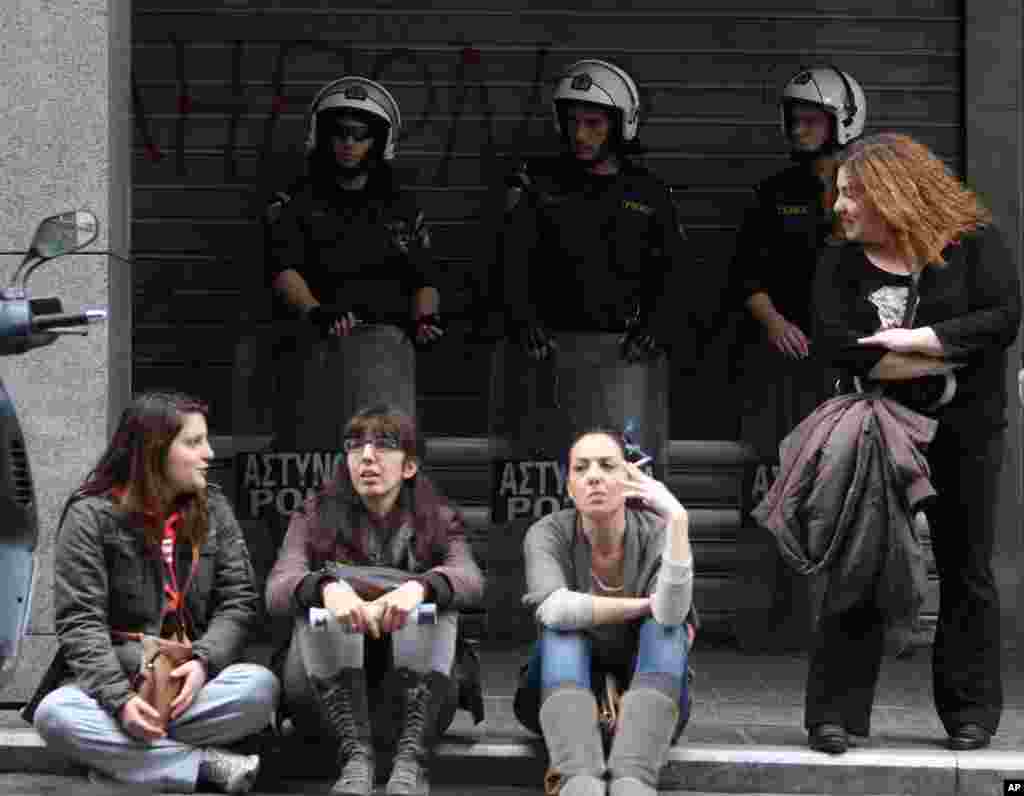
1/8Bank of Cyprus employees sit in front of riot police during a protest outside Greece's Finance Ministry as the bank remains closed for third day in central Athens, March 21, 2013.
Cypriot officials are trying to come up with an alternate plan to raise $7.5 billion to avoid a debt default, after a proposed tax sparked protests across the island.
Show moreShow less
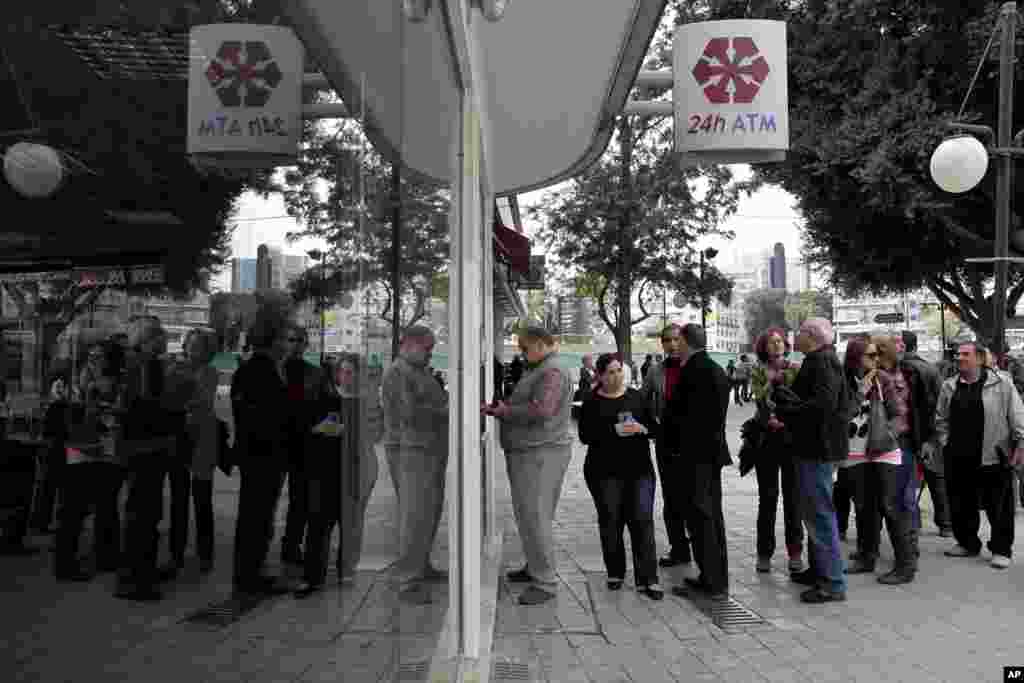
2/8People line up at an ATM outside a closed Laiki Bank branch in Nicosia, Cyprus, March 21, 2013.
Cypriot officials are trying to come up with an alternate plan to raise $7.5 billion to avoid a debt default, after a proposed tax sparked protests across the island.
Show moreShow less
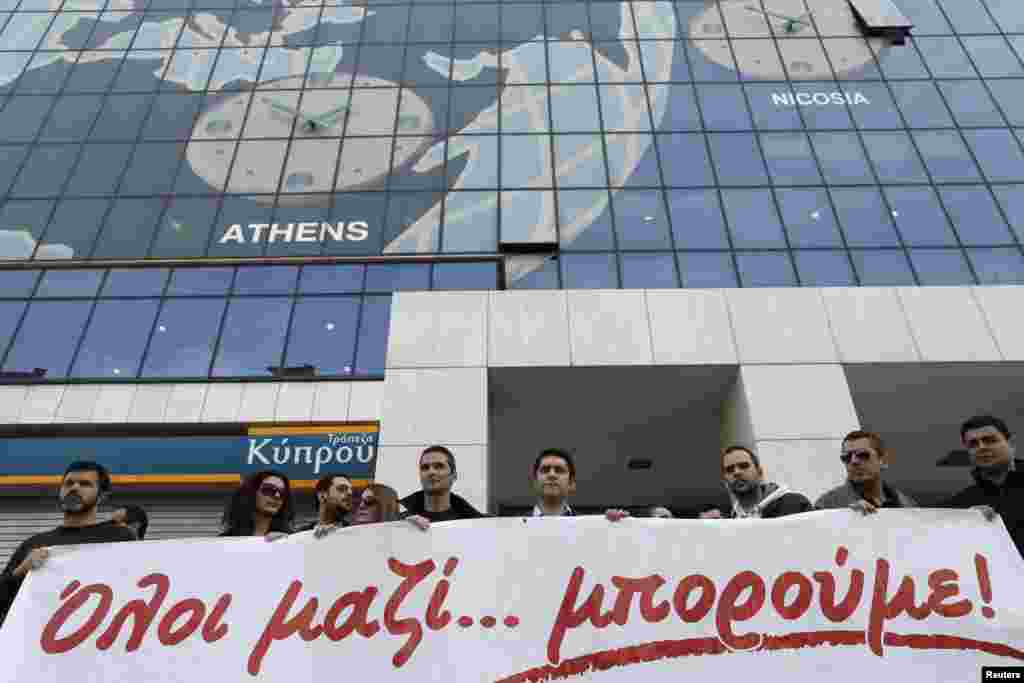
3/8Employees of the Bank of Cyprus take part in a rally in solidarity with Cyprus outside the headquarters of the bank in Athens, Greece, March 20, 2013.
Cypriot officials are trying to come up with an alternate plan to raise $7.5 billion to avoid a debt default, after a proposed tax sparked protests across the island.
Show moreShow less
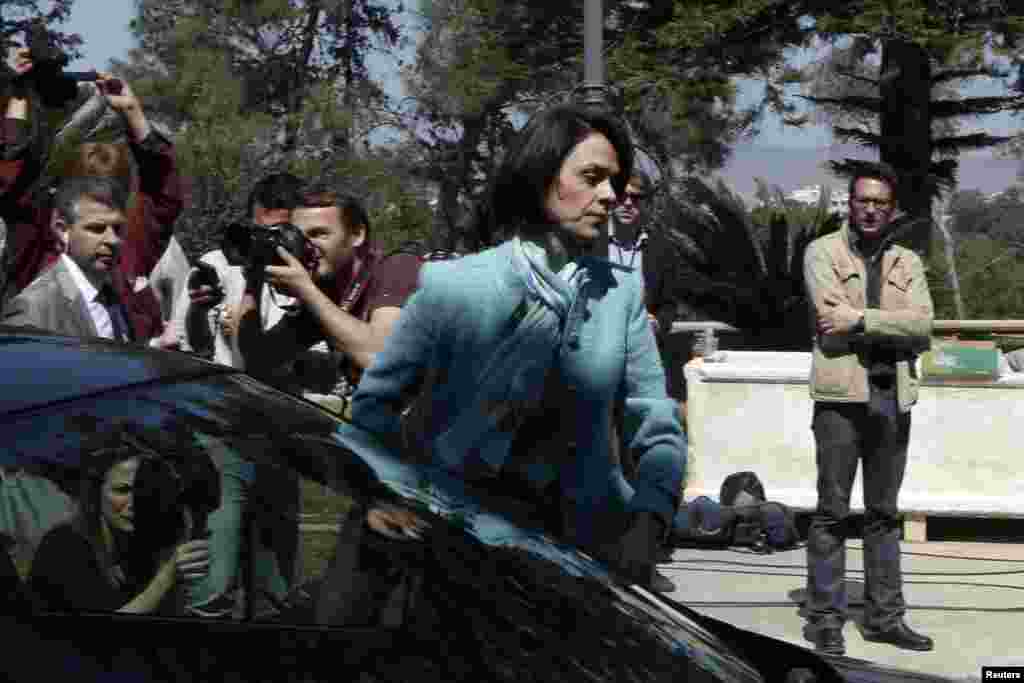
4/8International Monetary Fund mission chief Delia Velculescu arrives for a meeting with Cypriot President Nicos Anastasiades at the presidential palace in Nicosia, Cyprus, March 20, 2013.
Cypriot officials are trying to come up with an alternate plan to raise $7.5 billion to avoid a debt default, after a proposed tax sparked protests across the island.
Show moreShow less
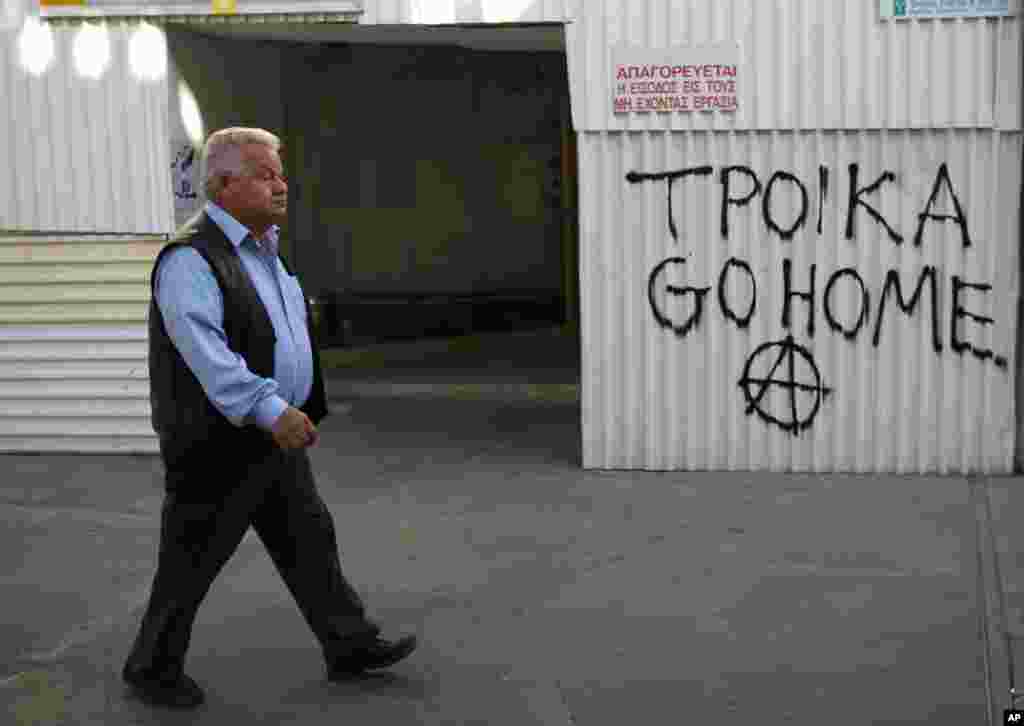
5/8A man walks by graffiti that reads "Troika out" in the old city of capital Nicosia, Cyprus, March 19, 2013.
Cypriot officials are trying to come up with an alternate plan to raise $7.5 billion to avoid a debt default, after a proposed tax sparked protests across the island.
Show moreShow less
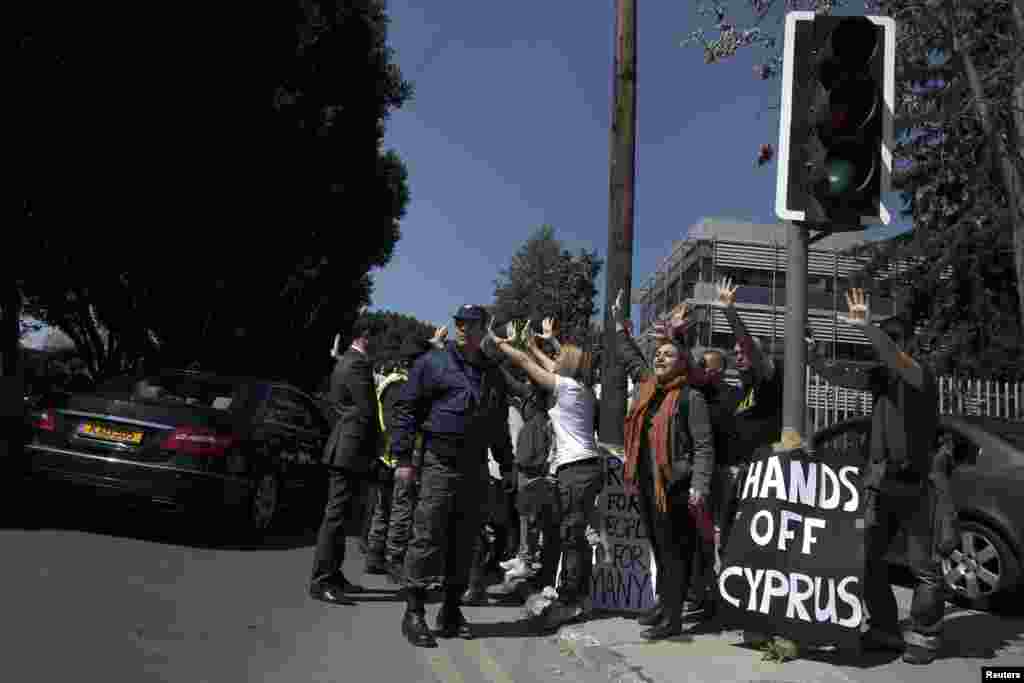
6/8Demonstrators raise their arms in protest as Cypriot President Nicos Anastasiades's convoy drives to the parliament in Nicosia, Cyprus, March 18, 2013.
Cypriot officials are trying to come up with an alternate plan to raise $7.5 billion to avoid a debt default, after a proposed tax sparked protests across the island.
Show moreShow less
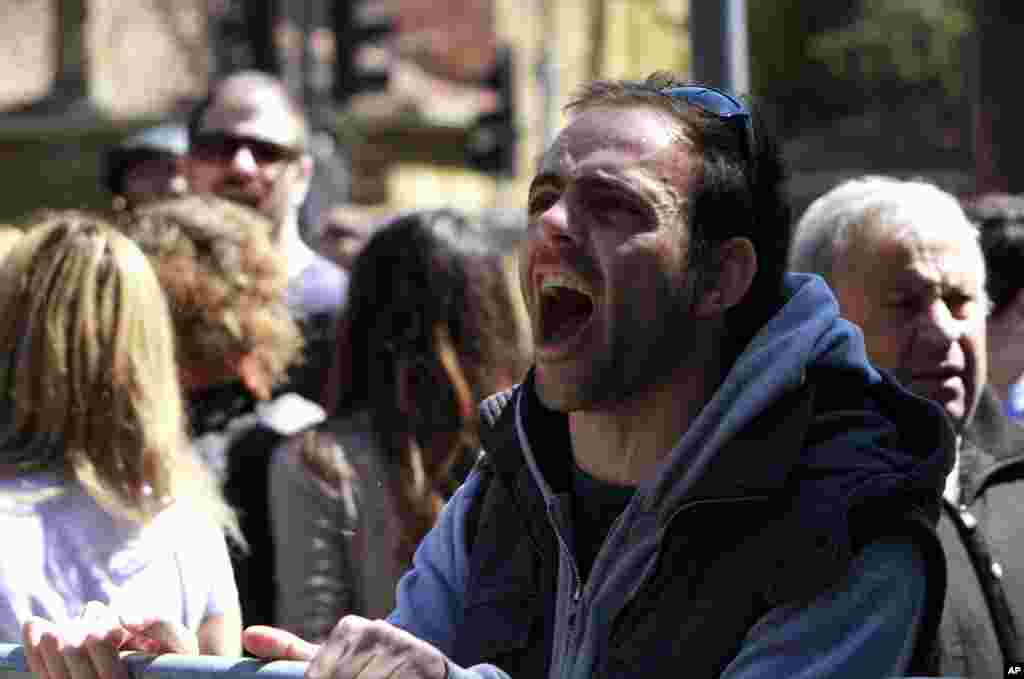
7/8A protester shouts slogans outside of parliament during a meeting in Nicosia, Cyprus, March 18, 2013.
Cypriot officials are trying to come up with an alternate plan to raise $7.5 billion to avoid a debt default, after a proposed tax sparked protests across the island.
Show moreShow less
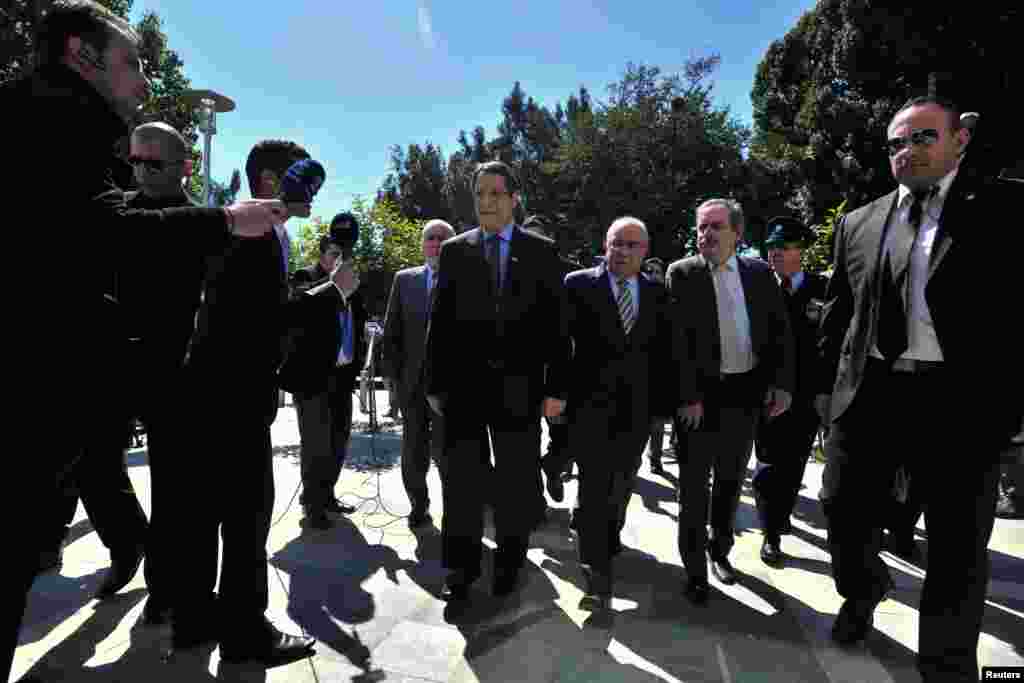
8/8Cypriot President Nicos Anastasiades arrives at parliament in Nicosia, Cyprus, March 18, 2013.
Cypriot officials are trying to come up with an alternate plan to raise $7.5 billion to avoid a debt default, after a proposed tax sparked protests across the island.
Show moreShow less
Previous slide
Next slide
Cypriot banks were closed on Monday for a holiday.
Cypriots were angered by the deposit tax, with one domestic worker saying it is unacceptable.
"We cleaning ladies spend our entire days trying to earn some money in order to feed our children, and now they are saying they are going to take it from us?" one woman said. "It's unacceptable. No. Not a single haircut, we will not accept any kind of haircut.''
Under bailout terms set Saturday by Cyprus's eurozone neighbors and the International Monetary Fund, a one-time tax of 9.9 percent would be imposed on deposits of $131,000 and up, while deposits under $131,000 would be taxed at 6.75 percent.
Analyst Robert Halver of the Baader Bank said the fear is that depositors throughout the eurozone might view the Cyprus experience as reason to start withdrawing their funds from bank accounts. Such a run on banks could create a new crisis for European governments, now in the third year of their debt crisis.
"What has been done in Cyprus is an experiment," Halver said. "If the population has to, in the form of their savings, contribute to rectify the mistakes that have been made in Cyprus, then there is a danger that in other countries people will decide, at the breakfast table, to withdraw their money. If money is withdrawn on a great scale, if we have a bank run, then we see the return of the bank crisis."
Russian President Vladimir Putin on Monday called the proposed levy "unfair, unprofessional and dangerous." Russian banks and corporations have billions of dollars in Cypriot banks.
Cypriot media say it is unlikely lawmakers will agree to the terms set in the bailout.
President Nicos Anastasiades said in a televised address to the nation Sunday if parliament does not approve the levy, Cyprus faces bankruptcy and the possible exit of Cyprus from the eurozone.
The Voice of America provides news and information in more than 40 languages to an estimated weekly audience of over 326 million people. Stories with the VOA News byline are the work of multiple VOA journalists and may contain information from wire service reports.