Report: Deal Reached in China Media Censorship Protest
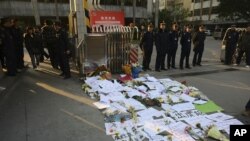
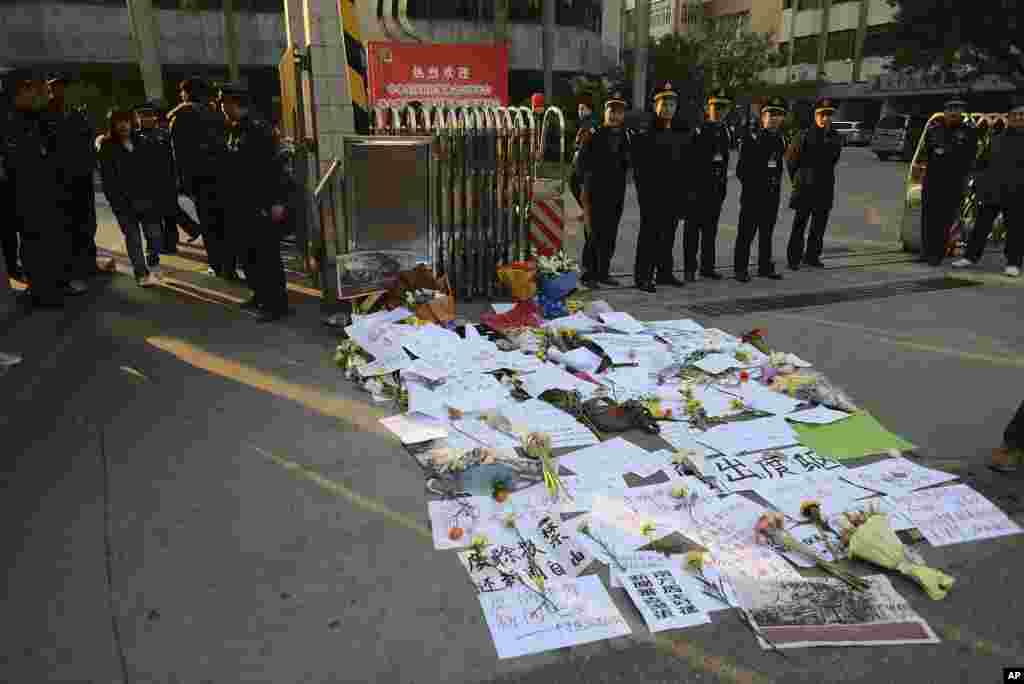
Security guards stand near protest banners and flowers are laid outside the headquarters of Southern Weekly newspaper in Guangzhou, Guangdong province January 7, 2013.
Government officials and journalists at a newspaper in southern China are reported to have reached a tentative deal to end a week-long standoff over government media censorship.
Though many details of the agreement remain unclear, reports said editors who had gone on strike have agreed to return to work and will publish the next edition of the Southern Weekly as usual on Thursday.
Quoting sources close to the negotiations, some reports said staff who walked off the job would not face punishment and the government would agree to loosen press controls that many journalists saw as excessive.
Doug Young, a journalism professor at Fudan University in Shanghai, says that the apparent concessions were likely the best possible outcome for the journalists.
"I would call it maybe a small victory, because it doesn't sound like they won any concrete concessions," says Young. "Getting this sort of a broader more vague promise probably represents the best they could have hoped for in this particular instance."
The dispute began last week when censors blocked an editorial urging political reform, and replaced it with one praising the Communist Party. It soon turned into a nationwide online protest against China's strict media censorship, with celebrities and other public figures expressing their support for the paper.
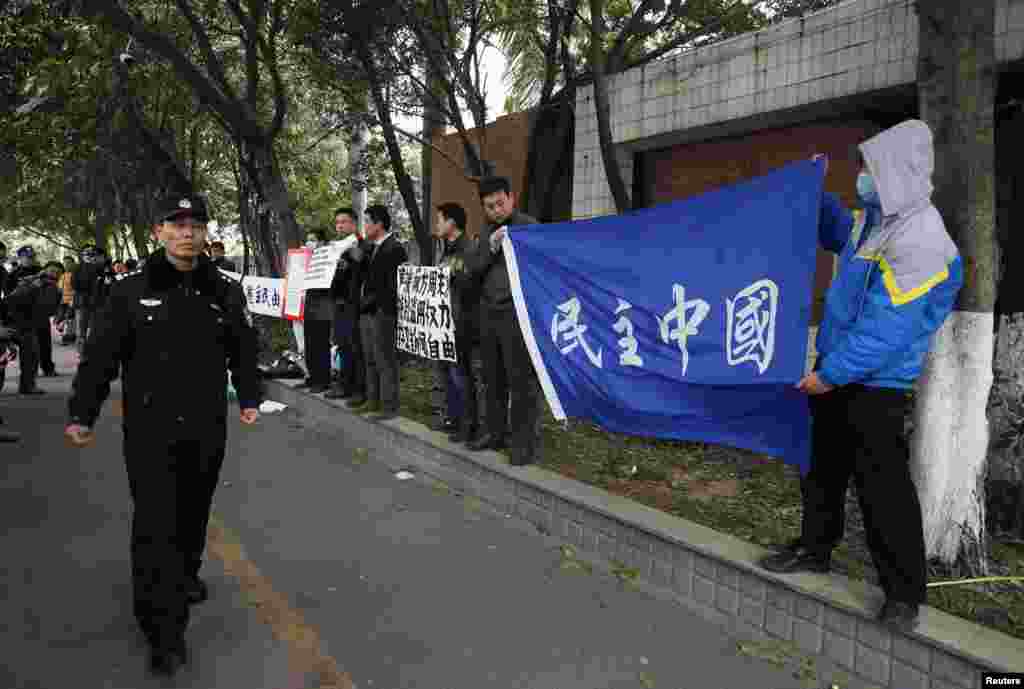
On Wednesday, a small group of protesters gathered for a third straight day outside the Southern Weekly in Guangzhou to protest censorship. One of the protesters, Xiao Qingshan, said he wants wider reforms to the country's media.
"We want freedom of speech to air our real voice," he says. "If we always have censorship and the media face shutdown every day, the media become a tool to cheat the people. Is there any hope for our country?"
Chinese Protest Media Censorship
1/10A supporter of the Southern Weekly newspaper in a wheelchair chants slogans in front of police officers near the newspaper's office in the southern Chinese city of Guangzhou, January 10, 2013.
Protesters clashed with Communist party supporters in southern China during a dispute about government censorship.
Show moreShow less
2/10A protester is taken away by plainclothes police officers and placed in a jeep near the office of Southern Weekly newspaper in the southern Chinese city of Guangzhou, January 10, 2013.
Protesters clashed with Communist party supporters in southern China during a dispute about government censorship.
Show moreShow less
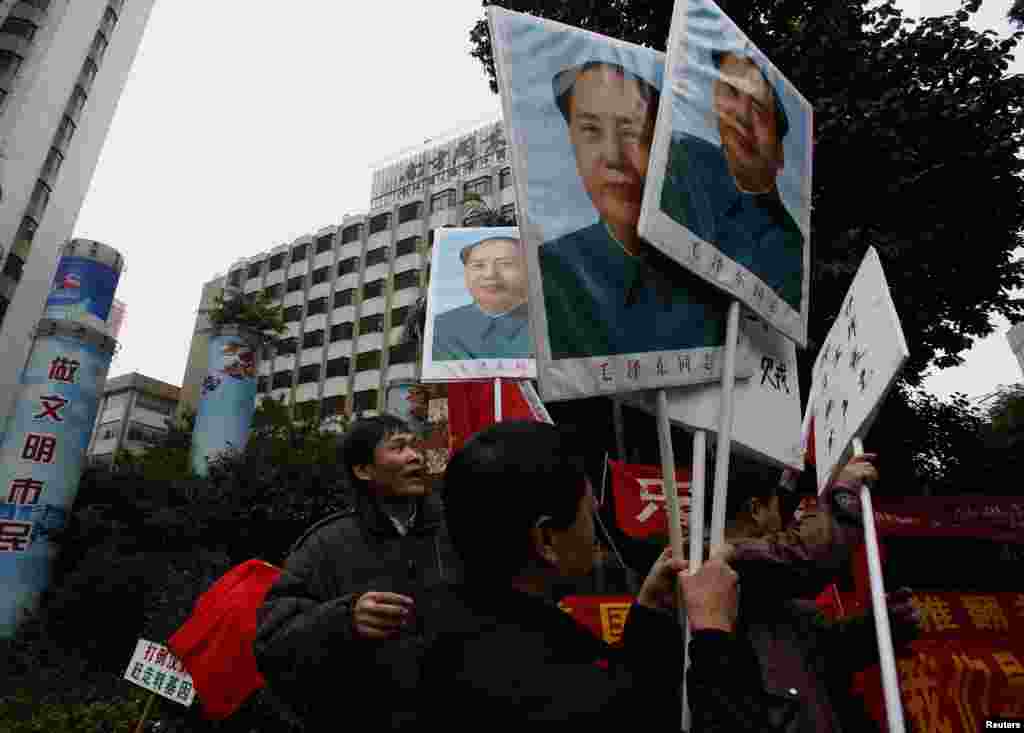
3/10Leftists carrying portraits of the late Chinese leader Mao Zedong demonstrate outside the office of the liberal Southern Weekly newspaper in the southern Chinese city of Guangzhou, January 9, 2013.
Protesters clashed with Communist party supporters in southern China during a dispute about government censorship.
Show moreShow less
4/10Police separate a supporter of the Southern Weekly from confronting leftists protesting outside the office of the liberal newspaper in the southern Chinese city of Guangzhou, January 9, 2013.
Protesters clashed with Communist party supporters in southern China during a dispute about government censorship.
Show moreShow less
5/10A police officer walks past supporters of Southern Weekly demonstrating outside the office of the liberal newspaper in the southern Chinese city of Guangzhou, January 9, 2013.
Protesters clashed with Communist party supporters in southern China during a dispute about government censorship.
Show moreShow less
6/10Demonstrators hold banners outside the headquarters of Southern Weekly newspaper in Guangzhou, Guangdong province, China, January 8, 2013.
Protesters clashed with Communist party supporters in southern China during a dispute about government censorship.
Show moreShow less
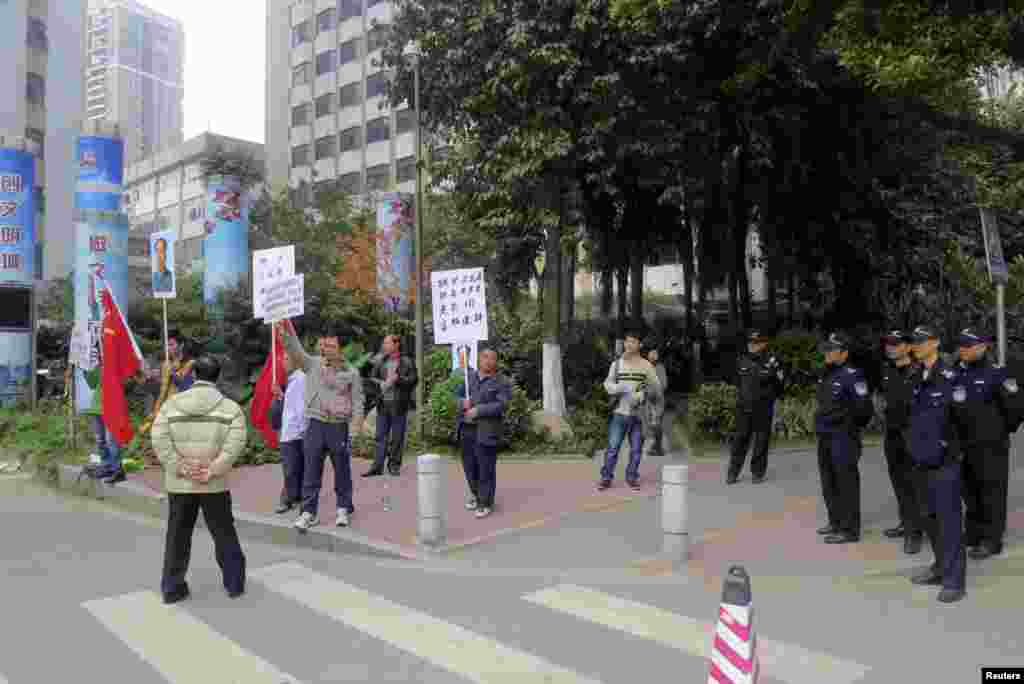
7/10Demonstrators hold banners, portraits of China's late Chairman Mao Zedong, and Chinese national flags next to police outside the headquarters of Southern Weekly newspaper, January 8, 2013.
Protesters clashed with Communist party supporters in southern China during a dispute about government censorship.
Show moreShow less
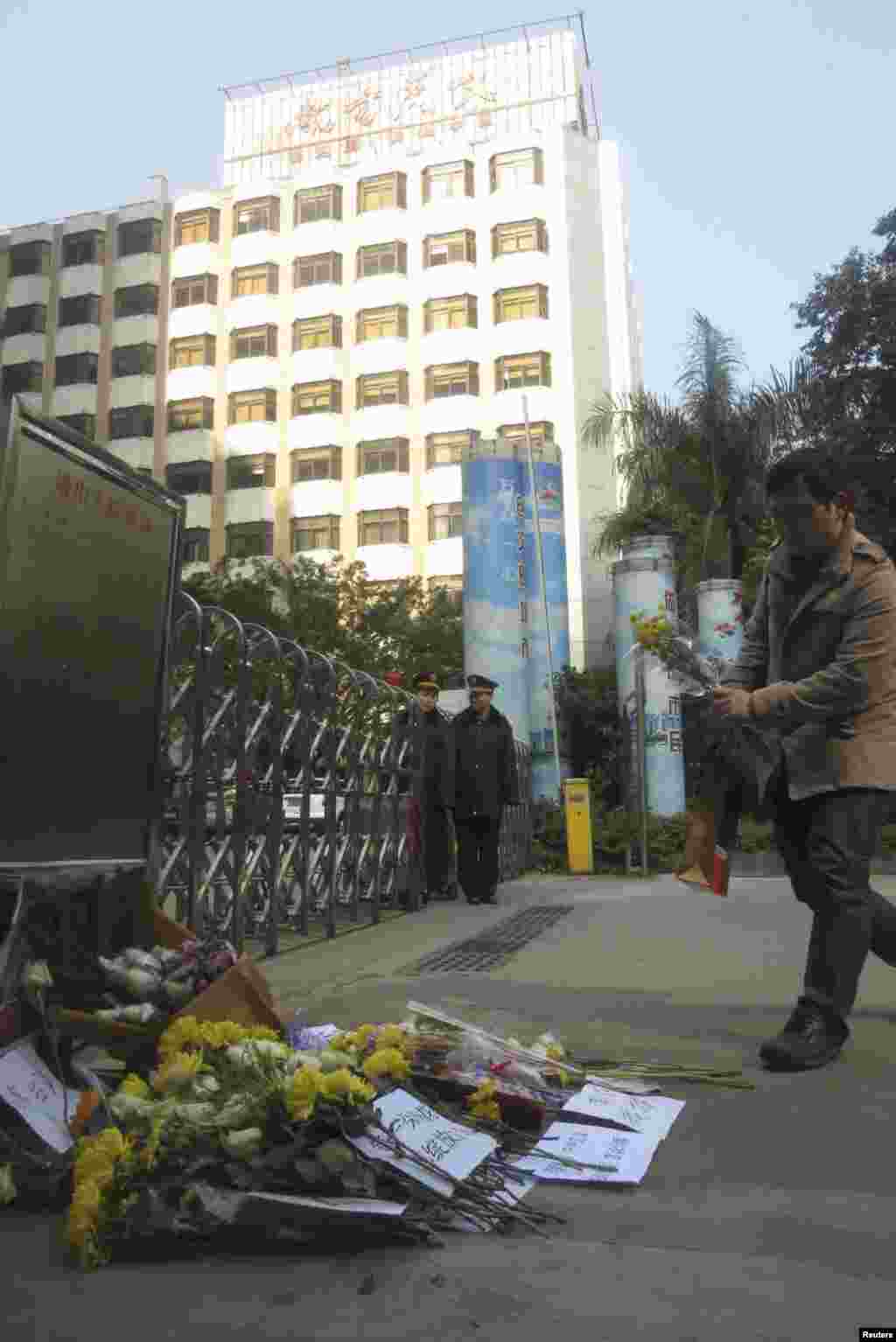
8/10A man lays a bouquet of chrysanthemums in front of the headquarters of Southern Weekly newspaper, January 7, 2013.
Protesters clashed with Communist party supporters in southern China during a dispute about government censorship.
Show moreShow less
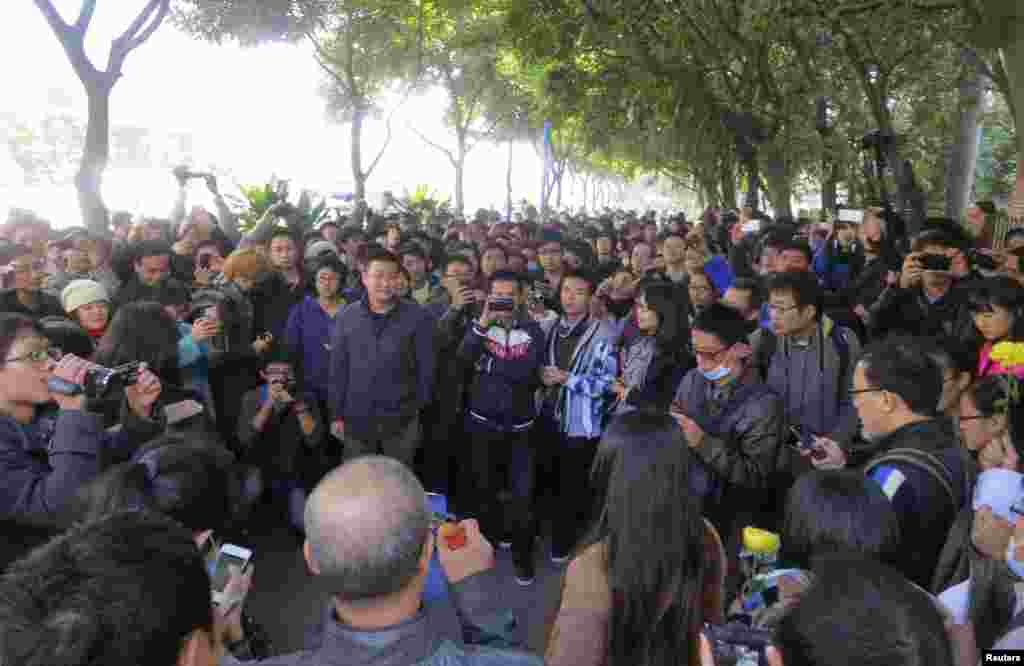
9/10Demonstrators gather along a street near the headquarters of Southern Weekly newspaper, January 7, 2013.
Protesters clashed with Communist party supporters in southern China during a dispute about government censorship.
Show moreShow less
10/10Security guards stand near protest banners and flowers are laid outside the headquarters of Southern Weekly newspaper, January 7, 2013.
Protesters clashed with Communist party supporters in southern China during a dispute about government censorship.
Show moreShow less
Previous slide
Next slide
On Tuesday, minor scuffles broke out between free-speech protesters and Communist Party supporters, who carried red flags and posters of Chairman Mao.
The protesters called for the resignation of Tuo Zhen, the provincial propaganda chief, who they blamed for changing the editorial and overseeing other strict censorship measures. Many observers said Beijing was unlikely to make such a huge concession.
Any possible concessions made by the government under the tentative agreement remain unclear, partly because Southern Weekly staff have reportedly been told not to discuss the case with foreign media. When contacted by VOA, staff at the paper's Beijing and Guangzhou offices said they were not in a position to discuss the situation.
The controversy has also reportedly widened to include another paper with a progressive reputation. Several unconfirmed reports suggest Dai Zegeng, the editor of the Beijing News, resigned after being forced to publish a state media editorial blaming the controversy on "external activists." Although the Beijing News did publish the editorial, it was placed near the back of the paper.
There were other signs suggesting Beijing had no intention of handing the rebel journalists any broad concessions. A leaked Central Propaganda Department directive circulating online suggests that "hostile foreign forces" were responsible for the dispute, and insisted that government control of the media is an "unwavering basic principle."
The Voice of America provides news and information in more than 40 languages to an estimated weekly audience of over 326 million people. Stories with the VOA News byline are the work of multiple VOA journalists and may contain information from wire service reports.