



U.N. officials say over the past four years, great strides have been made in many countries in eliminating the H5N1 virus, or avian flu. Nevertheless, the threat remains.
The Food and Agriculture Organization says a “concerted international effort “has rid the virus from poultry in almost all the countries it infected at the peak of its outbreak in 2006. But, it remains entrenched in Egypt, Indonesia, Bangladesh, Vietnam and China.
Over the years, the disease has forced the culling of 260 million birds and caused $20 billion in economic damage. H5N1 is blamed for 292 human deaths.
Successes and failures
Avian flu is one of the subjects being discussed at the International Ministerial Conference on Animal and Pandemic Influenza, underway in Hanoi.

Dr. Juan Lubroth, the FAO’s chief veterinary officer, is attending the conference in the Vietnamese capital.
If we look at the situation as it was in 2004, 2005 and 2006, we were on the increase, with many countries reporting outbreaks both in poultry and in human cases,” he says.
“If we look at the last couple of years and now in 2010, of the 63 or so countries and areas, we really only have a problem of H5N1 still in circulation in five countries or regions where the virus is entrenched in the poultry population.”
Intervention measures have been “insufficient” in certain areas, says Lubroth.
“What I mean by entrenched -- it’s already endemic. There is a transmission cycle that seems to reappear every year or at least twice a year in… November, December through March and then maybe a smaller peak that we have seen in June or July,” he says.
Egypt
The entrenchment of H5N1 in Egypt may stem from the way poultry has been traditionally produced and marketed over the centuries.
Also he says, “The dense population in Egypt…particularly in Lower Egypt with the huge metropolis that is Cairo, I think tends to maintain that virus. And intervention measures by either the central government veterinary services or the local veterinary services have not been able to stop movement of the virus.”
He says as a result of the lack of strict animal farming and production regulations over recent decades “the intensity of infection is maintained.”
“Recognizing that in Egypt, poultry is perhaps the most common or accessible type of meat available to the population,” he says.
Asia
The FAO official says, “I think the reasons are a bit different, but we still have to look at some common denominators – production and marketing. So, there are some risk factors that we still have not quite identified. And if we had sufficient amount of funding, we would be able to devote more time in the field to try to identify what are these critical control points and intervene appropriately.”
Risk of epidemic
Despite the relatively low number of deaths from avian flu, health officials have long feared it would jump to the human population and spread quickly.
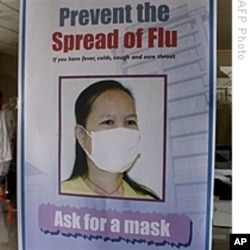
“The risk of the H5N1 becoming a human pandemic is real. The more problems that we have at the poultry level, the more the risk is that it will spill over to humans. And if it acquires the ability to have human to human transmission, then we could have a pandemic on our hands,” he says.
He says if that happened, H5N1 would spread very quickly around the world, similarly to what happened with H1N1, the so-called swine flu.
“However,” he says, “the H1N1 was very, very mild. H5N1 in humans is a big killer disease.”
In addressing the conference in Hanoi, Lubroth said the world must stop “hopping from one crisis to another,” and instead to a better job of forecasting and monitoring the “drivers” that promote disease.