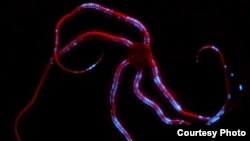
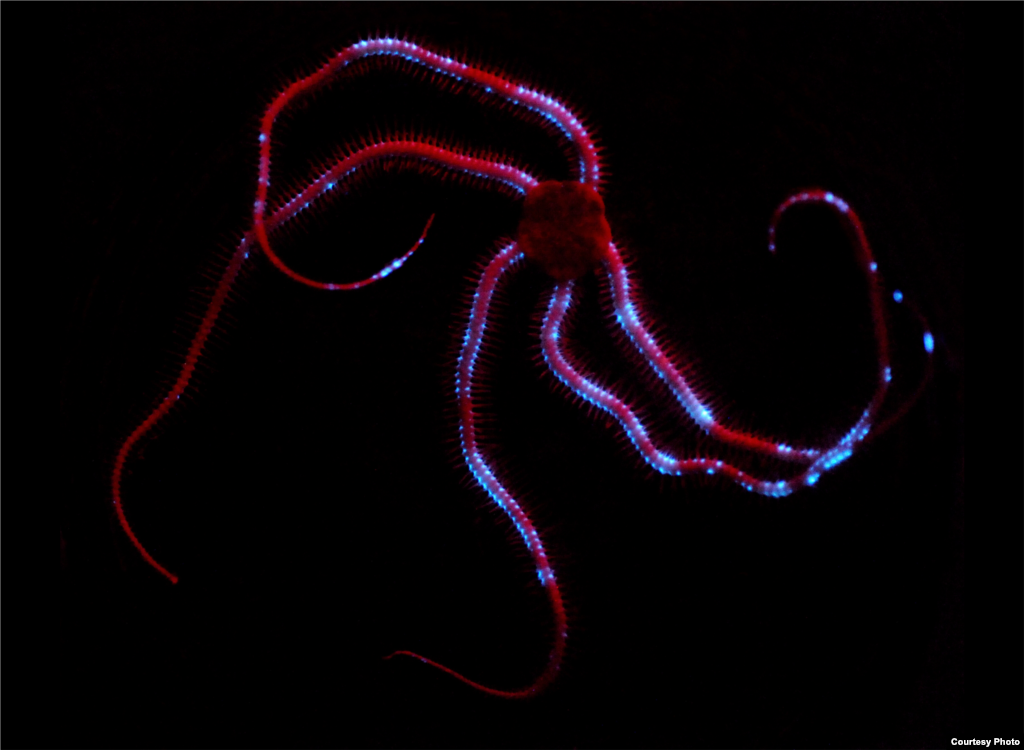
An example of bioluminescence: light emitted from a deep sea brittle star (Credit: Sonke Johnsen)
The ocean glows with undersea life which makes its own light.
These animals living on the ocean floor, beyond the reach of sunlight, have evolved this bioluminescence for camouflage, to find mates or to repel or confuse predators.
They also have a sort of color vision which combines sensitivity to blue and ultraviolet light. Their detection of these shorter wavelengths may provide them a way to ensure they grab food, not poison.
Two new studies published this week in Experimental Biology illuminate the scene on the sea floor.
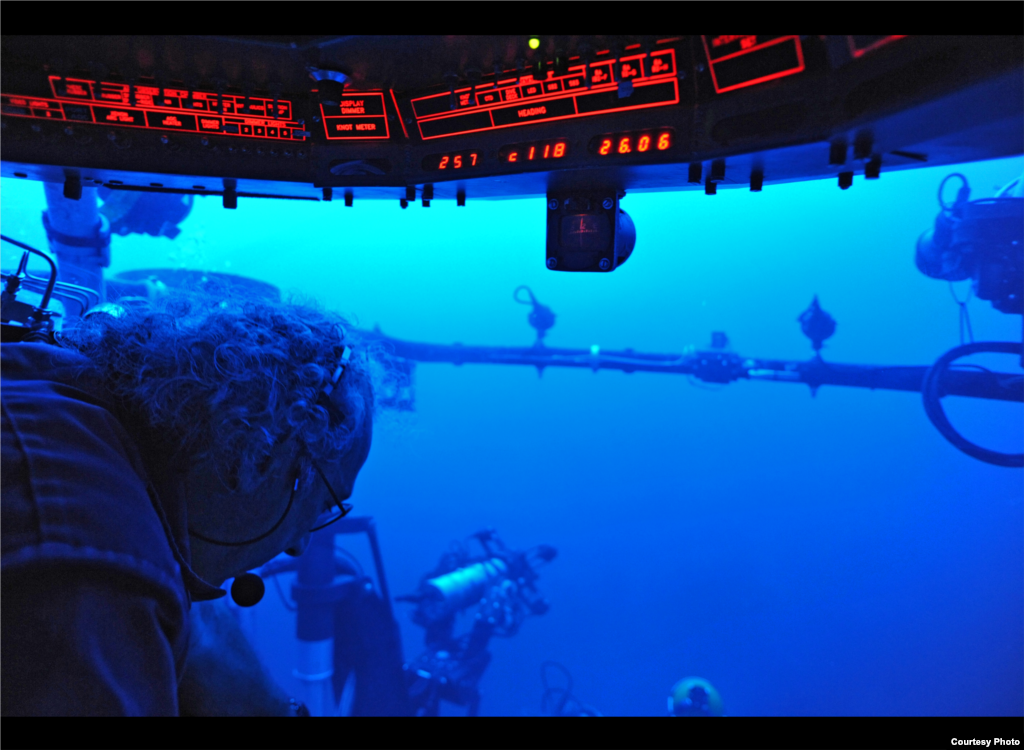
Duke University biologist Sonke Johnsen was among a crew of scientists on a submersible vehicle that explored the ocean bottom at three sites near the Bahamas.
“Our original guess was that actually the whole sea floor might have a dim glow from bacteria," Johnsen says. "There are a number of bacteria that glow continually as they are breaking down dead animals and things of that sort.”
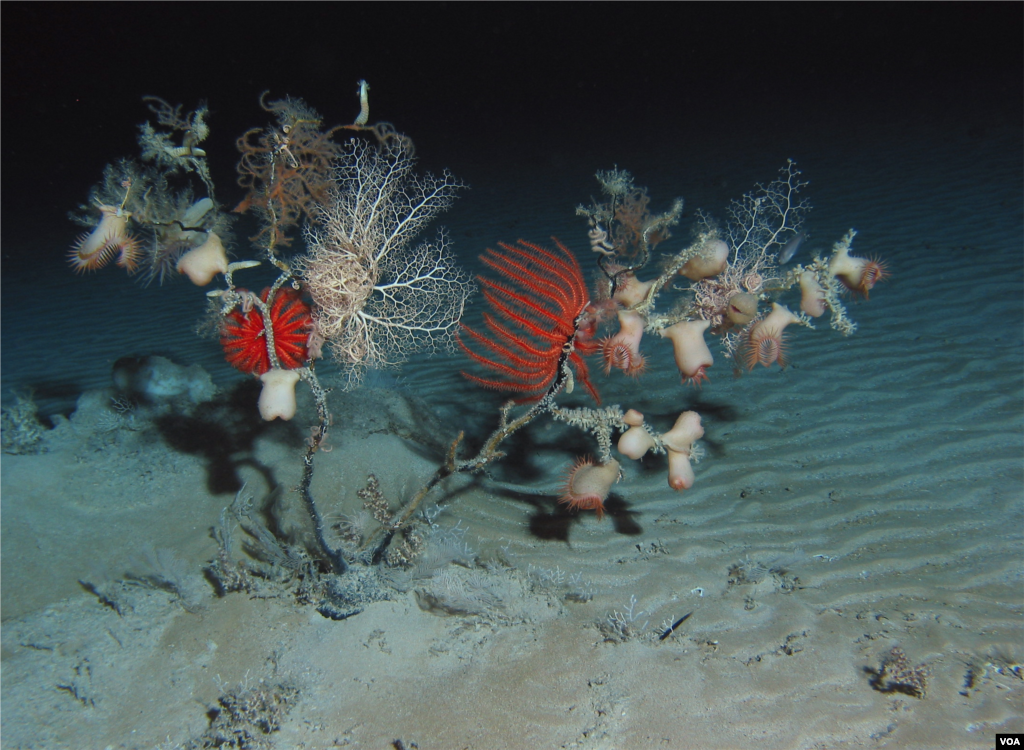
But that wasn’t the case. Using the vehicle’s robotic arm, they gently tapped the coral, crabs and anything else that moved to see which seabed creatures emitted light.
Sea Life Color Codes Food to Evade Danger
1/11Crabs feeding from coral, Credit: Sonke Johnsen
The ocean glows with undersea life that makes its own light. Animals have evolved this bioluminescence for camouflage, to find mates or to repel or confuse predators.
Show moreShow less
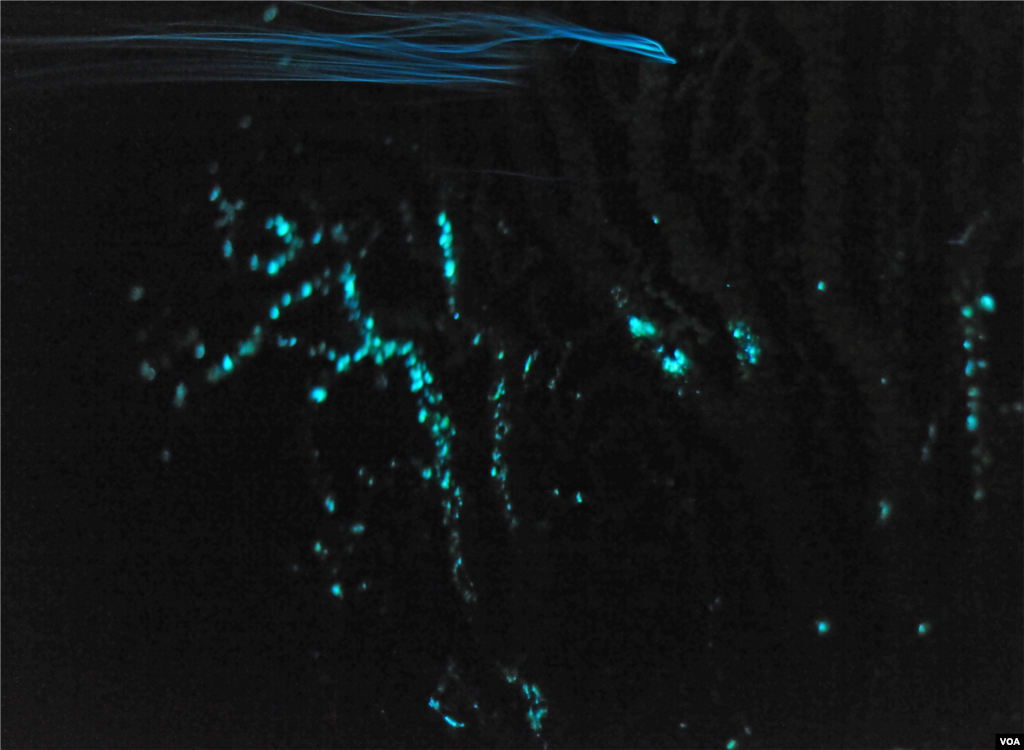
2/11Blue emitting plankton drifting past green emitting coral, Credit: Sonke Johnsen
The ocean glows with undersea life that makes its own light. Animals have evolved this bioluminescence for camouflage, to find mates or to repel or confuse predators.
Show moreShow less
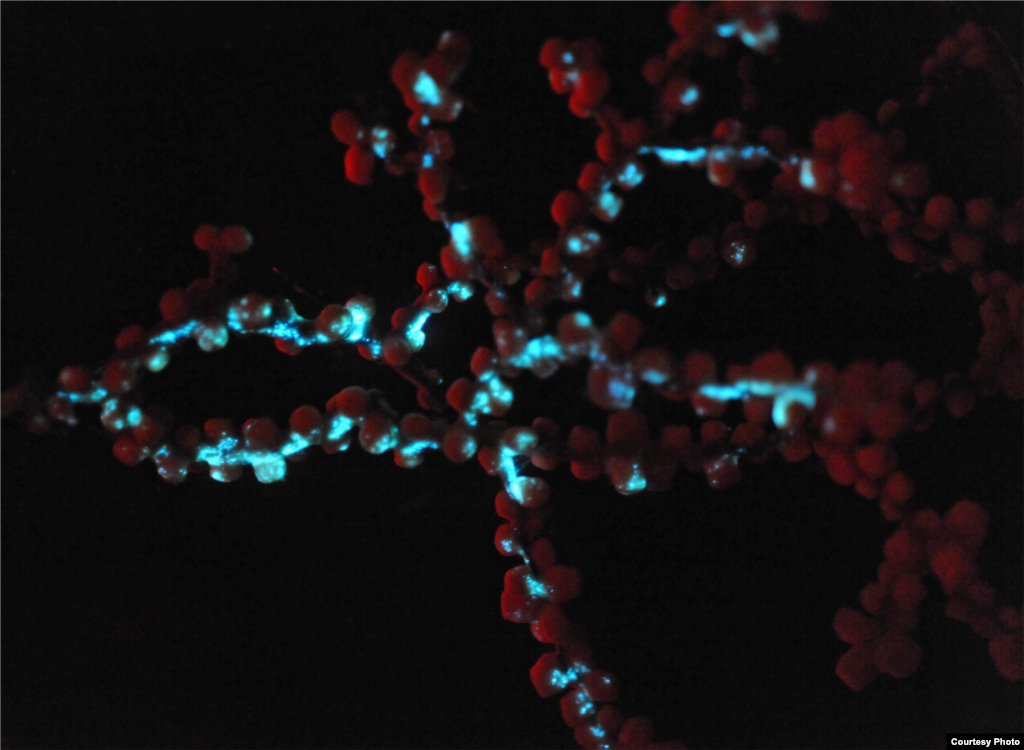
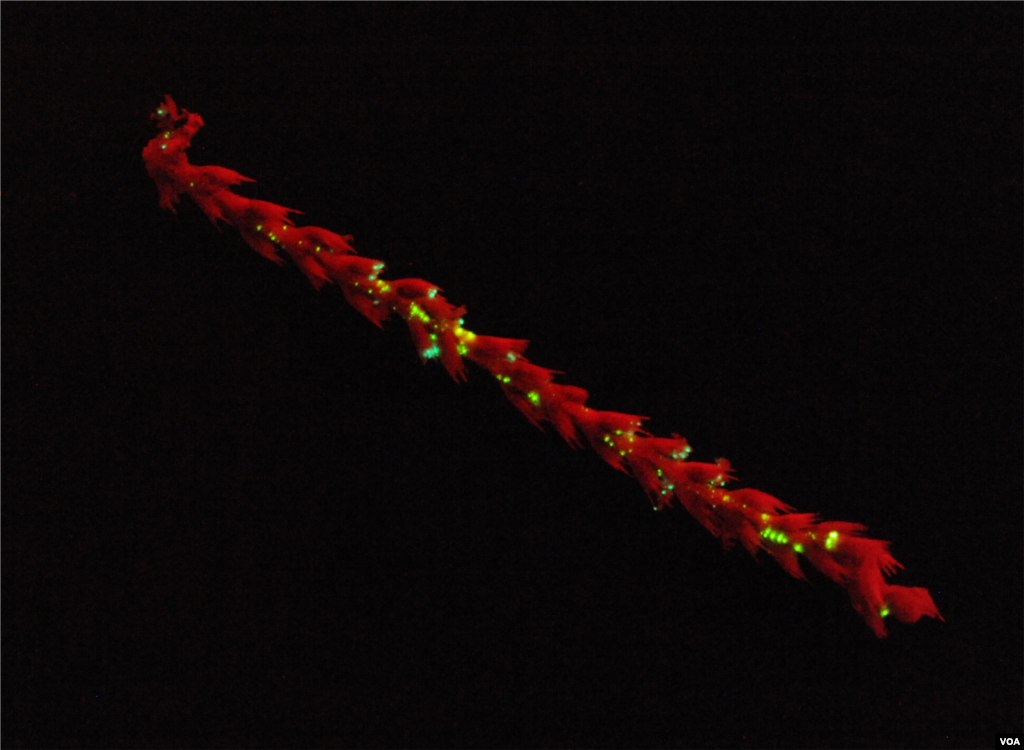
3/11Bioluminescence of a colonial anemone, Credit: Sonke Johnsen
The ocean glows with undersea life that makes its own light. Animals have evolved this bioluminescence for camouflage, to find mates or to repel or confuse predators.
The ocean glows with undersea life that makes its own light. Animals have evolved this bioluminescence for camouflage, to find mates or to repel or confuse predators.
Show moreShow less
5/11An example of bioluminescence: light emitted from a deep sea brittle star (Credit: Sonke Johnsen)
The ocean glows with undersea life that makes its own light. Animals have evolved this bioluminescence for camouflage, to find mates or to repel or confuse predators.
Show moreShow less
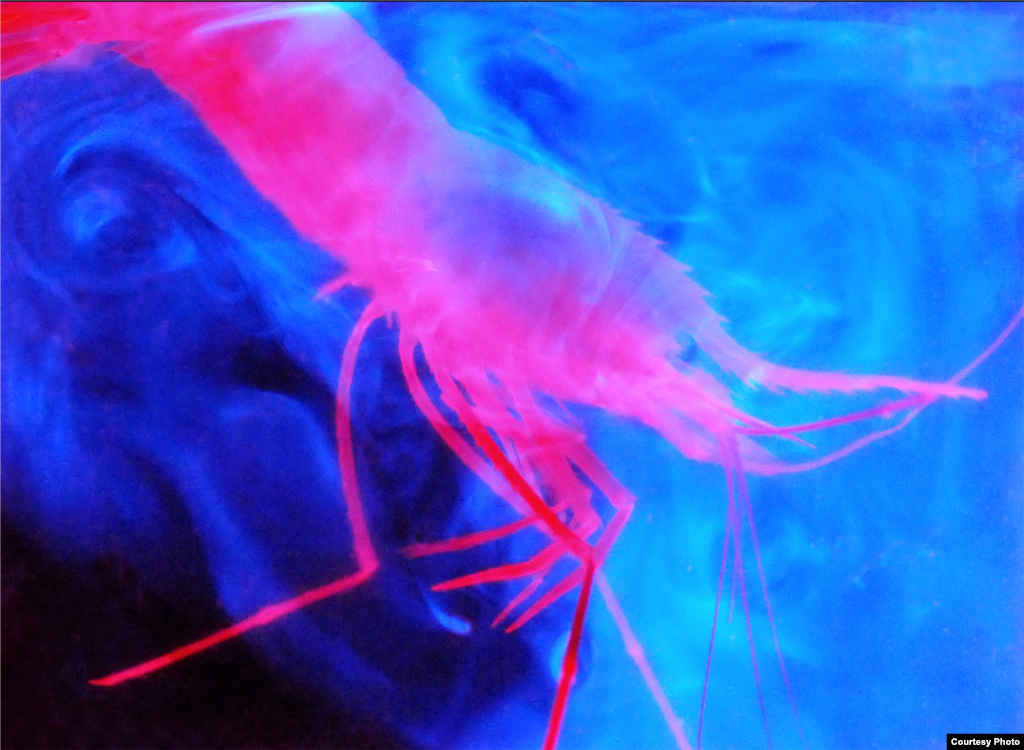
6/11Deep sea shrimp spew out chemicals that generate light where they mix in the surrounding currents, Credit: Sonke Johnsen
The ocean glows with undersea life that makes its own light. Animals have evolved this bioluminescence for camouflage, to find mates or to repel or confuse predators.
The ocean glows with undersea life that makes its own light. Animals have evolved this bioluminescence for camouflage, to find mates or to repel or confuse predators.
Show moreShow less
8/11The milky way from boat to show sensitivity of camera used to document sea creatures, Credit: Sonke Johnsen
The ocean glows with undersea life that makes its own light. Animals have evolved this bioluminescence for camouflage, to find mates or to repel or confuse predators.
Show moreShow less
9/11Light emitted from a deep sea brittle star, Credit: Sonke Johnsen
The ocean glows with undersea life that makes its own light. Animals have evolved this bioluminescence for camouflage, to find mates or to repel or confuse predators.
Show moreShow less
10/11Crabs sit placidly on a sea pen that emits green light, Credit: Sonke Johnse
The ocean glows with undersea life that makes its own light. Animals have evolved this bioluminescence for camouflage, to find mates or to repel or confuse predators.
Show moreShow less
11/11On the sea floor, scientists collect specimens ranging from a shrimp species that vomits light, to a glow-in-the-dark anemone. Credit: Sonke Johnsen
The ocean glows with undersea life that makes its own light. Animals have evolved this bioluminescence for camouflage, to find mates or to repel or confuse predators.
Show moreShow less
Previous slide
Next slide
Only 20 percent did, compared to 90 percent of the species that populate the open ocean higher in the water column.
Johnsen, who led the bioluminescence study, says the plankton produced a different color from the animals that ate them. “It is very, very blue. It’s like a blue LED. It’s just this beautiful, beautiful pure blue. Much of the light from the animals on the sea floor was green, or at least greener, and so you end up with this world where you have little blue flashes of light in the water and then green light whenever anything is touched on the bottom.”
For the second study, researchers collected species and brought them to the surface. Frank placed tiny electrodes on their eyes, and made a curious finding.
“That there are several species of deep sea crab that have both a blue and an ultraviolet visual pigment,” says Nova Southeastern University biologist Tamara Frank, who led the study.
Most creatures in the deep sea have evolved to detect only blue light, not the shorter ultraviolet waves that don’t penetrate to the sea floor.
Johnsen, a co-author of this study, says crab behavior provided a clue about why they could see both. “And as they touched these plankton and feed on them, those glow blue. But as they touch the coral they are standing on, that glows green.”
“What we hypothesize is that they are picking off the blue stuff, which they like to eat," says Frank, "and when the blue stuff hits the green stuff with that ultraviolet visual pigment, they can tell the difference between the blue and the green and therefore pick off what they like to eat versus what they don’t like to eat.”
Johnsen adds, “And so what our guess is - but we are not certain of this yet - is that they are actually using their color vision. In other words, blue comes from the water, blue is tasty. Green is what I am standing on. I don’t want that. It’s toxic.”
Understanding how deep sea animals see has led to a greater understanding of deep space. An orbiting x-ray telescope was inspired by the wide-angle vision of lobsters.