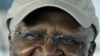
Desmond Tutu fought apartheid in South Africa, and was critical of the war in Iraq.
"We waged a war that shouldn't have happened," he said.
He also spoke out against genocide in Rwanda.
"God have mercy on us," he said.
The retired Anglican archbishop announced in July that he would retire from public life on his birthday.
"The time has come to slow down, and sip maybe rooibos tea with my beloved wife in the afternoons" he said.
Tutu rose through the ranks of the Anglican church in South Africa to become the first black Anglican archbishop of Capetown.
He was a vocal critic of South Africa's white-ruled government and encouraged non-violence to end apartheid.
Tutu was the recipient of many awards, and in 1984, he received a Nobel Peace Prize for advocating "a democratic and just society without racial divisions." He used the recognition to step up the anti-apartheid campaign, calling for an economic boycott against South Africa.
After the end of apartheid, Tutu called it an incredible day when Nelson Mandela won South Africa's first all-race elections.
"I would say the highest point for me was when I stood on the balcony in 1994 to introduce our new, brand new president to South Africa and the world," he said.
To help mend the nation, President Mandela appointed Tutu as head of the country's Truth and Reconciliation Commission. The group issued a report that included numerous confessions of guilt under apartheid in return for amnesty.
"It makes specific proposals on how we can cultivate a culture of human rights and of structures to insure that the atrocities of the past will not reoccur," Tutu said.
Tutu also campaigned to fight poverty and AIDS. In recent years, he expressed his disappointment in post-apartheid South Africa, especially the level of violent crime.
Despite his withdrawal from public life, Tutu says he will continue to support his peace foundation and will remain part of a group of elder statesmen who campaign for peace and human rights.
But Tutu says he will no longer give interviews and, as he put it, will mostly "shut up."
"I have been part of our struggle for freedom and democracy, and I am part of the celebration that we did succeed," he said. "I have been part of the post apartheid dispensation and long for us to do infinitely better."
Many say his voice will be missed.