



News / Health

Timeline of Developments in AIDS Epidemic

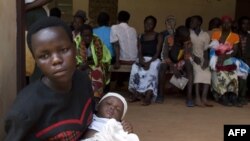
Women queue with their babies to be tested for HIV at a hospital in Bududa, eastern Uganda, September 27, 2011.
TEXT SIZE - +
  • 1981 - First cases of unusual immune system failure identified among gay men, women and injecting drug users
  • 1983 - Luc Montagnier isolates what is later known as HIV    
  • 1984 - Robert Gallo identifies HIV as the cause of AIDS
  • 1985 - At least one case of HIV identified in every region of the world
  • 1987 - AZT, the first therapy for AIDS, is approved in the United States
  • 1988 - Women account for half of adults with HIV in sub-Saharan Africa
  • 1990 - One million children have lost one or both parents to AIDS
  • 1991 - The red ribbon becomes a symbol of AIDS awareness
  • 1994 - First treatment to reduce mother-to-child HIV transmission is developed
  • 1996 - Brazil becomes the first developing country to provide antiretroviral therapy through its health program
  • 2000 - UNAIDS, WHO, pharmaceutical companies launch initiative to increase access to HIV treatment in developing countries
  • 2003 - U.S. President George W. Bush announces the $15 billion President's Emergency Plan for AIDS Relief, PEPFAR
  • 2005 - 1.3 million people in low and middle income countries are receiving antiretroviral therapy
  • 2006 - Annual global spending on AIDS in low and middle income countries is $8.9 billion
  • 2007 - Another major HIV vaccine trial is stopped after preliminary results show no benefit
  • 2008 - PEPFAR reauthorized for $48 billion over five years
  • 2009 - 5.2 million people in low and middle income countries have access to antiretroviral therapy
  • 2010 - U.S., South Korea, China and Namibia lift travels bans on HIV-positive people.
  • 2011 - Trial results showed early start to antiretroviral drugs greatly reduces the transmission of HIV among discordant couples

Source: UNAIDS, Avert

You May Like

India, China Pledge to Overcome Border Tensions

Indian prime minister and Chinese premier attempt to move past tense standoff in the Himalayas during Delhi talks More

Burmese President Opens US Visit with VOA Town Hall Meeting

Ahead of his meeting with President Obama Monday, Thein Sein answered questions on human rights and economic development in his country More

Video Washington Week: Focus on Burma, US Government Scandals

President Thein Sein visits the White House on Monday, Congressional probes of multiple scandals are continuing More

Featured Videos

Your JavaScript is turned off or you have an old version of Adobe's Flash Player. Get the latest Flash player.
Video

Video Boston Bomber Spent 6 Months in Russia’s Most Violent Republic

The news of the Boston Marathon bombings circled the globe, and resonated here in Dagestan, a majority Muslim republic in Russia, on the shores of the Caspian Sea. Last year, Tamerlan Tsarnaev, the older of two brothers suspected of the bombings and a long-time Boston resident, returned to Dagestan, where he had lived for a year during his youth. Dagestan was the land of his maternal ancestors. But in the last two years, this republic of 3 million people has gained notoriety as the region with the highest level of political and religious violence in all of Russia. VOA's James Brooke reports from Makhachkala, Russia.