


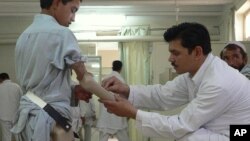
GENEVA – A new study by the World Health Organization (WHO) finds children with disabilities are almost four times more likely to experience violence as non-disabled children. The study says disabled children are far more prone to physical and sexual violence, to humiliation and neglect than are able-bodied children.
The WHO estimates that five percent or 93 million children around the world are disabled. These disabilities include physical impairments, such as cerebral palsy; sensory impairments, such as hearing or visual loss; intellectual impairment, mental illness or even long-term health conditions such as asthma or diabetes.
The report finds children with disabilities often suffer stigma, discrimination and ignorance about disability. There is also a lack of social support for those who care for them, which makes these children more vulnerable to violence.
WHO's technical officer for disability and rehabilitation, Tom Shakespeare, says children with disabilities are more likely to come from families that are poor and isolated. He says children in institutions can be especially vulnerable.
“It is also about the fact that children with disabilities are far more likely to be in institutions, and we know that institutions are places where abuse, neglect and violence are more common," Shakespeare noted. "Some children with disabilities have communication problems. They might be deaf. They might have limited speech. And, of course, that may make it more likely they will not be listened to, will not be understood, will not be believed. And again, that makes it more likely that they are preyed on.”
The report is based on 17 studies, with data on more than 18,000 disabled children from high-income countries. Researchers looked carefully at 74 other studies, some from low and middle-income countries, but those results were not included in the final report because the data was considered to be of low quality.
WHO's technical officer for violence and prevention, Christopher Mikton, says this underscores the urgent need for high-quality research in poorer countries. Nevertheless, Mikton notes that it is clear from what is known about the situation of children in poor countries that children with disabilities there are likely to suffer even more than those who live in wealthier countries.
“We know that rates of maltreatment in many low- and middle-income countries are considerably higher than in high-income countries," Mikton explained. "We also know that rates of disability among children tend to be higher in low- and middle-income countries. And we know that risk factors for violence - for example poverty, social inequality, crowded housing, whatever - a bunch of risk factors are more prevalent in low- and middle-income countries. So you can legitimately conclude that it is likely to be higher - the risk of violence against children in low- and middle-income countries. But we do not have evidence in this study."
WHO recommends removing disabled children from institutions. The organization says caring for them within the community would reduce violence against them. It says providing help and support to families with disabled children would remove a lot of pressure on caregivers and lessen abusive practices.
The report says some home nursing programs for children at risk of violence, and training programs to improve parenting skills, have successfully prevented violence against non-disabled children. It says these programs would probably work for disabled children as well.
The WHO estimates that five percent or 93 million children around the world are disabled. These disabilities include physical impairments, such as cerebral palsy; sensory impairments, such as hearing or visual loss; intellectual impairment, mental illness or even long-term health conditions such as asthma or diabetes.
The report finds children with disabilities often suffer stigma, discrimination and ignorance about disability. There is also a lack of social support for those who care for them, which makes these children more vulnerable to violence.
WHO's technical officer for disability and rehabilitation, Tom Shakespeare, says children with disabilities are more likely to come from families that are poor and isolated. He says children in institutions can be especially vulnerable.
“It is also about the fact that children with disabilities are far more likely to be in institutions, and we know that institutions are places where abuse, neglect and violence are more common," Shakespeare noted. "Some children with disabilities have communication problems. They might be deaf. They might have limited speech. And, of course, that may make it more likely they will not be listened to, will not be understood, will not be believed. And again, that makes it more likely that they are preyed on.”
The report is based on 17 studies, with data on more than 18,000 disabled children from high-income countries. Researchers looked carefully at 74 other studies, some from low and middle-income countries, but those results were not included in the final report because the data was considered to be of low quality.
WHO's technical officer for violence and prevention, Christopher Mikton, says this underscores the urgent need for high-quality research in poorer countries. Nevertheless, Mikton notes that it is clear from what is known about the situation of children in poor countries that children with disabilities there are likely to suffer even more than those who live in wealthier countries.
“We know that rates of maltreatment in many low- and middle-income countries are considerably higher than in high-income countries," Mikton explained. "We also know that rates of disability among children tend to be higher in low- and middle-income countries. And we know that risk factors for violence - for example poverty, social inequality, crowded housing, whatever - a bunch of risk factors are more prevalent in low- and middle-income countries. So you can legitimately conclude that it is likely to be higher - the risk of violence against children in low- and middle-income countries. But we do not have evidence in this study."
WHO recommends removing disabled children from institutions. The organization says caring for them within the community would reduce violence against them. It says providing help and support to families with disabled children would remove a lot of pressure on caregivers and lessen abusive practices.
The report says some home nursing programs for children at risk of violence, and training programs to improve parenting skills, have successfully prevented violence against non-disabled children. It says these programs would probably work for disabled children as well.