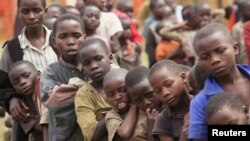
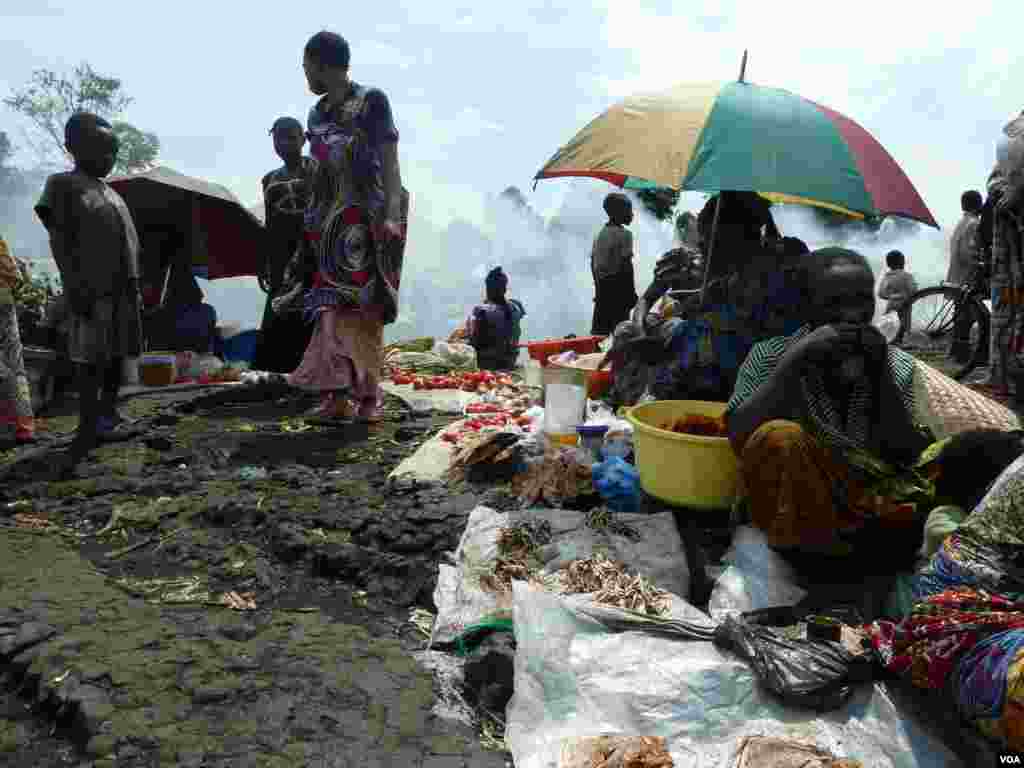
Refugee children, displaced by fighting in North Kivu Province in the Democratic Republic of Congo, wait for food in a transit camp in Kisoro town.
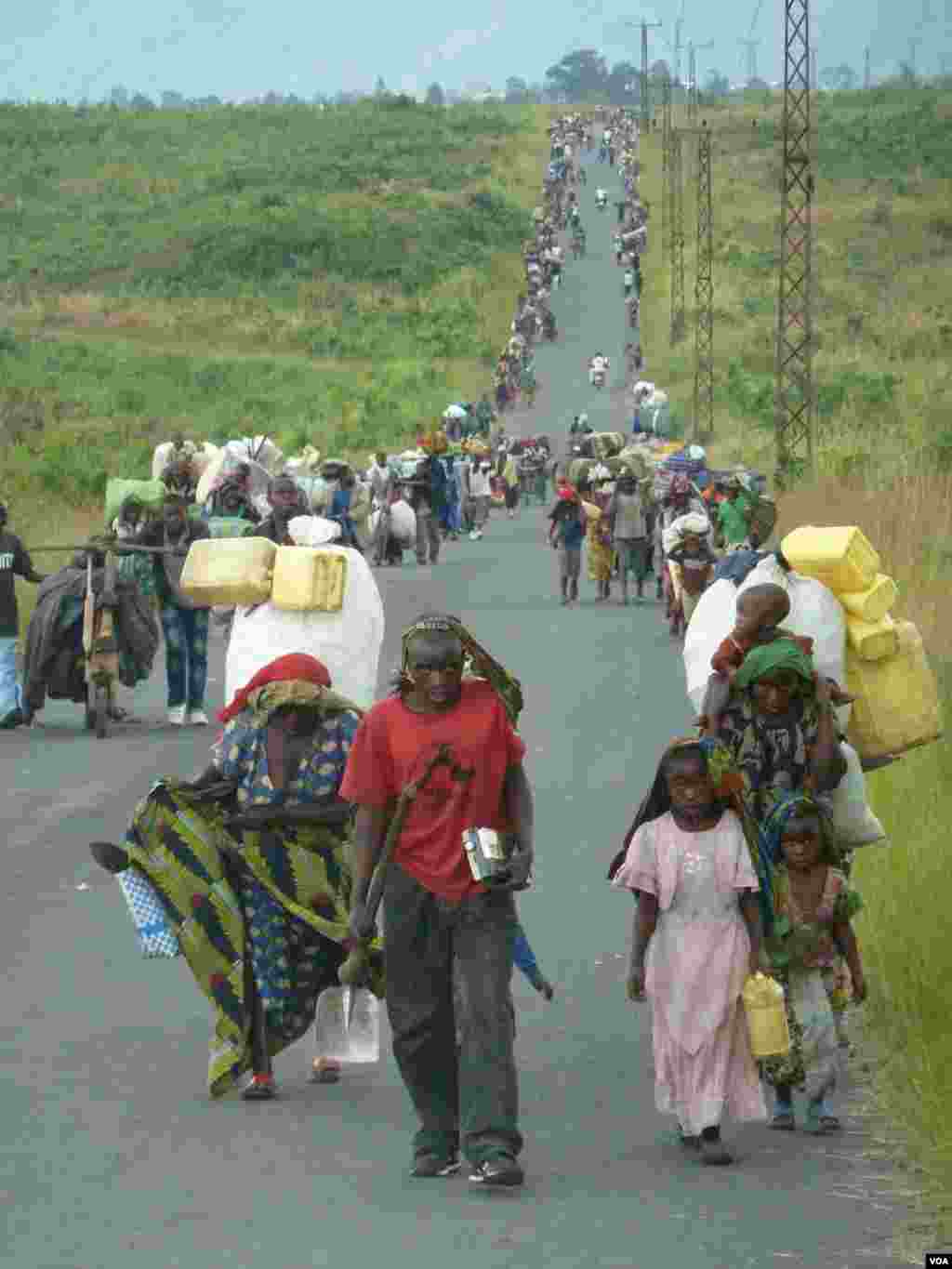
Many civilians displaced by the fighting in the eastern DRC are on the move again. The U.N. refugee agency describes the situation as fluid and unstable, making it harder for humanitarian agencies to provide assistance.
When M23 rebels moved on Goma, thousands of people fled the capital of North Kivu Province. Many traveled to the Sake area, some 20 kilometers away. However, Sake itself is now a battle zone.
“Because of the fighting in Sake, west of Goma, between the M23 and the Congolese armed forces, we saw people actually moving towards Goma looking for safety. But it’s a fluid situation because you also have people who are trying to leave Goma and go back to other areas they came from where they feel more secure,” said Fatoumata Lejeune-Kaba, spokesperson for the UNHCR.
With M23 in control of Goma, some feel its safe enough to return to the Rutshuru territory northeast of the town.
Lejeune-Kaba said it remains very difficult for aid agencies to help the displaced.
“Even normally in North Kivu, UNHCR oversees 31 displaced camps that were hosting 108,000 people. But because of the fighting neither us nor our partners are able to really access most of these. Actually only one of the camps, Mugunga III, is the one that we visited recently and that we can access. So it means that the situation is really bad for the displaced because there hasn’t been any aid for most of these camps since about last week,” she said.
There are only rough estimates as to how many people were displaced during the M23 offensive on Goma. They range from 100,000 to 140,000 people. She says that is a lot for just a few days.
“If we compare that, for example, to the figures we had for July through September, according to estimates there were 285,000 newly displaced people. And here within just a few days you have up to 140,000 displaced. So it shows the magnitude of the displacement,” said Lejeune-Kaba.
Related slide show: Families flee fighting in DRC
Families flee fighting in DRC
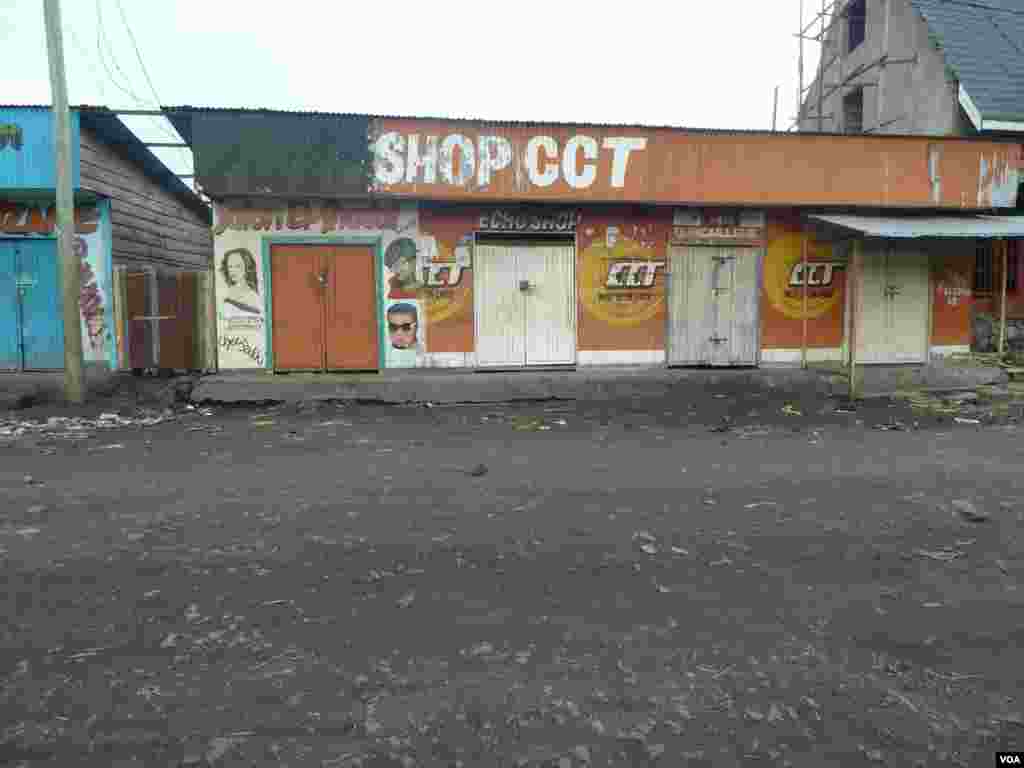
1/5Shops closed in Sake a day after M23 rebels took control of the town following overnight battles with the Congolese army, DRC, November 23, 2012. (G. Joselow/VOA)
Families flee fighting between the Congolese army and M23 rebels in the town of Sake, DRC
Show moreShow less
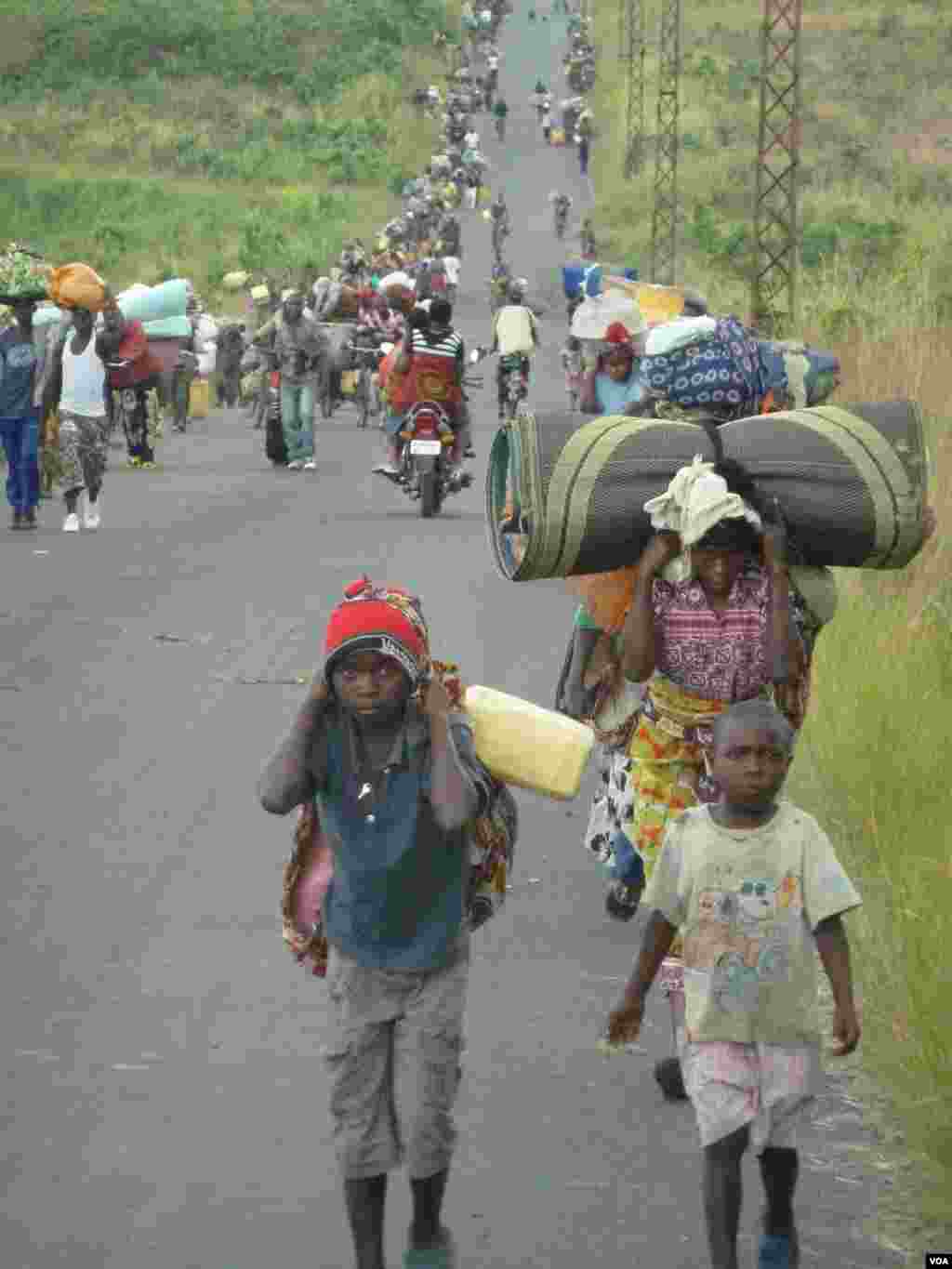
2/5Fighting has displaced tens of thousands of people from the town of Sake, west of Goma, DRC, November 23, 2011. (G. Joselow/VOA)
Families flee fighting between the Congolese army and M23 rebels in the town of Sake, DRC
Show moreShow less
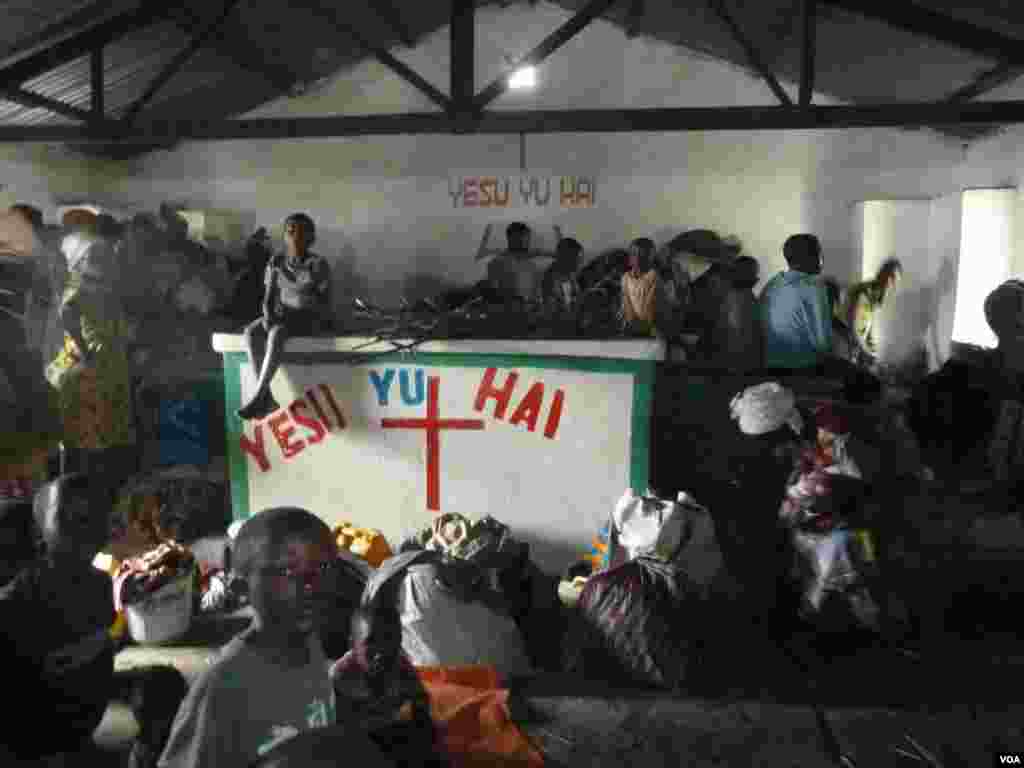
3/5With IDP camps filling up since the rebellion in eastern Congo began in April, newly displaced people are sleeping in churches until they can find a place to settle, DRC, November 23, 2012. (G. Joselow/VOA)
Families flee fighting between the Congolese army and M23 rebels in the town of Sake, DRC
Show moreShow less
4/5Displaced people from the town of Sake gather at the Mugunga camp on the road to Goma, DRC, November 23, 2012. (G. Joselow.VOA)
Families flee fighting between the Congolese army and M23 rebels in the town of Sake, DRC
Show moreShow less
5/5Families flee fighting between the Congolese army and M23 rebels in the town of Sake, DRC, November 23, 2012. G. Joselow/VOA)
Families flee fighting between the Congolese army and M23 rebels in the town of Sake, DRC
Show moreShow less
Previous slide
Next slide
Some of the displaced have been victims of violence or have gotten caught in the crossfire. UNHCR monitors said in Goma alone there were 60 assaults reported against civilians. Eight people have been killed. Houses and shops have been looted. Sixteen children have been reported wounded by gunfire. UNHCR says several hundred unaccompanied children that were in Goma are either newly displaced or refugees in Rwanda.