Conflict With Armenia Could Be Reignited During Azeri Election
STEPANAKERT, NAGORNO-KARABAKH —
Almost two decades ago, the big guns fell silent in the war between Armenians and Azeris over a mountainous corner of Azerbaijan called Nagorno-Karabakh.
Today, the 1994 ceasefire trench lines remain frozen in place. But Azerbaijan holds presidential elections in October. Now, some fear this frozen conflict could reignite over Nagorno-Karabakh, a self-proclaimed republic that is not recognized by any foreign countries.
The half-ruined mountaintop town of Shushi illustrates this ethnic divide. At the local music school, VOA chanced on a party - the songs, dances, food and cognac were all Armenian. Indeed, ethnic Armenians control Shushi, as they do all of Nagorno-Karabakh.
But nearby, two abandoned mosques, were reminders that this city - and all of Nagorno-Karabakh - is claimed by Azerbaijan, a Muslim majority nation.
On the mountain road to Shushi, a war memorial stands guard: an Armenian battle tank painted with a white Christian cross.
Across Nagorno-Karabakh, Armenians are rebuilding as if construction could solve the ownership dispute.
Ashot Ghoulian, chair of the National Assembly of Nagorno-Karabakh, said aid flows here from Armenians around the world.
“The Diaspora has a huge significance for the social economic development of Karabakh,” he said in the offices of the parliament of the self-proclaimed Nagorno-Karabakh Republic. “What our compatriots are sending from America, from European countries, from Russia, and the former Soviet states - all of this allows us to complete very serious economic projects.”
Nagorno-Karabakh
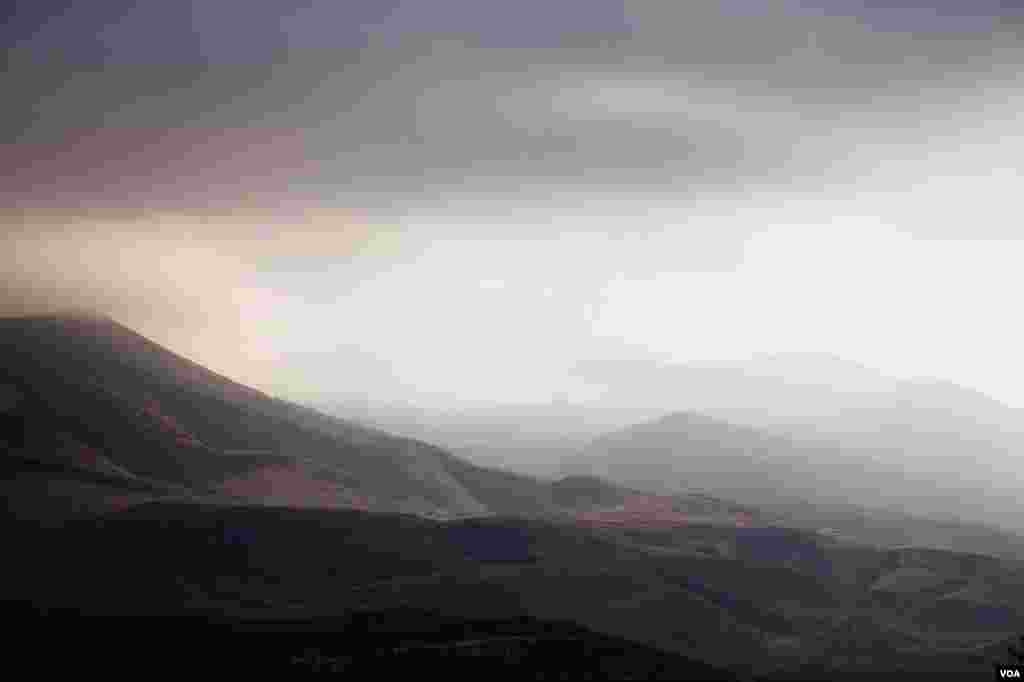
1/11Shrouded in mists, Nagorno-Karabakh, or mountainous Karabakh, is a breakaway region of Azerbaijan, controlled for the last 20 years by ethnic Armenians. (U. Filimonova/VOA)
Almost two decades ago, the big guns fell silent in the war between Armenians and Azeris over a mountainous corner of Azerbaijan called Nagorno-Karabakh.
Show moreShow less
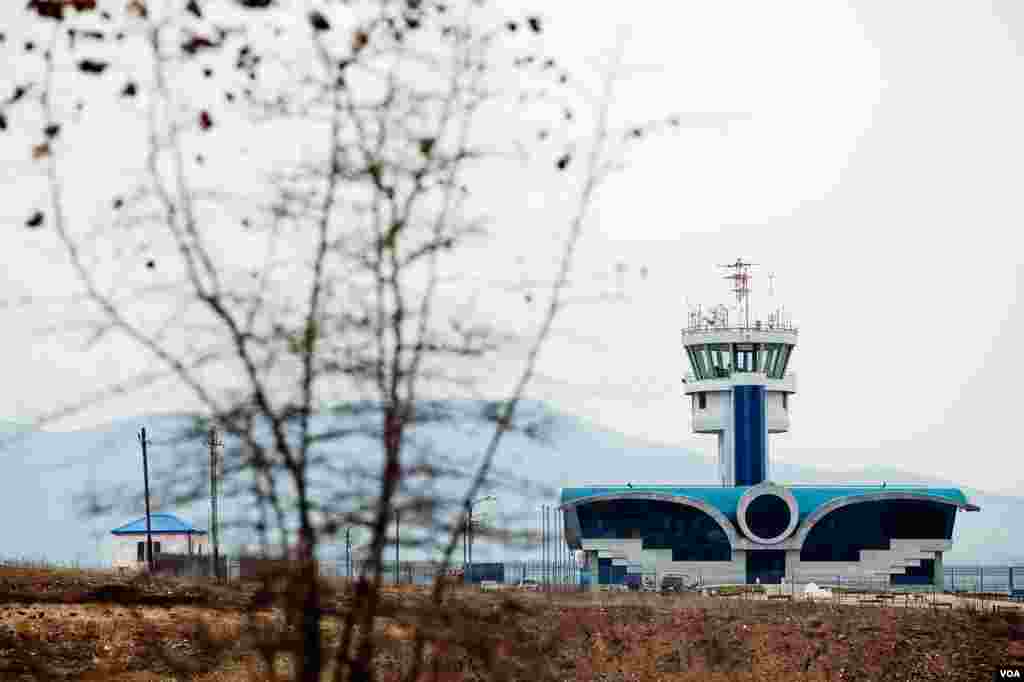
2/11The new terminal for what is to be Karabakh's first airport is fully functional, but stands unused. Azeri authorities have threatened to shoot down planes using the air strip outside of Stepanakert. (U. Filimonova/VOA)
Almost two decades ago, the big guns fell silent in the war between Armenians and Azeris over a mountainous corner of Azerbaijan called Nagorno-Karabakh.
Show moreShow less
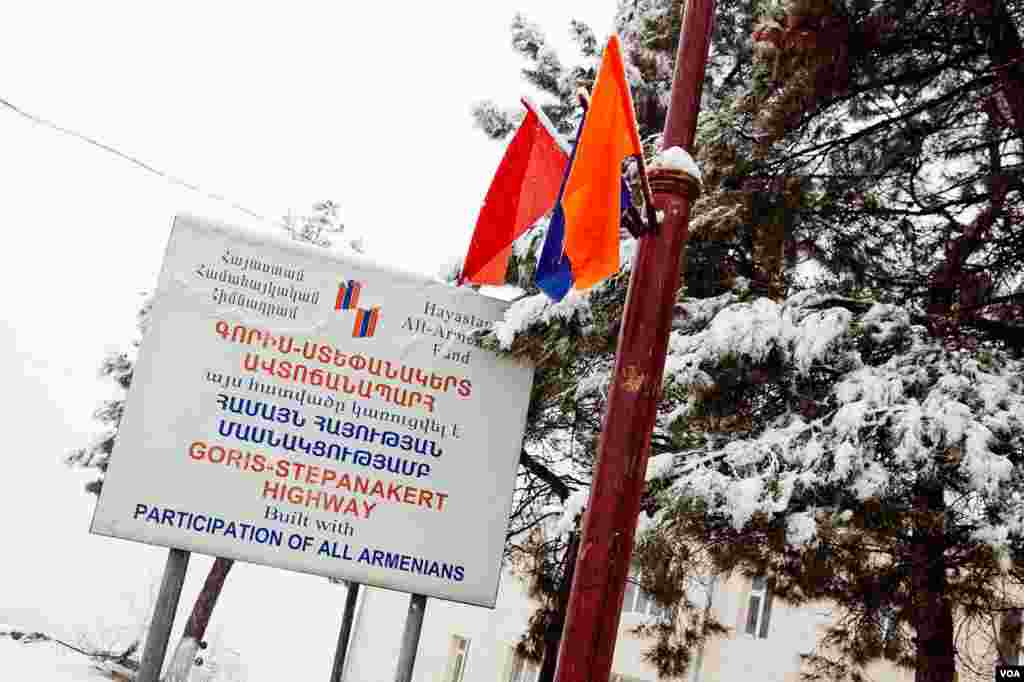
3/11Donations from overseas Armenians built Karabakh's lone lifeline to Aremenia -- a winding road through the high mountains. (U. Filimonova/VOA)
Almost two decades ago, the big guns fell silent in the war between Armenians and Azeris over a mountainous corner of Azerbaijan called Nagorno-Karabakh.
Show moreShow less
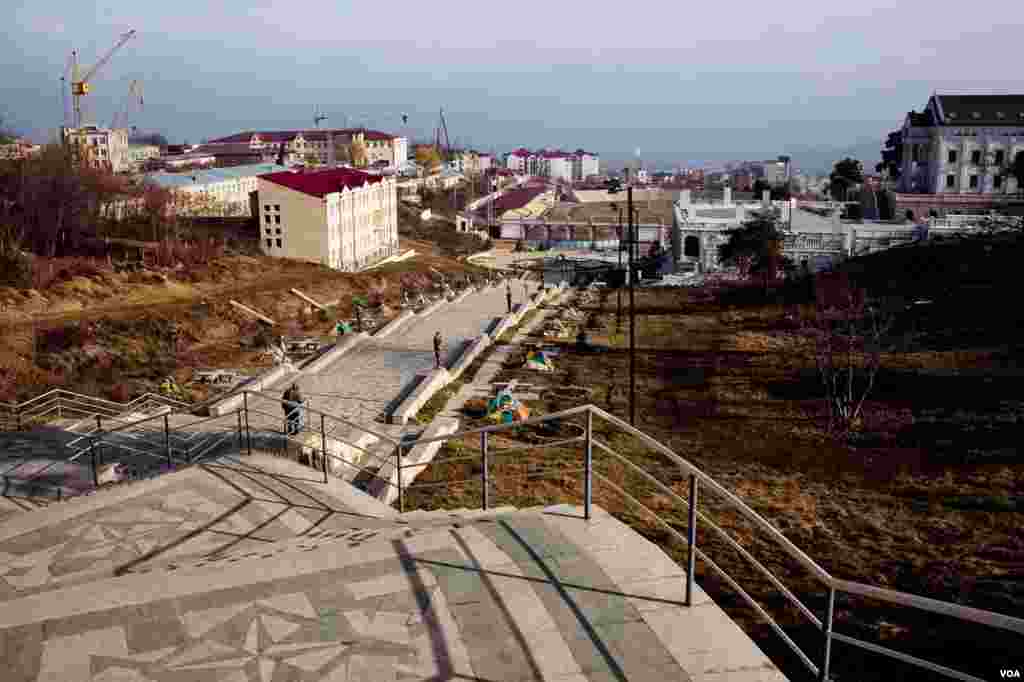
4/11A city view in Nagorno. (U. Filimonova/VOA)
Almost two decades ago, the big guns fell silent in the war between Armenians and Azeris over a mountainous corner of Azerbaijan called Nagorno-Karabakh.
Show moreShow less
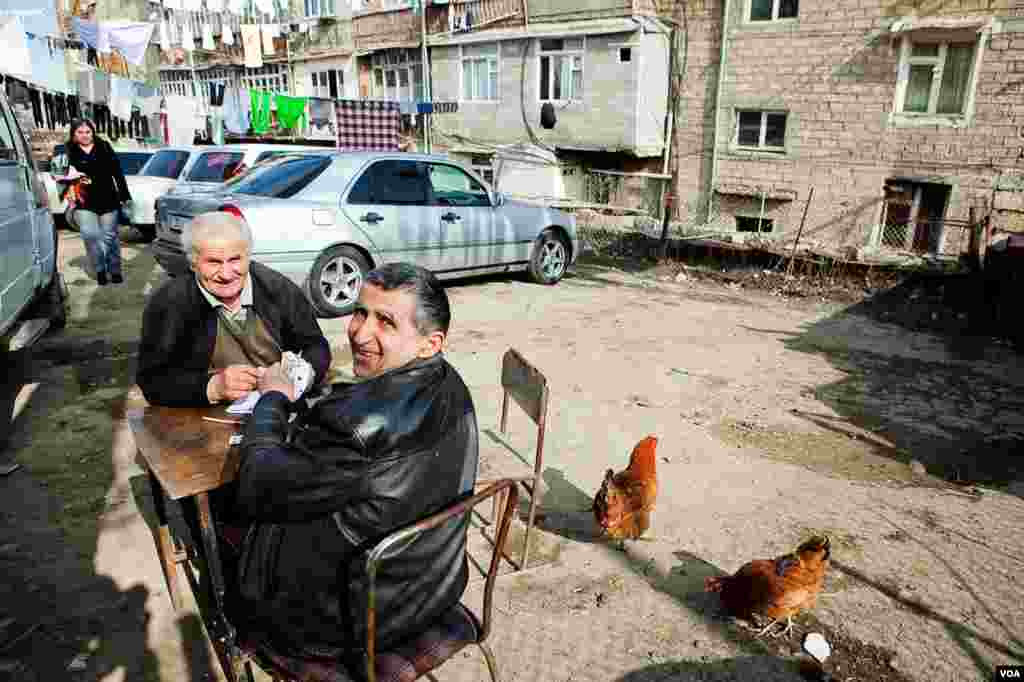
5/11Men playing cards on a back street of sleepy Stepanakert. (U. Filimonova/VOA)
Almost two decades ago, the big guns fell silent in the war between Armenians and Azeris over a mountainous corner of Azerbaijan called Nagorno-Karabakh.
Show moreShow less
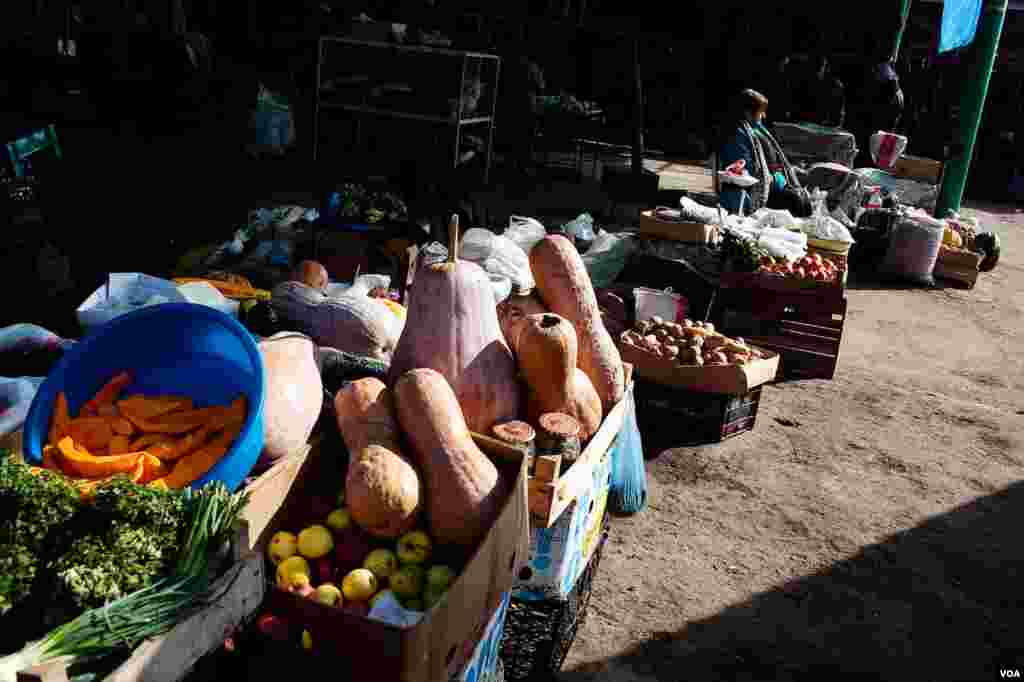
6/11Fruits of the land -- agriculture remains the backbone of Nagorno-Karabakh economy. (U. Filimonova/VOA)
Almost two decades ago, the big guns fell silent in the war between Armenians and Azeris over a mountainous corner of Azerbaijan called Nagorno-Karabakh.
Show moreShow less
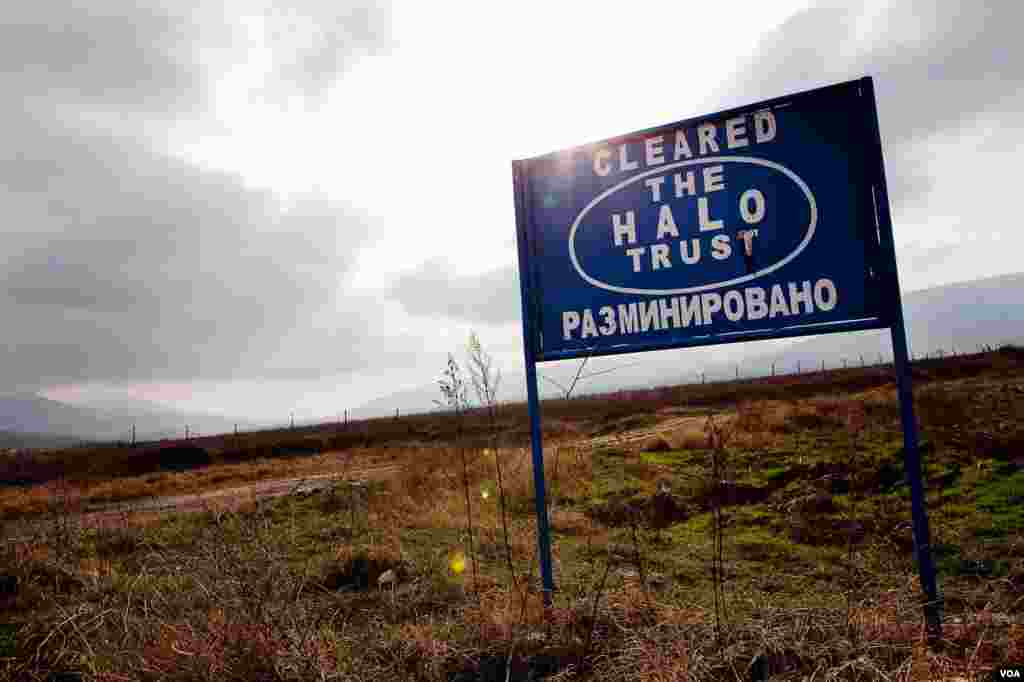
7/11Halo Trust, a British based group, clears land mines and cluster bombs, left over from the 1992-1994 war of secession. (U. Filimonova/VOA)
Almost two decades ago, the big guns fell silent in the war between Armenians and Azeris over a mountainous corner of Azerbaijan called Nagorno-Karabakh.
Show moreShow less
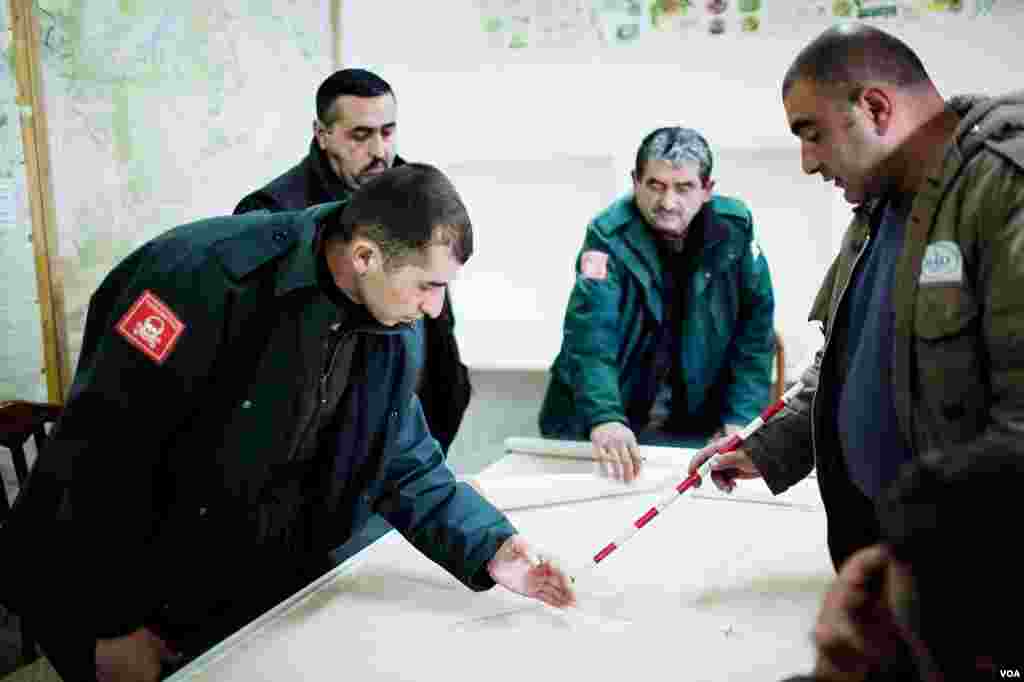
8/11Halo Trust workers plot the locations of unexploded ordinance -- still deadly after 20 years. (U. Filimonova/VOA)
Almost two decades ago, the big guns fell silent in the war between Armenians and Azeris over a mountainous corner of Azerbaijan called Nagorno-Karabakh.
Show moreShow less
9/11At Stepanakert's Griboedova Middle School No. 3 an honor roll shows the photos of school alumni killed in the 1992-1994 war with Azerbaijan. (U. Filimonova/VOA)
Almost two decades ago, the big guns fell silent in the war between Armenians and Azeris over a mountainous corner of Azerbaijan called Nagorno-Karabakh.
Show moreShow less
10/11Boys at school know that obligatory military service faces them at age 18. (U. Filimonova/VOA)
Almost two decades ago, the big guns fell silent in the war between Armenians and Azeris over a mountainous corner of Azerbaijan called Nagorno-Karabakh.
Show moreShow less
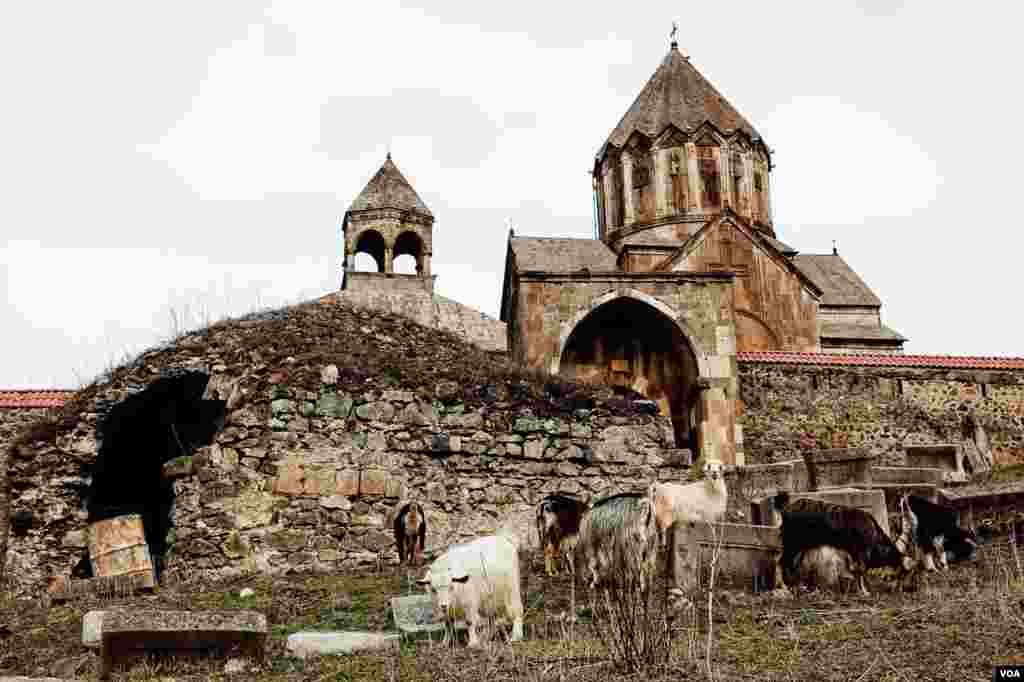
11/11Goats graze outside the monastery at Gandzasar. Dating back to the 10th century, Gandzasar, or 'hilltop treasure' is the seat of the Armenian archbishop of Nagorno-Karabakh. (U. Filimonova/VOA)
Almost two decades ago, the big guns fell silent in the war between Armenians and Azeris over a mountainous corner of Azerbaijan called Nagorno-Karabakh.
Show moreShow less
Previous slide
Next slide
Diaspora aid paved Karabakh’s lifeline to the outside world - a curving mountain road to neighboring Armenia. To further cut Karabakh’s isolation, a new airport has been completed for Stepanakert, the region’s capital.
But it remains unused: Azerbaijan threatens to shoot down planes landing here. And Azeri President Ilham Aliyev has repeated vows to retake Nagorno-Karabakh, by force if necessary.
His military budget of $4 billion is almost the size of Armenia’s gross national product. This worries Ashot Ghoulian.
He said: “What’s happening with Azerbaijan, anti-Armenian hysteria, the arms race, and Armenophobia - I think all of this is postponing resolution of the Karabakh problem.”
At the front lines, cross border sniper fire kills about one soldier a month.
Richard Giragosian, director of the Regional Studies Center, a Yerevan think tank, warns that passionate election campaign rhetoric could spark real fighting on the ground.
“There’s little likelihood in the near future of any breakthrough diplomatically or politically,” Giragosian said in Yerevan, Armenia’s capital. “There is an increasing risk of war, however. But interestingly, the danger is a war by accident, based on miscalculation, where skirmishes could spiral out of control.”
But Aleksandr Iskandaryan, the Director of the Caucasus Institute in Yerevan, predicts Azerbaijan will not risk a full-fledged military attack on Nagorno-Karabakh.
“These fortifications are very well built and well equipped,” he said, looking at a map of the ceasefire lines. “To go through with a front tank attack, it’s very serious. It will lose a lot of people. It’s quite serious.”
Children in Nagorno-Karabakh's capital of Stepanakert grow up knowing that war is never distant.
At Middle School No. 3, newly rebuilt with diaspora donation, there is an honor roll of alumni killed two decades ago. It is a reminder of the danger that this frozen conflict could suddenly burn hot - and claim another generation of young men.