


It’s known that clean water and sanitation can bring a sharp decline in dysentery cases in developing countries. But it’s not enough to stop the spread of the disease in countries undergoing rapid development and industrialization.
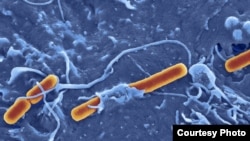
Dysentery, a diarrheal disease, is primarily associated with developing countries where it kills more than one million people a year. Most of them are young children. The bacterium that generally causes this type of dysentery is known as Shigella flexneri. As nations improve sanitation and provide clean drinking water, the germ affects fewer people.
“For most it’s severe watery, and it’s characterized or differentiated from a more mild disease by blood spots. You get blood spots in the diarrhea,” said Professor Nicholas Thompson of Britain’s Wellcome Trust Sanger Institute and lead author of the new dysentery study.
The severity of dysentery can vary.
“If we are well fed and if we are relatively healthy, then it’s a very acute infection. It’s something that we wouldn’t want to get again. But generally, because we have access to clean water and medicines, we recover and we recover perfectly fine. The problem is in countries where perhaps - especially the under fives - there’s a lack of proper nutrition and a lack of access to clean water, then it has much more severe implications,” he said.
Thompson said clean water and sanitation are the most effective ways of treating all diarrheal diseases. But there’s another bacterium that causes dysentery – Shigella sonnei. And it’s spreading despite improvements in water and sanitation.
“[In] industrialized countries or industrializing countries where there are improvements in both sanitation and water, you have a reduction in Shigella flexneri. So that’s one of the bacteria that causes bacterial dysentery. But you get an increase in Shigella sonnei. That’s the species or the type of Shigella that we’ve studied. And we think, and other people think as well, that this is associated actually with improvements in water quality,” he said.
That begs the question why? Why would Shigella sonnei affect more people if the water’s cleaner? It’s because cleaning up drinking water also gets rid of a harmless common bacterium called Plesiomonas Shigelloides. To the immune system, the outer coat of that bacterium looks identical to Shigella sonnei, and antibodies are created to fight it. So its presence helps create somewhat of a natural immunity against the dysentery bacterium. And without that, in countries where overall health is poor, a tougher strain of dysentery can spread and is spreading.
Thompson said, “Luckily there are still alternative antibiotics, and certainly antibiotics in combination can be used against Shigella sonnei. What we’re saying and what we’re showing is that there is an increasing trend of this particular bacterium towards acquiring genes that make them increasingly resistant to drugs used in therapy. If this trend continues, there will come a time when none of the antibiotics that are available to us will work on this bacterium.”
He added that a vaccine will eventually be needed. Research is currently underway. He says the fact that the bacterium has a stable outer coat could help scientists develop a vaccine more quickly. It’s believed Shigella sonnei first emerged in Europe about 500 years ago. Contamination often occurs from not washing hands and through contaminated water.
Dysentery, a diarrheal disease, is primarily associated with developing countries where it kills more than one million people a year. Most of them are young children. The bacterium that generally causes this type of dysentery is known as Shigella flexneri. As nations improve sanitation and provide clean drinking water, the germ affects fewer people.
“For most it’s severe watery, and it’s characterized or differentiated from a more mild disease by blood spots. You get blood spots in the diarrhea,” said Professor Nicholas Thompson of Britain’s Wellcome Trust Sanger Institute and lead author of the new dysentery study.
The severity of dysentery can vary.
“If we are well fed and if we are relatively healthy, then it’s a very acute infection. It’s something that we wouldn’t want to get again. But generally, because we have access to clean water and medicines, we recover and we recover perfectly fine. The problem is in countries where perhaps - especially the under fives - there’s a lack of proper nutrition and a lack of access to clean water, then it has much more severe implications,” he said.
Thompson said clean water and sanitation are the most effective ways of treating all diarrheal diseases. But there’s another bacterium that causes dysentery – Shigella sonnei. And it’s spreading despite improvements in water and sanitation.
“[In] industrialized countries or industrializing countries where there are improvements in both sanitation and water, you have a reduction in Shigella flexneri. So that’s one of the bacteria that causes bacterial dysentery. But you get an increase in Shigella sonnei. That’s the species or the type of Shigella that we’ve studied. And we think, and other people think as well, that this is associated actually with improvements in water quality,” he said.
That begs the question why? Why would Shigella sonnei affect more people if the water’s cleaner? It’s because cleaning up drinking water also gets rid of a harmless common bacterium called Plesiomonas Shigelloides. To the immune system, the outer coat of that bacterium looks identical to Shigella sonnei, and antibodies are created to fight it. So its presence helps create somewhat of a natural immunity against the dysentery bacterium. And without that, in countries where overall health is poor, a tougher strain of dysentery can spread and is spreading.
Thompson said, “Luckily there are still alternative antibiotics, and certainly antibiotics in combination can be used against Shigella sonnei. What we’re saying and what we’re showing is that there is an increasing trend of this particular bacterium towards acquiring genes that make them increasingly resistant to drugs used in therapy. If this trend continues, there will come a time when none of the antibiotics that are available to us will work on this bacterium.”
He added that a vaccine will eventually be needed. Research is currently underway. He says the fact that the bacterium has a stable outer coat could help scientists develop a vaccine more quickly. It’s believed Shigella sonnei first emerged in Europe about 500 years ago. Contamination often occurs from not washing hands and through contaminated water.