



Amyotrophic lateral sclerosis, better known as ALS, is a rare but devastating neuromuscular condition with no known cure which is nearly always fatal.
However, a new study in the Annals of Neurology suggests preventing the paralyzing disease might be as simple as eating a diet of brightly-colored fruits and vegetables.
ALS is believed to result, in part, from damage to motor neurons in the brain and spinal cord. For reasons not fully understood, corrosive oxygen molecules, called free radicals, overwhelm the body's cell maintenance and repair systems, inflicting irreversible damage on the nerve cells, causing progressive, and eventually total, paralysis.
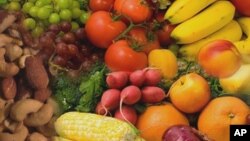
Eating brightly-colored fruit and vegetables, such as red peppers, carrots and kale, which are rich in anti-oxidants, may head off or slow the development of ALS, according to Alberto Ascherio, professor of nutrition at Harvard University's School of Public Health in Boston, Massachusetts.
Bright red, orange and green produce contains natural compounds known as carotinoids, in particular beta-carotene and lutein, which are known to counter the harmful effects of oxidative stress.
“So, if it is true that carotinoids could reduce the risk, there is the possibility that it could also slow the disease process in people who have the disease; we don’t know that yet," Ascherio says. "But we are trying to find clues about things that may help people with the disease.”
Ascherio and his colleagues analyzed data on one million people who took part in five large studies which tracked changes in their health as they aged. Information on the volunteers came from the National Institutes of Health’s Diet and Health study, the Cancer Prevention Study, the Multi-ethnic Cohort, the Health Professionals Follow-Up Study and the Nurses’ Health Study.
About 1,000 of the participants eventually developed ALS.
“We found that the group of people with the highest level of carotenoid intake had about a 25 percent lower risk of developing and dying of ALS,” Ascherio says.
Researchers also found that study participants who consumed the most carotenoid-rich foods tended to exercise more and eat foods containing a lot of vitamins C and E. However, investigators found that those vitamins did not reduce the risk of ALS.
ALS is also known as Lou Gehrig's Disease, after the famed American baseball player who was diagnosed with the disease in 1939.
However, a new study in the Annals of Neurology suggests preventing the paralyzing disease might be as simple as eating a diet of brightly-colored fruits and vegetables.
ALS is believed to result, in part, from damage to motor neurons in the brain and spinal cord. For reasons not fully understood, corrosive oxygen molecules, called free radicals, overwhelm the body's cell maintenance and repair systems, inflicting irreversible damage on the nerve cells, causing progressive, and eventually total, paralysis.
Eating brightly-colored fruit and vegetables, such as red peppers, carrots and kale, which are rich in anti-oxidants, may head off or slow the development of ALS, according to Alberto Ascherio, professor of nutrition at Harvard University's School of Public Health in Boston, Massachusetts.
Bright red, orange and green produce contains natural compounds known as carotinoids, in particular beta-carotene and lutein, which are known to counter the harmful effects of oxidative stress.
“So, if it is true that carotinoids could reduce the risk, there is the possibility that it could also slow the disease process in people who have the disease; we don’t know that yet," Ascherio says. "But we are trying to find clues about things that may help people with the disease.”
Ascherio and his colleagues analyzed data on one million people who took part in five large studies which tracked changes in their health as they aged. Information on the volunteers came from the National Institutes of Health’s Diet and Health study, the Cancer Prevention Study, the Multi-ethnic Cohort, the Health Professionals Follow-Up Study and the Nurses’ Health Study.
About 1,000 of the participants eventually developed ALS.
“We found that the group of people with the highest level of carotenoid intake had about a 25 percent lower risk of developing and dying of ALS,” Ascherio says.
Researchers also found that study participants who consumed the most carotenoid-rich foods tended to exercise more and eat foods containing a lot of vitamins C and E. However, investigators found that those vitamins did not reduce the risk of ALS.
ALS is also known as Lou Gehrig's Disease, after the famed American baseball player who was diagnosed with the disease in 1939.