



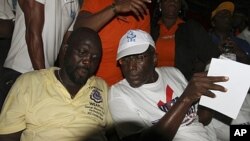
The Economic Community of West African States (ECOWAS) is expressing disappointment over the decision of Liberia main opposition leader to boycott the November 8 presidential run-off.
Sonny Ugoh, communications director for the sub-regional bloc, says his group is calling on Winston Tubman, leader of the opposition Congress for Democratic Change, to reverse his decision to boycott the election.
The opposition leader refused to participate in Tuesday’s run-off election after expressing concern the polls will be rigged.
“Understandably, ECOWAS is disappointed because we were under the impression that after his visit to Abuja that the leader of the opposition and his party were on board… [But] on getting back to Monrovia, he said something different from what he had agreed to do [when he was] in Abuja,” said Ugoh. “It’s unfortunate that he has taken this position because I don’t think it is helpful to the democratic culture in his country.”
Analysts say it is unlikely Tubman will rescind his decision since he stopped campaigning ahead of the run-off vote. Supporters of the party also contend that the Independent Elections Commission has failed to address their concerns in the run up to the poll.
Their claims of voter fraud, some observers say, forced National Elections Commission chairman James Fromayan to resign ahead of the run-off.
ECOWAS described the first round vote as free and fair. Ugoh said the run-off will proceed even if the opposition leader does not change his mind.
“As long as the outcome will satisfy the parameters we have indicated, we will have no option under the circumstances but to accept the outcome of the run-off,” said Ugoh. “What is important is ECOWAS is asking him [Tubman] to reconsider his position. It is important for him to subordinate his own interest to that of the country.”
He said despite the disappointment, ECOWAS will continue with efforts to encourage the opposition to participate in Tuesday’s vote.
“For us, all the campaigning that is important has been done prior to the first election. We have tried to engage in order to encourage [Tubman] to step up to the plate to participate in the run-off,” said Ugoh.” I don’t see what can be achieved by boycotting the election. It’s more useful if he participates in the election because that way the people will speak and decide who will lead them.”