


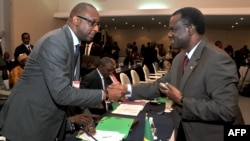
The Economic Community of West African States (ECOWAS) and Mali’s government have agreed to the deployment of a standby force to the West African country, where Islamist militants control the north.
"Thankfully, there is now a consensus around the mandate of the force, which is the same mandate that the heads of state had decided, and that is three strong responsibilities for the force, which are to protect republican institutions, support them and to restore their territorial integrity,” said ECOWAS communications director Sonny Ugoh.
He welcomed the agreement as a positive step, towards regional stability.
“It’s a welcome development, which now removes another impediment for the deployment of the force,” he said.
Islamist groups reportedly linked to al-Qaida now control about two-thirds of Mali's national territory.
The Islamists, along with Tuareg separatists, seized control of the north in April after the coup in Bamako in March. Since then, the militant groups Ansar Dine and the Movement for Oneness and Jihad in West Africa have moved to enforce a strict version of Islamic law.
ECOWAS has been seeking a U.N. mandate ahead of a troop deployment to Mali.
"What we still have outstanding has to do with the UN Security Council mandate, which we are hoping to get soon," said Ugoh.
The world body has expressed concern about what it says is the increasing entrenchment of terrorist elements in northern Mali, including Al-Qaida in the Islamic Maghreb.
The council said it will consider other measures to end the insecurity in northern Mali, following ECOWAS’ appeal to impose sanctions to end the crisis.
Ugoh said he was hopeful that the regional bloc will receive the U.N. mandate in order to deploy the troops to Mali.
“The U.N. Security Council itself has indicated that they were very excited about what ECOWAS is doing and we are confident that we will certainly get [the mandate]," said Ugoh.
He said the Security Council is among other international bodies worried about the insecurity in northern Mali.
"Thankfully, there is now a consensus around the mandate of the force, which is the same mandate that the heads of state had decided, and that is three strong responsibilities for the force, which are to protect republican institutions, support them and to restore their territorial integrity,” said ECOWAS communications director Sonny Ugoh.
He welcomed the agreement as a positive step, towards regional stability.
“It’s a welcome development, which now removes another impediment for the deployment of the force,” he said.
Islamist groups reportedly linked to al-Qaida now control about two-thirds of Mali's national territory.
The Islamists, along with Tuareg separatists, seized control of the north in April after the coup in Bamako in March. Since then, the militant groups Ansar Dine and the Movement for Oneness and Jihad in West Africa have moved to enforce a strict version of Islamic law.
ECOWAS has been seeking a U.N. mandate ahead of a troop deployment to Mali.
"What we still have outstanding has to do with the UN Security Council mandate, which we are hoping to get soon," said Ugoh.
The world body has expressed concern about what it says is the increasing entrenchment of terrorist elements in northern Mali, including Al-Qaida in the Islamic Maghreb.
The council said it will consider other measures to end the insecurity in northern Mali, following ECOWAS’ appeal to impose sanctions to end the crisis.
Ugoh said he was hopeful that the regional bloc will receive the U.N. mandate in order to deploy the troops to Mali.
“The U.N. Security Council itself has indicated that they were very excited about what ECOWAS is doing and we are confident that we will certainly get [the mandate]," said Ugoh.
He said the Security Council is among other international bodies worried about the insecurity in northern Mali.
