


News / Middle East

Egypt Opens Border With Gaza Strip to Allow Humanitarian Aid

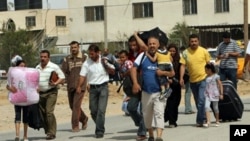
Palestinians carry their belongings as they head towards the newly-opened border crossing to Egypt in Rafah, in the southern Gaza Strip, 01 Jun, 2010

Multimedia

Audio
TEXT SIZE - +
Elizabeth Arrott

Egypt is opening its border with Gaza to humanitarian aid and relief.  The move comes as Cairo, along with its neighbors in the Middle East, continue to condemn Israel's deadly raid Monday of an international aid convoy to the Palestinian territory.

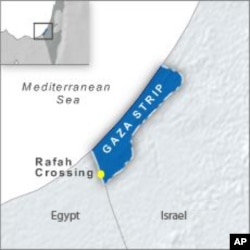
President Hosni Mubarak ordered security at the Rafah border crossing to allow aid to enter Gaza, and to let Gazans in need of medical treatment to leave.

The move follows Israel's violent interception Monday of 10,000 tons of supplies bound for Gaza aboard an international aid flotilla.

Egypt, for the most part, has kept its border with the Palestinian territory closed since Hamas militants came to power in 2007.

Listen to VOA's Paul Westpheling interview with Elizabeth Arrott who is on the Gaza border:

Fahmy Howeidy, a prominent Egyptian columnist, says it is not clear how long or how inclusive the new border opening will be.  

"I can imagine that President Mubarak and Egypt are embarrassed now because there is international pressure now to open borders.  And he knows, and all of us know, that he is participating in the closing borders and is participating in the siege," Howeidy said.
Egypt Opens Border With Gaza Strip to Allow Humanitarian Aid

Other Arab nations have condemned Cairo for blocking the Rafah crossing, in particular during the Israel-Gaza war last year.  Under previous peace negotiations, Egypt has international obligations to regulate the border.  Despite the criticism of its neighbors, the Egyptian government is believed to be building a wall to cut off the smuggling tunnels used to transport goods and, Israel alleges, weapons to the territory.   

Anger at the Israeli raid continued for a second day across the Middle East.   In the Yemeni capital Sana'a, tens of thousands of people joined in a government-led protest.  Three members of Yemen's parliament were among the hundreds of people in the aid convoy.

In Iran, President Mahmoud Ahmadinejad again spoke out against the raid and the country that he has repeatedly said will not last.

The Iranian leader warned Israel about any aggression, saying a "storm of anger from the nations of the region will uproot you."

The Arab League is holding an emergency meeting in Cairo Tuesday to discuss what action it will take.

You May Like

Experts Weigh In on Challenges of Closing Guantanamo Prison

Former chief military prosecutor at Guantanamo delivers petition to White House with more than 370,000 signatures, demanding facility be closed down immediately More

Karzai to Discuss Enhancing Defense Ties with India

Afghanistan looking for more military aid as it prepares for withdrawal of NATO forces by next year More

India, China Pledge to Overcome Border Tensions

Indian prime minister and Chinese premier attempt to move past tense standoff in the Himalayas during Delhi talks More

Burmese President Opens US Visit with VOA Town Hall Meeting

Ahead of his meeting with President Obama Monday, Thein Sein answered questions on human rights and economic development in his country More

This forum has been closed.
Comments
     
There are no comments in this forum. Be first and add one

Featured Videos

Your JavaScript is turned off or you have an old version of Adobe's Flash Player. Get the latest Flash player.
Video

Video US Oil Surge Could Impact Mideast Geopolitics

The United States will account for a third of new oil supplies over the next five years, and will become energy self-sufficient in 20 years, according to a new report by the Paris-based International Energy Agency (IEA). Although U.S. oil imports from Arab Gulf countries increased last year, analysts predict the U.S. will lose its dependence on Middle East imports, which is expected to have a huge impact on international relations and the balance of power. VOA's Henry Ridgewell reports.