



News / Middle East

Egyptian VP Predicts Drop in Economic Growth

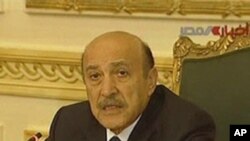
An image grab taken from Egyptian state television Al-Masriya shows new Egyptian Vice President Omar Suleiman speaking during talks between the Egyptian regime and several opposition groups, including the Muslim Brotherhood, Cairo on February 6, 2011
TEXT SIZE - +

Egyptian Vice President Omar Suleiman says the ongoing political protests in the country will sharply cut its economic growth this year.

Suleiman, who is trying to convince protesters to end the demonstrations, said Wednesday that Egypt's economy might advance by 3.4 percent in 2011. In December, the government predicted 6 percent growth for 2011, but that was before the street protests started two weeks ago against the 30-year reign of President Hosni Mubarak.

Analysts at Bank of America Merrill Lynch said Egypt's annual economic growth could slow even more, perhaps to 1 or 2 percent. The Egyptian economy grew by 5 percent last year.

Thousands of workers at some key industries in Egypt walked off jobs or staged protests this week, apart from the Cairo-focused demonstrations against the government.

Suleiman told news agencies that the government would not be overthrown. He said that would "lead to chaos."  Suleiman said talks between government officials and opposition groups were the first way to achieve stability.

Egypt's economy has not come to a complete halt with the protests, but the effects have been widespread. The government reported that about one million tourists fled the country in the first nine days of the protests. The vital Asia-to-Europe shipping link through the Suez Canal is still operating but 6,000 workers in the canal zone have started a sit-down strike.

Numerous international companies have shut their operations in Egypt and laid off workers. Norway's Statoil said it was no longer drilling in Egypt. The country's stock market is still closed and not scheduled to reopen until next Sunday.

Consumers are facing sharply higher prices, with meat prices quadrupling, and many shelves emptied at food stores.


NEW: Follow our Middle East reports on Twitter
and discuss them on our Facebook page.

You May Like

India, China Pledge to Overcome Border Tensions

Indian prime minister and Chinese premier attempt to move past tense standoff in the Himalayas during Delhi talks More

Burmese President Opens US Visit with VOA Town Hall Meeting

Ahead of his meeting with President Obama Monday, Thein Sein answered questions on human rights and economic development in his country More

Video Washington Week: Focus on Burma, US Government Scandals

President Thein Sein visits the White House on Monday, Congressional probes of multiple scandals are continuing More

This forum has been closed.
Comments
     
There are no comments in this forum. Be first and add one

Featured Videos

Your JavaScript is turned off or you have an old version of Adobe's Flash Player. Get the latest Flash player.
Video

Video Boston Bomber Spent 6 Months in Russia’s Most Violent Republic

The news of the Boston Marathon bombings circled the globe, and resonated here in Dagestan, a majority Muslim republic in Russia, on the shores of the Caspian Sea. Last year, Tamerlan Tsarnaev, the older of two brothers suspected of the bombings and a long-time Boston resident, returned to Dagestan, where he had lived for a year during his youth. Dagestan was the land of his maternal ancestors. But in the last two years, this republic of 3 million people has gained notoriety as the region with the highest level of political and religious violence in all of Russia. VOA's James Brooke reports from Makhachkala, Russia.