


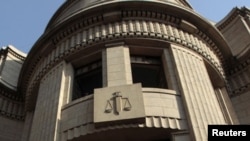
Egypt’s Supreme Constitutional Court is emerging as the potential kingmaker and powerful arbiter in the future of Egyptian politics as the country prepares for a heated presidential runoff election.
The court must untangle a web of laws that could steer the country in two radically different directions. Its decisions could turn Egypt over to an ally of former strongman Hosni Mubarak or the candidate of the Muslim Brotherhood, a movement suspected of being as authoritarian internally as the Mubarak regime once was. Emotions and pressure tactics are running high on all sides. How they will affect the justices remains to be seen.
On June 14, just two days before Egyptians go to the polls for a second time in a month, the Supreme Court will begin considering whether Ahmed Shafiq, Mubarak’s last prime minister and one of the two finalists in the election, should be able to run at all. The court will be weighing the constitutionality of the so-called “political law of isolation,” passed by the new Islamist-dominated parliament, which bans former senior Mubarak allies from participating in politics for the next five years.
The court also will begin hearing a complaint about the constitutionality of the Law of Parliamentary Elections issued by the Supreme Council of Armed Forces (SCAF), which allowed members of political parties to run for seats normally reserved for independent candidates.
George Washington University Professor Nathan Brown, who is a leading expert on Egypt’s judicial system, says the court's motions will have huge consequences.
“This is the time at which Egypt’s permanent governing structures will be formed. So, the decisions that will be made now will determine the rules of Egyptian politics for some time to come,” Brown said.
This is not the first time the court has considered the legality of a parliamentary election, according to Clark Lombardi, an associate law professor at the University of Washington.
“After contested elections under Mubarak, the court issued a ruling saying the parliament was elected in an unconstitutional way, forcing Mubarak to dissolve parliament. The legal precedent is quite clear,” he said.
Loose laws
Despite that precedent, the Supreme Constitutional Court still faces a tough decision because Egypt's laws are changing as fast as its political landscape.
“It’s very hard to talk about the role of law because law is not a stable, autonomous independent thing. It is moving, too,” said Kristen Stilt, a law professor at Northwestern University in Illinois.
Mubarak operated under the 1971 Constitution, which was suspended after his resignation amid a popular uprising last year. In its place, the SCAF announced a constitutional declaration – in effect an interim constitution – that combined remnants of the '71 document with new articles adopted in a public referendum. The SCAF also announced a new law to govern Egypt's first post-revolutionary parliamentary election, but changed it under pressure from political parties.
The new parliament, tasked primarily with creating an assembly to write a new constitution, instead focused on who could be president and passed the “isolation law,” which technically bars ex-regime members from running in the election. That law was then apparently ignored by the presidential election committee, presided over by Supreme Court Chief Justice, Farouk Sultan.
Symbol of independence
In a country where most institutions have been known to bend to the will of authority, the Supreme Constitutional Court served for years in the 1970s and 1980s as a rare and powerful symbol of independence. Egypt's leaders allowed that independence for political purposes, but the court took advantage of its strength to hold the government accountable, according to Lombardi.
"The court clearly took it upon itself to establish itself as a party with whom one had to negotiate,” he said.
The Supreme Court today is a shadow of its former self, however. In the 1990s, Mubarak's government implemented a so-called "court packing" plan, adding judges to the bench to dilute the power of the independent, liberalizing forces.
With Mubarak gone, and an opportunity to decide what Egypt should look like, the judges likely will want to exert their own will, and not someone else's, said Brown.
"So you’ve got a very strong commitment of Egypt’s judges to what they would see is to protect the rule of law during this threatening time,” he said.
That doesn't mean the court is immune to outside influence. Some judges are advising the SCAF, and the chief justice served in military courts and is still considered close to the armed forces. The Muslim Brotherhood-dominated parliament also recently proposed a law that would stem the justices' ability to overturn legislation, a move Brown said was considered a warning to the court not to dissolve parliament.
Forecasting uncertainty
Egypt's airwaves and newspapers are full of debate by pundits and politicians about which way the court will lean, and how that will affect the political transition. With the Presidential Election Committee headed by Chief Justice Sultan, some say the Supreme Constitutional Court likely will overturn the “political isolation law” ignored by the election committee. That would clear the way for Shafiq in the runoff.
Also, if the court deems members of parliament to have been elected under unlawful rules, Stilt said it could order another complete or partial parliamentary election, which would stall the adoption of a new constitution.
In the meantime, the SCAF has called for parliament to meet on June 12 to elect a 100-member committee to draft that constitution. If they fail to reach a consensus, the SCAF could issue yet another constitutional declaration.
Egypt has tied itself into what Brown called a "legal pretzel." In the short-term, that means there are no real legitimate structures in a country in transition. But in the long-term, Brown said, untying that pretzel could lead to some healthy trends.
"This is now a country where no single political force can dominate. And that is coming to terms [with the fact] that you have a pluralist political environment, where various political forces are assertive. That’s a healthy, contentious basis for democratic politics," he said, adding that reducing the military’s influence will be critical to that process.
Do you think Egypt's Supreme Court will be the political kingmaker? Share your comments and take our poll.
The court must untangle a web of laws that could steer the country in two radically different directions. Its decisions could turn Egypt over to an ally of former strongman Hosni Mubarak or the candidate of the Muslim Brotherhood, a movement suspected of being as authoritarian internally as the Mubarak regime once was. Emotions and pressure tactics are running high on all sides. How they will affect the justices remains to be seen.
On June 14, just two days before Egyptians go to the polls for a second time in a month, the Supreme Court will begin considering whether Ahmed Shafiq, Mubarak’s last prime minister and one of the two finalists in the election, should be able to run at all. The court will be weighing the constitutionality of the so-called “political law of isolation,” passed by the new Islamist-dominated parliament, which bans former senior Mubarak allies from participating in politics for the next five years.
The court also will begin hearing a complaint about the constitutionality of the Law of Parliamentary Elections issued by the Supreme Council of Armed Forces (SCAF), which allowed members of political parties to run for seats normally reserved for independent candidates.
George Washington University Professor Nathan Brown, who is a leading expert on Egypt’s judicial system, says the court's motions will have huge consequences.
“This is the time at which Egypt’s permanent governing structures will be formed. So, the decisions that will be made now will determine the rules of Egyptian politics for some time to come,” Brown said.
This is not the first time the court has considered the legality of a parliamentary election, according to Clark Lombardi, an associate law professor at the University of Washington.
“After contested elections under Mubarak, the court issued a ruling saying the parliament was elected in an unconstitutional way, forcing Mubarak to dissolve parliament. The legal precedent is quite clear,” he said.
Loose laws
Despite that precedent, the Supreme Constitutional Court still faces a tough decision because Egypt's laws are changing as fast as its political landscape.
“It’s very hard to talk about the role of law because law is not a stable, autonomous independent thing. It is moving, too,” said Kristen Stilt, a law professor at Northwestern University in Illinois.
Mubarak operated under the 1971 Constitution, which was suspended after his resignation amid a popular uprising last year. In its place, the SCAF announced a constitutional declaration – in effect an interim constitution – that combined remnants of the '71 document with new articles adopted in a public referendum. The SCAF also announced a new law to govern Egypt's first post-revolutionary parliamentary election, but changed it under pressure from political parties.
The new parliament, tasked primarily with creating an assembly to write a new constitution, instead focused on who could be president and passed the “isolation law,” which technically bars ex-regime members from running in the election. That law was then apparently ignored by the presidential election committee, presided over by Supreme Court Chief Justice, Farouk Sultan.
Symbol of independence
In a country where most institutions have been known to bend to the will of authority, the Supreme Constitutional Court served for years in the 1970s and 1980s as a rare and powerful symbol of independence. Egypt's leaders allowed that independence for political purposes, but the court took advantage of its strength to hold the government accountable, according to Lombardi.
"The court clearly took it upon itself to establish itself as a party with whom one had to negotiate,” he said.
The Supreme Court today is a shadow of its former self, however. In the 1990s, Mubarak's government implemented a so-called "court packing" plan, adding judges to the bench to dilute the power of the independent, liberalizing forces.
With Mubarak gone, and an opportunity to decide what Egypt should look like, the judges likely will want to exert their own will, and not someone else's, said Brown.
"So you’ve got a very strong commitment of Egypt’s judges to what they would see is to protect the rule of law during this threatening time,” he said.
That doesn't mean the court is immune to outside influence. Some judges are advising the SCAF, and the chief justice served in military courts and is still considered close to the armed forces. The Muslim Brotherhood-dominated parliament also recently proposed a law that would stem the justices' ability to overturn legislation, a move Brown said was considered a warning to the court not to dissolve parliament.
Forecasting uncertainty
Egypt's airwaves and newspapers are full of debate by pundits and politicians about which way the court will lean, and how that will affect the political transition. With the Presidential Election Committee headed by Chief Justice Sultan, some say the Supreme Constitutional Court likely will overturn the “political isolation law” ignored by the election committee. That would clear the way for Shafiq in the runoff.
Also, if the court deems members of parliament to have been elected under unlawful rules, Stilt said it could order another complete or partial parliamentary election, which would stall the adoption of a new constitution.
In the meantime, the SCAF has called for parliament to meet on June 12 to elect a 100-member committee to draft that constitution. If they fail to reach a consensus, the SCAF could issue yet another constitutional declaration.
Egypt has tied itself into what Brown called a "legal pretzel." In the short-term, that means there are no real legitimate structures in a country in transition. But in the long-term, Brown said, untying that pretzel could lead to some healthy trends.
"This is now a country where no single political force can dominate. And that is coming to terms [with the fact] that you have a pluralist political environment, where various political forces are assertive. That’s a healthy, contentious basis for democratic politics," he said, adding that reducing the military’s influence will be critical to that process.
Do you think Egypt's Supreme Court will be the political kingmaker? Share your comments and take our poll.