


PARIS — The Paris-based U.N. Educational, Scientific and Cultural Organization (UNESCO) is due to award a science prize financed by Equatorial Guinea - even as French authorities are investigating the country's leaders for alleged large-scale corruption.
Hailing from Egypt, South Africa and Mexico, the three scientists receiving the UNESCO prize are all leading researchers in their fields. What's in dispute is the origin of the new prize. It's a mouthful - the UNESCO-Equatorial Guinea International Prize for Research in the Life Sciences. It was previously named after Equatorial Guinea's president, Teodoro Obiang Nguema Mbasogo.
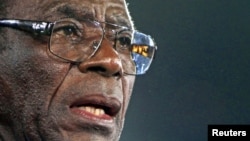
The autocratic Mr. Obiang has earmarked $3 million for the prize. But its reputation is already tarnished. French magistrates have been investigating claims of corruption against him and two other African leaders. On Friday, they issued an arrest warrant against his son, Teodorin Nguema Obiang Mangue, on embezzlement charges.
Maud Perdriel of the French NGO Sherpa, which brought charges against the African leaders, hailed the move, saying "it shows that nobody is above the law. Immunity is no longer a synonym of impunity - which is a great thing."
Sherpa and Transparency International accuse both Obiangs of illegally using state funds to buy luxurious property and cars in France. While Equatorial Guinea is rich in oil, many of its citizens are extremely poor. The country also has one of the world's highest infant mortality rates.
Appointed as a diplomat to UNESCO last year, the younger Obiang was recently upgraded to vice president of the West African nation. As such, his Paris lawyer, Emmanuel Marsigny, says he has judicial immunity.
Marsigny said the younger Obiang acquired his wealth legally, as a successful businessman. He said all of his acquisitions overseas are legal and transparent.
Marsigny said it is unfair to stigmatize the UNESCO prize. But Sherpa's Perdriel said it should be eliminated. "We don't believe that an organization such as UNESCO [should] associate itself to a regime which is not known for it's openness, it's respect for human rights," he explained.
UNESCO officials will not comment on the record. But the prize has deeply divided the agency's member nations. The United States and other countries blocked the the award for years. But UNESCO's executive board finally approved it last March.
Hailing from Egypt, South Africa and Mexico, the three scientists receiving the UNESCO prize are all leading researchers in their fields. What's in dispute is the origin of the new prize. It's a mouthful - the UNESCO-Equatorial Guinea International Prize for Research in the Life Sciences. It was previously named after Equatorial Guinea's president, Teodoro Obiang Nguema Mbasogo.
The autocratic Mr. Obiang has earmarked $3 million for the prize. But its reputation is already tarnished. French magistrates have been investigating claims of corruption against him and two other African leaders. On Friday, they issued an arrest warrant against his son, Teodorin Nguema Obiang Mangue, on embezzlement charges.
Maud Perdriel of the French NGO Sherpa, which brought charges against the African leaders, hailed the move, saying "it shows that nobody is above the law. Immunity is no longer a synonym of impunity - which is a great thing."
Sherpa and Transparency International accuse both Obiangs of illegally using state funds to buy luxurious property and cars in France. While Equatorial Guinea is rich in oil, many of its citizens are extremely poor. The country also has one of the world's highest infant mortality rates.
Appointed as a diplomat to UNESCO last year, the younger Obiang was recently upgraded to vice president of the West African nation. As such, his Paris lawyer, Emmanuel Marsigny, says he has judicial immunity.
Marsigny said the younger Obiang acquired his wealth legally, as a successful businessman. He said all of his acquisitions overseas are legal and transparent.
Marsigny said it is unfair to stigmatize the UNESCO prize. But Sherpa's Perdriel said it should be eliminated. "We don't believe that an organization such as UNESCO [should] associate itself to a regime which is not known for it's openness, it's respect for human rights," he explained.
UNESCO officials will not comment on the record. But the prize has deeply divided the agency's member nations. The United States and other countries blocked the the award for years. But UNESCO's executive board finally approved it last March.